
▪️Jamal plans to stage the first ever Boxing Federation of Kenya women’s-only boxing tournament
August 13, 2026
“We must do more to create opportunities for women in boxing” says Boxing Federation of Kenya President Anthony “Jamal” Otieno.
Jamal strongly believes the future of Kenyan boxing cannot be complete if women are left behind.
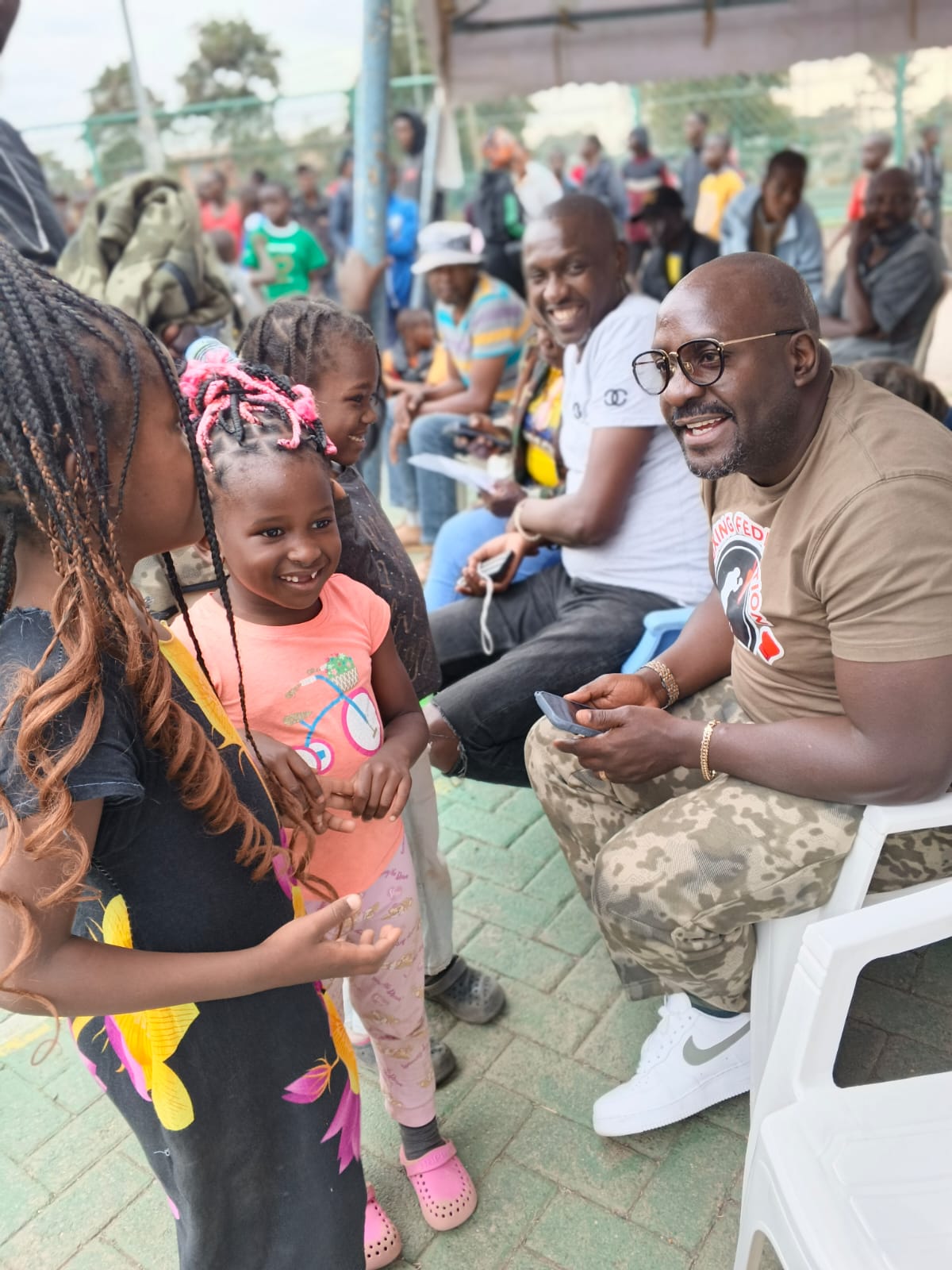
At the recent Robert Wangila Memorial Boxing Championship, Jamal demonstrated once again that his vision for boxing goes beyond medals, rankings and championships. His commitment to spending time with boxers and engaging with the boxing family also highlighted an important issue — the need to deliberately expand and strengthen women’s participation in the sport.
For many years, women have demonstrated that they possess the talent, courage, discipline and determination required to excel in boxing.
What they need is opportunity.
What they need is exposure.
What they need is structured development.
What they need is investment.
And most importantly, they need leaders who believe in them.
Boxing is not a sport reserved for men only.
The modern boxing landscape has already demonstrated that women can compete at the highest level and produce outstanding performances.
From the grassroots gym to the national team, women boxers have repeatedly shown that they can train hard, compete fiercely and represent their clubs, counties and country with distinction.
But talent alone is not enough.
Talent requires an environment where it can grow.
A young girl who walks into a boxing gym for the first time should be able to look around and see other women succeeding.
She should be able to identify role models.
She should have access to competent coaching.
She should have opportunities to compete.
She should feel safe and respected.
She should be encouraged to dream.
And she should be told:
“You belong here.”
That is the kind of environment Kenya must continue building.
Jamal has made it clear that women’s involvement in boxing deserves greater attention.
This is not simply about increasing the number of women who participate in competitions.
It is about creating a complete pathway for women throughout the boxing ecosystem.
Women should be athletes.
Women should be coaches.
Women should be referees and judges.
Women should be administrators.
Women should be technical officials.
Women should be team managers.
Women should be sports leaders.
Women should be mentors.
Women should have a voice in shaping the future of boxing.
A truly progressive boxing structure must give women opportunities not only to participate, but also to lead.
The transformation must begin at grassroots level.
The boxing clubs are where the future starts.
A young girl from Kariobangi, Dandora, Mathare, Huruma, Ongata Rongai, Kisumu, Mombasa, Nakuru or any other part of Kenya should have an opportunity to walk into a boxing gym and discover her potential.
She should not be told that boxing is “for boys.”
Instead, she should be encouraged to train.
She should be given equipment.
She should receive proper coaching.
She should be given competitive opportunities.
And when she loses, she should be encouraged to come back stronger.
When she wins, she should be celebrated.
That is how champions are created.
One of the biggest barriers facing women’s boxing is not always talent.
Sometimes it is mindset.
There are still people who believe that boxing is too aggressive for women.
There are families that discourage girls from taking up the sport.
There are communities that do not recognize women’s sporting ambitions.
There are young girls who are afraid to enter gyms because they believe they will not be accepted.
These attitudes must change.
Boxing is built on discipline, respect, fitness, courage and self-control.
When properly structured, it can empower young women physically, mentally and socially.
A boxing girl learns how to stand confidently.
She learns how to defend herself.
She learns discipline.
She learns resilience.
She learns how to deal with pressure.
She learns that setbacks are not the end of the journey.
These are life skills that go far beyond the ring.
Women’s boxing should not be treated as an afterthought.
It should not only receive attention when there is a major tournament.
It should not be remembered only when selecting teams for international competitions.
It should be part of the long-term development strategy of Kenyan boxing.
That means investing in women’s programmes consistently.
It means identifying talent early.
It means developing coaches who can work effectively with female athletes.
It means creating competitions.
It means supporting women who want to pursue officiating and administration.
It means building pathways from grassroots boxing to elite competition.
And it means ensuring that women have a seat at the table when decisions about the future of boxing are being made.
Every generation needs someone to look up to.
A young female boxer who sees another Kenyan woman succeeding in the ring begins to believe:
“If she can do it, maybe I can do it too.”
That belief can change a life.
This is why the success of women boxers must be celebrated.
Their stories must be told.
Their victories must be documented.
Their struggles must be acknowledged.
Their journeys must inspire the next generation.
But we also need more women behind the scenes.
Imagine a young female boxer being trained by a woman coach.
Imagine her being officiated by a woman referee.
Imagine her being mentored by a former female champion.
Imagine her eventually becoming a coach herself.
That is how a sustainable women’s boxing ecosystem is created.
A promise is powerful.
But a promise becomes transformational when it becomes action.
Jamal’s commitment to increasing women’s involvement in boxing should therefore inspire the entire boxing fraternity to ask:
What can we do differently?
Clubs can establish women’s boxing programmes.
Coaches can actively recruit young female athletes.
Parents can encourage their daughters to participate.
Sponsors can invest in women’s tournaments.
Administrators can create more opportunities.
Former boxers can become mentors.
Women who have experience in the sport can be encouraged to take leadership roles.
And fans can support women’s bouts with the same enthusiasm they give men’s competitions.
Everyone has a role.
If you are a young woman watching boxing from the sidelines, this message is for you:
Don’t be afraid to dream.
If you want to box, find a reputable boxing club.
If you want to compete, train.
If you want to become a coach, learn.
If you want to become a referee or judge, pursue the necessary development.
If you want to become an administrator, step forward.
Do not allow outdated stereotypes to determine what you can become.
The ring does not ask whether you are a man or a woman.
The ring asks whether you are prepared.
It asks whether you have discipline.
It asks whether you have courage.
It asks whether you are willing to work.
And Kenyan women have repeatedly demonstrated that they possess all these qualities.
The future of Kenyan boxing should be one where women are visible at every level.
We should see more girls entering boxing clubs.
More women competing nationally.
More women representing Kenya internationally.
More female coaches.
More female officials.
More female administrators.
More women in decision-making positions.
And more young girls growing up knowing that boxing is an avenue through which they can discover their potential.
This is not about replacing men.
It is about expanding the family.
When women succeed, Kenyan boxing becomes stronger.
When more girls participate, the talent pool becomes deeper.
When women take leadership roles, the sport gains new perspectives.
When communities support female athletes, society benefits.
The boxing fraternity will be watching.
Not with criticism, but with hope.
Hope that the promise to improve women’s participation becomes programmes.
Hope that more girls receive opportunities.
Hope that clubs are supported to develop women’s boxing.
Hope that female officials receive pathways to progress.
Hope that women are included in leadership and decision-making.
Hope that the next generation of Kenyan female boxers will have opportunities that previous generations did not have.
Because the greatest measure of leadership is not what we say today.
It is what becomes possible tomorrow because of what we did today.
Robert Wangila’s legacy reminds us that boxing can inspire an entire nation.
Now, perhaps, we can begin writing another chapter — one in which Kenyan women are given even greater space to express themselves through the sport.
Let the boxing gyms become places where boys and girls train together with mutual respect.
Let tournaments give women meaningful opportunities to compete.
Let coaches discover and nurture female talent.
Let administrators create pathways.
Let sponsors invest.
Let parents encourage.
Let fans support.
And let leaders like Jamal champion the cause.
Because somewhere in Kenya today, there is a young girl who has never stepped into a boxing gym.
She may have extraordinary talent.
She may have the heart of a champion.
She may one day represent Kenya on the biggest international stage.
But she needs someone to open the door.
Let us open that door.
Let us give her a chance.
Let us give her a platform.
Let us give her the confidence to say:
“I AM A BOXER.”
◾JAMAL’S PROMISE: MORE OPPORTUNITIES FOR WOMEN.
◾MORE GIRLS IN THE GYM.
◾MORE WOMEN IN COMPETITION.
◾MORE FEMALE COACHES AND OFFICIALS.
◾MORE WOMEN IN BOXING LEADERSHIP.
◾ONE STRONGER, MORE INCLUSIVE KENYAN BOXING FAMILY.
The future of Kenyan boxing cannot be built by half of the population.
Let us build it together.
We now look forward to the first-ever BFK women’s boxing tournament. Jamal has announced this special event will take place in 2026 at a date to be announced.
@Boxing Arena