▪️”All the Congolese were so excited—it was a level of happiness that is difficult to explain,” Mayambula told boxersworld.co.ke in Kinshasa
October 30, 2026
KINSHASA, DR Congo — Half a century ago, the eyes of the world were locked on Kinshasa for the Rumble in the Jungle.
For Nzau Mayambula, now 74 and serving as the Secretary General of the Congolese Boxing Federation, those memories remain as vivid as the floodlights of October 30, 1974.
Then a 22-year-old middleweight training under coach Ngunza Kibale at the local Kake Club, Mayambula’s entire life trajectory was reshaped by the night Muhammad Ali shocked the world by knocking out George Foreman in the eighth round to reclaim the world heavyweight crown.
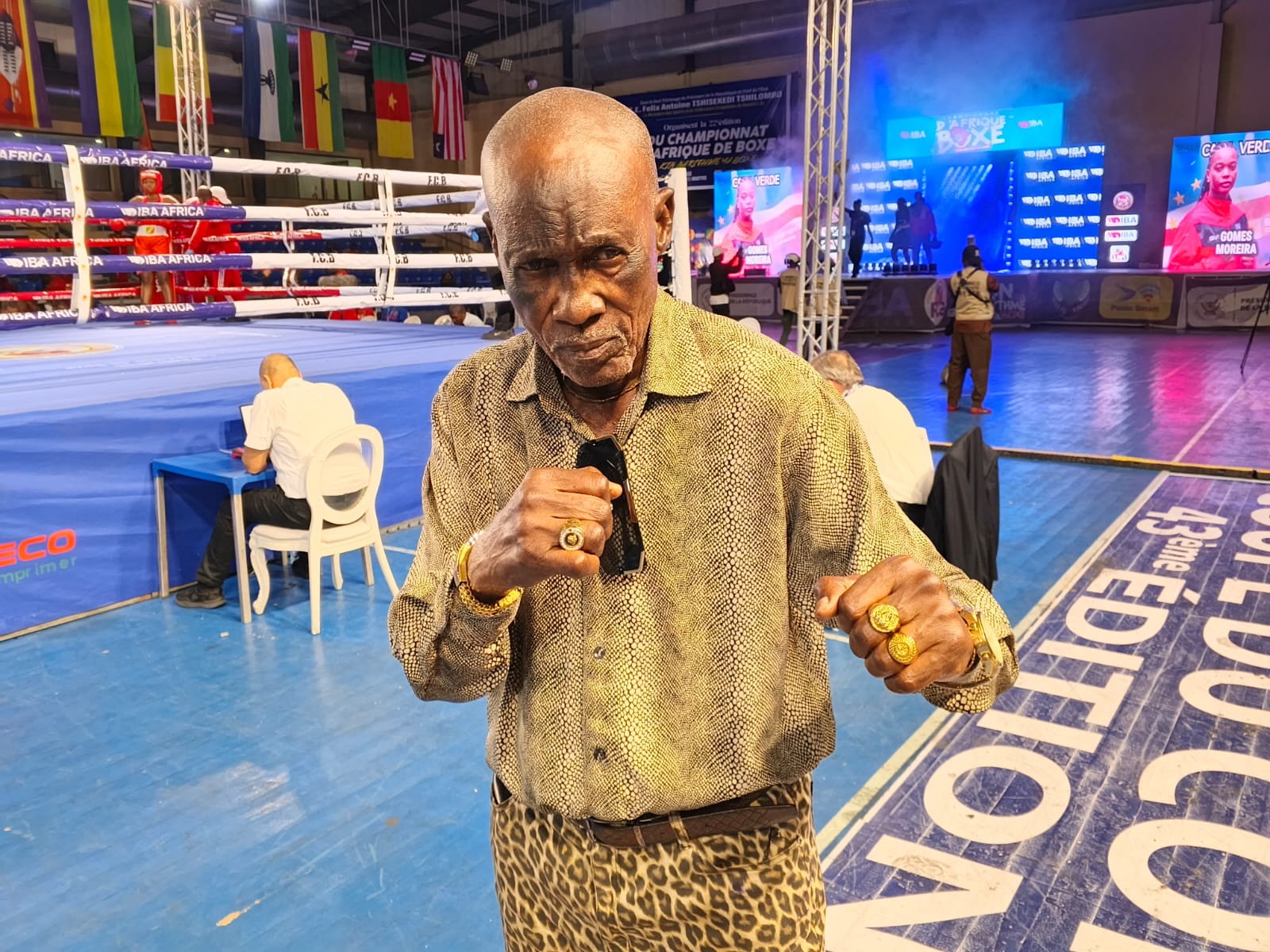
Speaking from the sidelines of the Africa Elite Boxing Championships at the Stade des Martyrs in Kinshasa, Mayambula (pictured) reflected on a magical time when global music icons like James Brown and Miriam Makeba descended on the city, and the streets hummed with historic energy.
The people’s champion vs the reserved giant
“All the Congolese were excited—it was a level of happiness that is difficult to explain,” Mayambula recalls.
“That day inspired a generation of young men to take up boxing, all of them trying to imitate the two heavyweights. But Muhammad was always the favorite.”
The difference lay in how both men embraced Zaire (now the Democratic Republic of the Congo). While Foreman remained reserved and detached, Ali fully immersed himself in the local culture. Though he trained out at a distant presidential estate in Nsele—requiring a long car journey to visit—Ali stayed centrally at the Grand Hotel (now the Pullman).
“Ali felt like a Congolese,” Mayambula says. “He would come right out of the hotel to speak with the ordinary people. He did his roadwork right alongside us, and they would watch us young local boxers training. During his training sessions, Ali would even lead the chants, singing ‘Ali, Boma ye!’ (Ali, kill him!) himself.”
A 6:00 pm arrival pm for a 2:00 am fight
On the night of the bout, Mayambula and his friends arrived at the Stade du 20 Mai (now Stade Tata Raphaël) at 6:00pm, despite the opening bell being scheduled for 2:00am to accommodate US closed-circuit television markets.
“My dad gave me some money to buy a ticket. I can’t remember exactly how much it cost now, but by the time we got inside, the stadium was already completely packed with people sitting everywhere, right down to the ground,” he says.
Conspicuously absent from the stadium seats was Zaire’s dictator, Mobutu Sese Seko, who had funded the record $10 million purse ($5 million for each fighter) to market his country globally. Fearing a security incident or a public coup under the global media glare, Mobutu chose to watch the historic upset via a closed-circuit feed from the safety of his palace.
A lasting boxing revolution
Ali’s legendary “rope-a-dope” tactic safely wore down the heavily favored, hard-hitting Foreman before unleashing the decisive eighth-round flurry.
For Mayambula, watching his idol mirror his own jab and dance across the ring cemented a lifelong obsession.
“The fight completely revolutionized boxing in the DRC,” Mayambula asserts. “Every young man wanted to move like Ali, fight like Ali, and be like Ali.”
Fifty-two years later, that spark has not faded. As he watches a new generation of continental talent exchange blows at the Africa Elite Championships, the Secretary General knows the foundational blocks of his federation were laid on that sweat-drenched, unforgettable morning in 1974.
boxersworld.co.ke