
▪️This gradual ascent on the canvas is the result of a deliberate, long-term strategic plan orchestrated by the boss of Congolese Boxing Federation and IBA Africa Interim President, General Ilunga Luyoyo, alongside National Technical Director Toussaint Lofanga and assistant national coach Ilunga Baoba
November 3, 2026
The Democratic Republic of Congo (DRC) has officially solidified its status as the undisputed king of African boxing, shattering continental records on home soil.
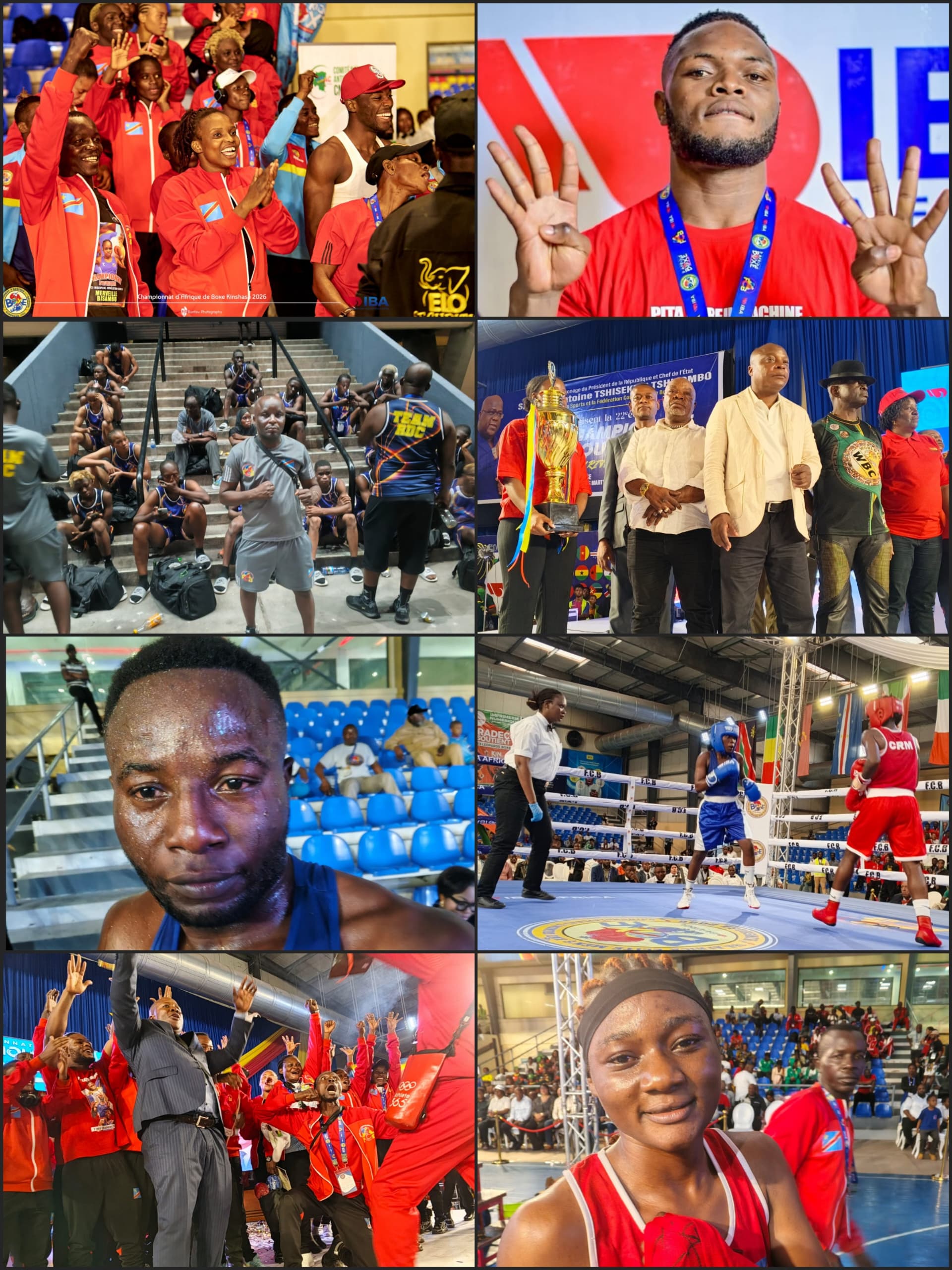
Concluding on October 31, 2026, at the Stade des Martyrs Gymnasium in Kinshasa, the 2026 IBA Africa Elite Men’s and Women’s Boxing Championships bore witness to a historic performance. The DRC team captured an unprecedented haul of 17 gold, 1 silver, and 6 bronze medals, culminating in a record total of 24 medals. This spectacular achievement eclipsed previous standards and marked a monumental leap forward for the Leopards, who finished as runners-up in both the 2023 and 2024 editions.
The driving force of this historic haul was a clean sweep by the Congolese women’s squad, who captured nine gold medals—including standout performances by defending champions Benedicte Diyoka (48kg) and Merveille Mbalayi Mbamba (63kg). Not to be outdone, the men’s squad won eight gold medals, spearheaded by dominant victories from seasoned icons David Tshama (75kg) and Peter Pita Kabeji (92kg).
The relentless ascent (2022–2026)
The modern era of Congolese boxing dominance has been defined by a well executed geometric ascent up the medal standings:
• 2022 (Maputo): The foundation was poured as the DRC finished 5th overall with a 2-3-4 medal tally, sparked by early continental titles from David Tshama (middleweight) and Pita Kabeji (light-heavyweight).
• 2023 (Yaoundé): The Leopards climbed to the 2nd spot overall, collecting a 5-6-4 medal haul to finish closely behind powerhouse Morocco.
• 2024 (Kinshasa & beyond): The DRC maintained its runner-up momentum behind Morocco on home soil (9-5-7), while simultaneously winning the inaugural Mandela Cup in Durban with a fierce 10-3-6 collection and finishing fourth at the African Games in Accra 2-5-4 to signal their expanding depth.
• 2026 (Kinshasa): Total supremacy. The host nation conquered 68% of all available gold medals in the tournament to sit standalone at the apex of African boxing. It will be interesting to see which country will better the astounding 17-gold medal harvest in Kinshasa.
A Heritage forged in gold
This modern-day golden age beautifully mirrors the country’s profound boxing lineage. The DRC’s very first taste of continental glory dates back to its debut at the 1968 African Boxing Championships in Lusaka, Zambia, where lightweight pioneer Cédar Sindo defeated Nigeria’s Dela Johnson in the finals. Four years later, at the 1972 Championships in Nairobi, the nation (then boxing under the flag of Zaire) placed 5th overall with one silver and three bronze medals highlighted by featherweight Mputu securing a hard-fought silver against Kenyan home favorite Sammy Mbogwa who was declared the Best Boxer.
The Luyoyo blueprint: commercializing African boxing
This phenomenal ascent on the canvas is the result of a deliberate, long-term strategic plan orchestrated by the boss of Congolese Boxing Federation and IBA Africa Interim President, General Ilunga Luyoyo, alongside National Technical Director Toussaint Lofanga and assistant national coach Ilunga Baoba.
Luyoyo’s vision seeks to rewire the African sports landscape by building sustainable economic self-reliance. Rather than treating boxing as a heavily subsidized amateur discipline or an exploitative pipeline for foreign promotional outfits, the federation has introduced a highly commercialized framework.
By seamlessly blending sovereign domestic backing with projected lucrative independent prize-money circuits—evidenced by Kinshasa independently hosting the 2024 African Elite Championships
and funding premier events without relying on traditional external international federation funding—the DRC is successfully transforming the continental boxing model.
The ultimate goal is to convert African soil into a premier destination capable of attracting elite international contenders from Europe, Asia, and the Americas, ensuring that home-grown talents no longer need to migrate abroad to achieve global prominence and financial security.