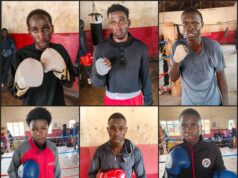



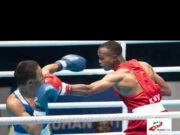
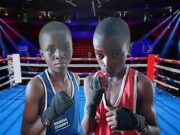

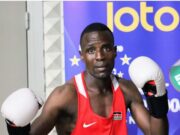
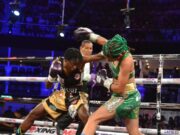
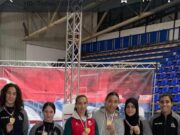
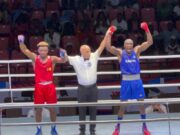
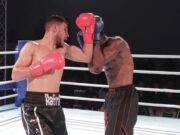


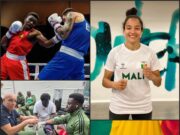

▪️Instead of sparring against the same local teammates day in and day out, the Zambians are sparring against boxers from different countries in Belfast
July 16, 2026
The pre-games training camp has been an absolute game-changer for the Zambian boxers. Leaving the familiar confines of the OYDC Zambia—Sports Development Centre in Lusaka, the team relocated to Belfast, Northern Ireland, to integrate with other international Commonwealth Games squads.
For rising talents such African Games featherweight bronze medallist Albert Ngulube and bantamweight Catherine Mwape, this camp has been an eye-opener. Instead of sparring against the same local teammates day in and day out, they are stepping into the ring with English, Canadian, and Northern Irish fighters. This melting pot of diverse boxing styles has enabled the Zambians learn to adjust to boxers with different styles such as southpaws, swarmers, counter-punchers, out-boxers, switch hitters and boxer-punchers.
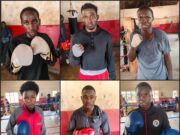
In addition to Albert Ngulube and Catherine Mwape, others are African Games silver medallists, bantamweight Mwengo Mwale and welterweight Emmanuel Katema.
To inject more finesse, Zambia Boxing Federation in conjunction with the Olympic Committee have hired British coach Karl Whalley who is working together with the national team head coach Charles Kangwa.
A former national champion and England L3 coach and technical educator, Whalley speaks highly of the Zambian boxers ahead of the Commonwealth Games in an interview with boxersworld.co.ke before they left for Belfast.
“This is a very good team that has benefitted from a full-time training camp partner,” said Whalley.
“I’ve noticed cardio vascular fitness has improved over 8% in all boxers. Local muscular strength has improved by over 20%. Technical and tactical awareness has been continuously reviewed. I trust that the team now Respects Everyone but Fears No One.”
Whalley went on: “We have focussed on specificity of training techniques: tactical, psychological, physical and spiritual are all elements we have reviewed and developed.
“Team Zambia’s strength are its people. The weaknesses centre at around limited infrastructure and equipment shortfalls. Holistically, we have a need for a future coaching strategy and talent pathway.
“We have engaged in a range of new coaching techniques, endurance training, resilience training and nutrition/weight management.
While Whalley reckons boxing has not changed much, he feels it’s important for African governments to invest on coaching and analytical processes.
“Boxing remains the same sport as it always has been,” said Whalley.
“However, many nations have invested heavily in coach education, analysis processes and boxer development. Promoting ‘next generation’ squad training, from school boxers to international competitors.”
He contends proper training is crucial for a boxer’s success but that’s not guaranteed.
“No matter how hard a boxer trains, their success can never be guaranteed. A good draw in the Commonwealth Games is always important. Keeping the athletes fit and focused is the key to success when boxing against such high-calibre of boxers. We have worked considerably on adapting our counter attacks and a more relentless approach to our competitors.”
Whalley’s first bout was on his 11th birthday and the last fight 17 years later. He has so far trained eight national champions and numerous regional champions in the UK.
The Zambia federation also hired a British coach, Barry Philpott for the 2022 Commonwealth Games in Birmingham, cruising to the final for the first time since the 2002 Commonwealth Games in Manchester.
Stephen Zimba was among the seven African boxers in the final but one of them, Ghana’s Joseph Commey, did not fight as he was unwell. Zimba lost in the final to Loan Croft of Wales. Zambia placed 11th overall with two medals, silver and bronze from flyweight Patrick “Baddo” Chinyemba.
Zambia has so far won a total of 29 medals – two gold, eight silver and 19 bronze – in the Commonwealth Games since their first participation in Edinburgh, Scotland, 1970. Light-middleweight Julius Luipa won a silver and two bronze medals from light-welterweight Paul Kayuba and middleweight Samuel Kasongo, finishing eighth overall.
The best ever performance by the Zambian boxers in the Commonwealth Games was in 1974 and 2002, finishing fourth overall in both Games.
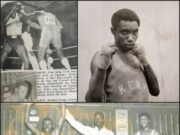
In the 1974 edition held in Christchurch, New Zealand, light-middleweight Lottie Mwale won Zambia’s first ever gold medal with bantamweight Newton Chisanga winning silver and a bronze from middleweight Julius Luipa.
At the 2002 Games in Manchester, England, flyweight Kennedy Kanyanta won Zambia’s second gold while lightweight Dennis Zimba brought home a silver with two bronzes by light-welterweight Davies Mwale and super-heavyweight Gozie Dijeh.
Turning to Glasgow, the Zambians are expected to maintain the momentum from their success at the 2025 IBA Men’s World Championships in Dubai where they emerged as the top-placed African nation, scooping two bronze medals through flyweight Patrick Chinyemba and light-welterweight Emmanuel Katema. Not only did they win bronze medals enabling Zambia finish 9th overall but they made $75,000 from the richest ever amateur boxing championships in the world with a total of $8.3 million at stake. Chinyemba lost in the semis to Russia’s Bair Batlaev while Katema was beaten by Omar Livaza of Kyrgyzstan.
Against this inspiring background, a lot is expected from the Zambians in Glasgow with Mwale and Katema carrying the hopes of the African continent.