












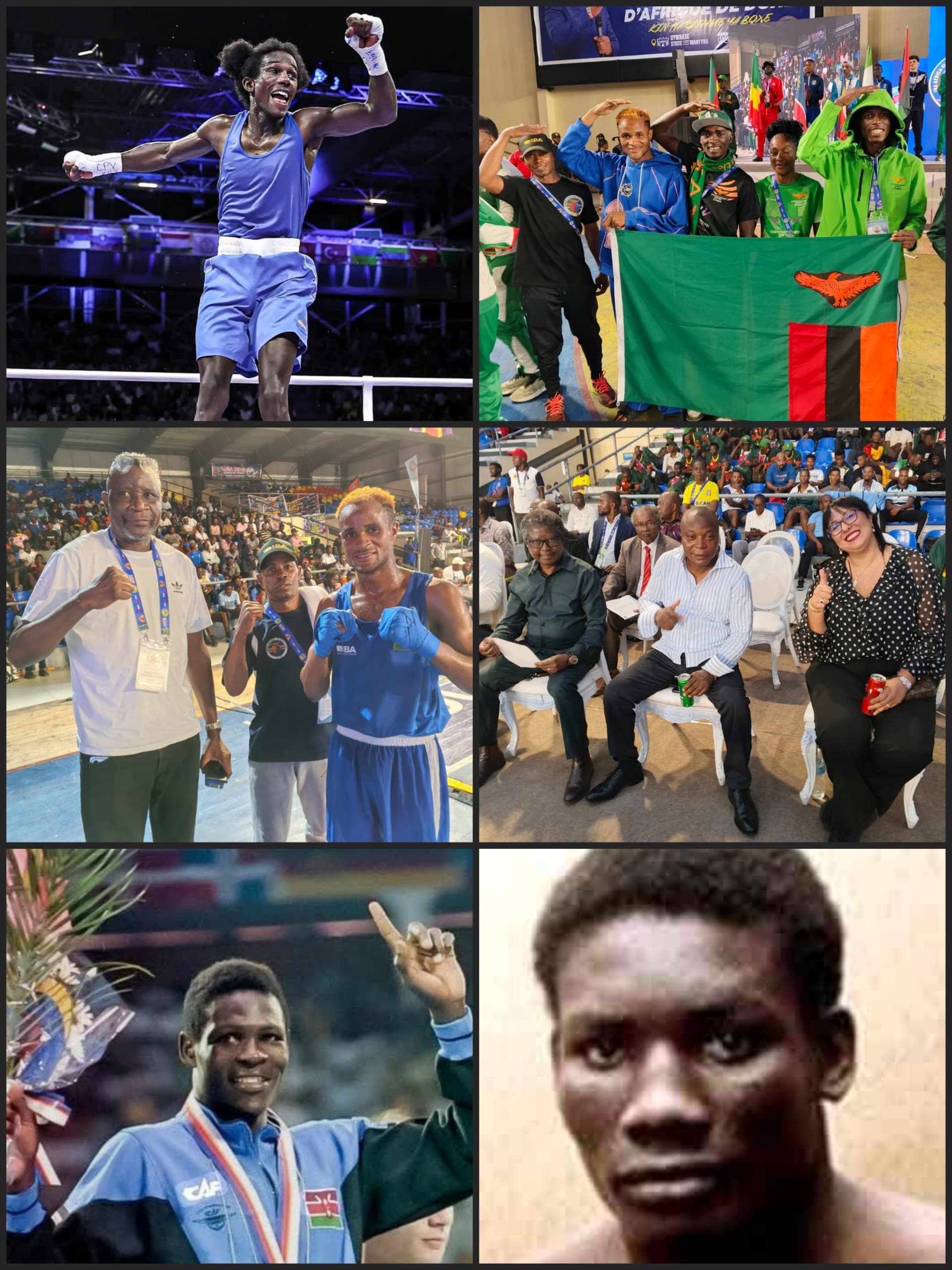
▪️After clinching third place in Kinshasa with three golds and one silver, Zambia’s boxers returned to an empty airport. This is a familiar story across Africa that IBA Africa Interim President General Luyoyo intends to rewrite with a wealth-building pro series and lucrative tournaments to save the sport from financial slavery of the West
November 26, 2026
African boxing has for decades suffered from chronic neglect by its own governments, forcing the continent’s finest pugilists to turn professional abroad or compete in lucrative tournaments like the upcoming IBA President’s Cup in Istanbul.
Despite possessing immense wealth and raw athletic talent, Africa remains a “sleeping giant” in boxing, leaving its fighters trapped in economic dependency on Western countries and foreign prize pools rather than staging rich, homegrown events that draw international talent to African soil.
Breaking this cycle of reliance on external handouts is a central pillar of IBA Africa Interim President General Luyoyo’s vision to generate sustainable wealth for fighters at home. His urgency is underscored by recent governmental snubs, most notably when a five-member Zambian boxing squad returned home to a cold reception despite minting an extraordinary three gold medals and a silver.
Their trip to Kinshasa was made possible by Luyoyo who funded travel and accommodation expenses of 17 countries.
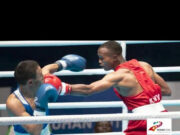
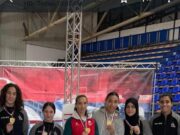
The Zambians put up a sterling show to finish third overall with three gold medals and a silver in the 2026 IBA Africa Elite Men’s and Women’s Boxing Championships in Kinshasa. They trailed overall winners Democratic Republic of Congo and Cameroon.
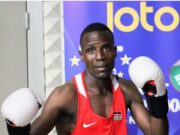
Yet when the gallant boxers returned home there were no government ministers waiting at the terminal. There were no brass bands, no television cameras, and no invitation to State House or the Ministry of Youth, Sport and Arts. Worse still, gold medallist Gerald “Boyka” Kabinda returned home not to a hero’s bonus, but to a debt collector.
“He borrowed money to go to Kinshasa. He needs to pay it back,” Zambia Boxing Federation (ZBF) President Boniface Sokoni revealed during a press briefing in Lusaka.
Kabinda’s plight lays bare a bitter paradox that has haunted African boxing for half a century: the men and women who bleed to hoist their national flags on the world’s grandest stages are routinely abandoned by the very governments that bask in their glory.
“What surprised us most is the warm reception accorded to a bronze medallist in judo at the Youth Olympics, most of the top government and NOC officials were at the airport but on our part we did better but ignored,” noted Sokoni.
For Zambia, boxing is not a fringe pastime; it is the bedrock of the nation’s sporting history. Long before modern track stars entered the spotlight, it was an 18-year-old flyweight from Chingola, Keith “Spinks” Mwila, who delivered Zambia’s first-ever Olympic medal, claiming bronze at the 1984 Los Angeles Games.
Over the decades, legends like Lottie Mwale, Julius Luipa, 2002 Commonwealth Games flyweight champion Kennedy Kanyanta, Esther Phiri, and African Games gold medallist Patrick Chinyemba have kept the Zambian flag flying in international rings.
Interestingly, ZBF’s sponsorship application went unapproved by the Ministry of Youth, Sport and Arts, despite the federation fulfilling requirements set by the National Olympic Committee of Zambia.
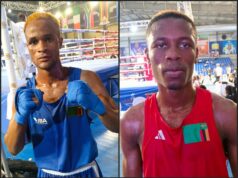
Forced to slash an original 15-athlete squad down to five—Mwengo Mwale, Albert Ngulube, Emmanuel Katema, Gerald Kabinda, and Catherine Mwape—the team made it only through the generosity of General Luyoyo’s deep pockets. They survived in Kinshasa without allowances.
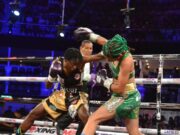
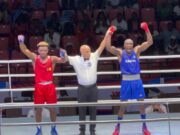
Mwale, Ngulube, and Kabinda struck gold and Mwape claimed silver with Emmanuel Katema bowing out early after an overzealous ringside doctor decided to stop the fight through a minor injury.
Yet after this magnificent showing, the state’s silence upon their return was deafening.
Zambia’s institutional apathy is far from an isolated scandal; it is an epidemic stretching from the Atlantic archipelago of Cape Verde to the highlands of East Africa.
At the 2024 Paris Olympics, David Pina etched his name into the history books by winning a bronze medal in the men’s 51kg division—the first Olympic medal of any kind for Cape Verde. Weeks after uniting his nation, Pina publicly expressed his heartbreak when he received a state reward of just $5,000. After paying five months of rent in Portugal and sharing a cut with his coach, the historic medallist was left with virtually nothing.
“Unfortunately, my country doesn’t have plans for sports; they don’t guarantee our future as athletes and life after their career,” Pina lamented.
In East Africa, the cautionary tales are even more sobering. Kenya and Uganda once ruled amateur boxing, producing Olympic and world champions whose names commanded global respect. Today, their legacies serve as an indictment of state neglect.
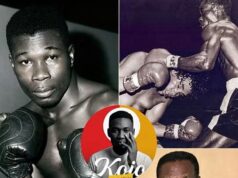
- Philip Waruinge (Kenya): Widely regarded as Kenya’s greatest amateur boxer, Waruinge won bronze at the 1968 Mexico Olympics – becoming the only African ever awarded the prestigious Val Barker Trophy for the tournament’s most outstanding boxer – before adding Olympic silver in Munich in 1972. After retiring from pro boxing in Japan, he faded from public view, raising chickens on the outskirts of Nakuru. When he died in October 2022 at age 77, not a single national or county government official attended his burial in Njoro but a few weeks later top government officials led by then CS Ababu Namwamba attended the burial of Wilson Kiprugut Chumo, Kenya’s first Olympics medallist in 1964 in Tokyo where he won bronze.
Stephen Muchoki (Kenya): A 1974 World Championships silver medallist, 1978 World Champion, and Commonwealth Games gold medallist, Muchoki is a living reminder of state neglect. Not even a house was given to Muchoki to recognise his achievement of becoming Kenya’s first and so far the only one to have won a world title in amateur boxing.
Ayub Kalule Uganda: He is a former world title holder in amateur and pro boxing. He has endured periods of neglect and is currently ailing but the Ugandan government has done nothing to assist him. Kalule is Africa’s first ever boxer to win gold at the 1974 World Championships in Havana, Cuba.
Even more heartbreaking is the fate of Kalule’s compatriot, two-time Olympic medallist Leo Rwabwogo, the legendary flyweight boxer who remains one of Africa’s greatest Olympians after winning bronze in 1968 and silver in 1972. He spent his final years struggling financially before passing away in poverty. So did his compatriot Eridadi Mukwanga, a silver medallist at the 1968 Mexico Olympics.
Cameroon: Joseph Bessala, the formidable welterweight who won Cameroon’s very first Olympic medal (silver at the 1968 Mexico City Games) and inspired generations of Central African fighters, died in abject poverty in 2010, largely forgotten by the nation he first put on the Olympic podium.
A glimmer of hope from Kinshasa and an urgent call to action
If African governments continue to fail their fighters, an unexpected lifeline is emerging from my within boxing’s own leadership.
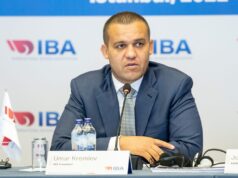
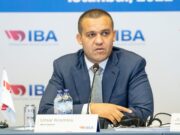
Under the stewardship of IBA Africa Interim President General Ferdinand Ilunga Luyoyo of the DR Congo, continental boxing is witnessing a rare display of practical, deep-pocketed commitment.
During the Kinshasa championships, Luyoyo personally stepped in to cover the travel, accommodation, and per diems of 17 African nations, a gesture that directly rescued delegations like Zambia’s from staying home.
Beyond keeping tournaments afloat, Luyoyo has outlined ambitious plans to transform the economics of African boxing, including launching a professional series tailored for African amateur boxers so fighters can earn a sustainable living without abandoning their Olympic dreams, and hosting a grand gala dinner to honour Africa’s neglected boxing icons.
Gala dinners and prize purses are a vital start, but for aging legends who gave their youth and health to the ring, applause alone will not pay hospital bills. African ministries of sport and continental bodies must go further by establishing urgent, comprehensive medical insurance and pension cover for retired national medallists.
Until governments learn to honour their champions while they are still alive—and fund their journeys before they have to borrow bus fare to win gold—the shame of Lusaka’s empty arrivals hall will remain a stain on African sport.