GHANIAN TRIO SET FOR GLORY AT INAUGURAL WBC GRAND PRIX
Ghana’s boxing prowess will be on full display as three of the nation’s most promising fighters — Holy Dorgbetor, Samuel Quaye and Shakul Samed — prepare to battle against the world’s best at the maiden WBC Boxing Grand Prix in Riyadh, Saudi Arabia, next month.
The trio, selected from a competitive pool of 128 fighters across 41 countries, will step into the ring from April 17-20 for a shot at global stardom in what promises to be one of the biggest boxing spectacles of the year.
The four-day event is more than just another tournament — it represents a once-in-a-lifetime opportunity for the three Ghanaian warriors to announce themselves on the world stage.
The WBC Grand Prix, organised by the World Boxing Council (WBC) in collaboration with Saudi Arabia’s Riyadh Season sports initiative, is a groundbreaking competition designed to unearth the next generation of boxing superstars.
A long-cherished vision of the late WBC President Don José Sulaimán, this event is billed as the first-ever Boxing World Cup and will feature four weight divisions: Featherweight, Super Lightweight, Middleweight and Heavyweight.
With 32 fighters in each category, the tournament adopts a straight knockout format, spanning five rounds across the year. Unlike conventional boxing events, there will be no draws — every bout must produce a winner.
To ensure fairness and transparency, the tournament will feature open scoring after rounds two, four and six, as well as instant replay technology to eliminate controversial decisions.
“This is a dream of a great man like José Sulaimán, and thank God his son Mauricio has continued it. We will support the Riyadh Season WBC Grand Prix with all our might to make it a worldwide success,” His Excellency Turki Alalshikh, Advisor at the Saudi Royal Court and Chairman of the General Entertainment Authority, said.
Ghana’s Warriors
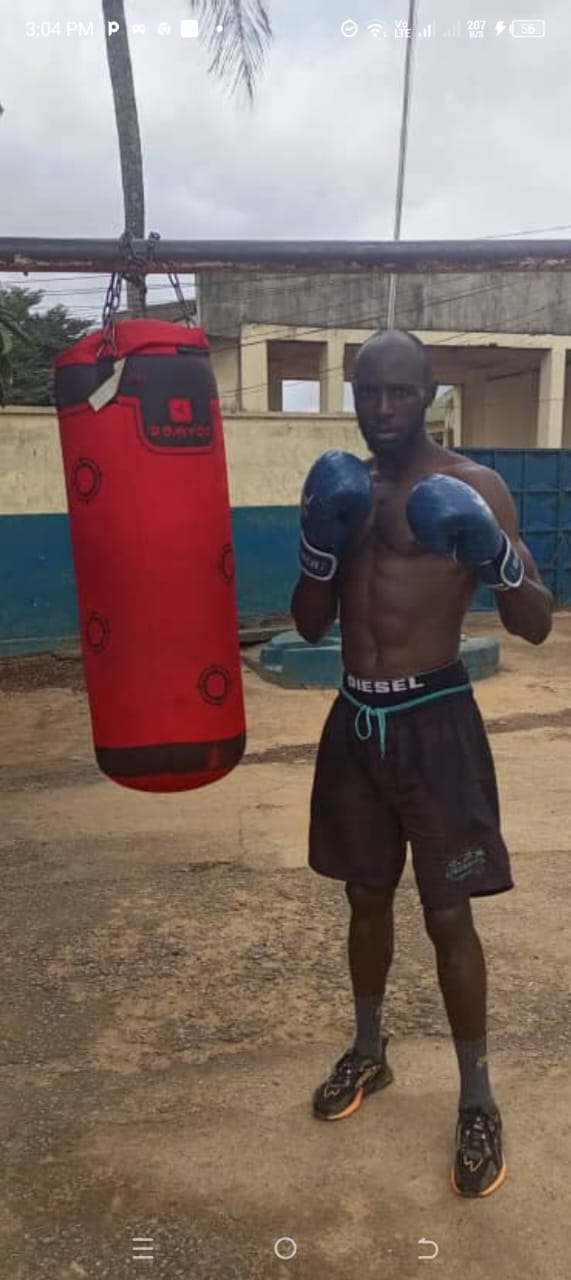
Holy Dorgbetor (Featherweight) – Rising Star
At just 25 years old, Holy Dorgbetor is one of Ghana’s brightest prospects, boasting an unbeaten record of 12 wins, one draw and seven knockouts.
The IBF Continental Africa champion and former Ghanaian and UBO Africa titleholder has been in relentless form, and he sees the WBC Grand Prix as his golden opportunity to make a global breakthrough.
“I am very excited to be selected for the WBC Grand Prix. I am training hard to showcase my skills and make my family, my manager and Ghanaians proud,” Dorgbetor told the Graphic Sports.
“I appeal to Ghanaians for their support and prayers so I can return as a champion,” he added.
Samuel Quaye (Super Lightweight) – Comeback King Nicknamed “No Chance”, Samuel Quaye, 22, had a difficult start to his professional career, suffering a defeat on debut in 2022.
However, he bounced back in style, embarking on a 10-fight winning streak that saw him claim the Ghana super lightweight title last year.
With his fearless fighting style and rapid rise through the ranks, Quaye is eager to prove he belongs among the best in Riyadh.
Shakul Samed (Middleweight) – Knockout Machine
The youngest of the famous Samir boxing family, Shakul Samed, is already carving his own legacy.
A decorated amateur who competed at both the Olympic Games and Commonwealth Games, 25-year-old Samed has made a seamless transition to the professional ranks.
Since turning pro in March 2023, he has won all nine of his fights, eight of them by knockout. His most recent victory — a devastating first-round KO of Benin’s Fataou Garadima Yacoubou at the Accra Sports Stadium—sent a clear warning to his rivals.
Morocco's world bantamweight champion Widad Bertal was Africa's most successful performer in Serbia. Below her is team manager Nabil Hilmi.
WHY MOST AFRICAN COUNTRIES FLOP IN WORLD BOXING TOURNEY
Morocco once again emerged as the most successful African country in the Women’s World Boxing Championships in Serbia.
The Moroccans topped Africa by placing seventh overall with a gold from bantamweight Widad Bertal and light-heavyweight Hasnae Larti’s bronze medal behind winners Russia followed by Kazakhstan and Turkey in third place.
It was a repeat performance by Morocco who also won gold and bronze at the 2023 Women’s Worlds in India to finish sixth overall behind winners India, China and Russia in that order.
In an interview with boxersworld.co.ke, Morocco’s team manager Nabil Hilmi said they owe their success to the overwhelming support from the government which closely monitors their performance in major international events. For instance, after what the government described as Morocco’s dismal performance at the Paris Olympics, the entire technical bench was sent home and in came Cuba’s experienced Juan Carlos Maestre as the head coach. He’s handling a highly motivated team.
Morocco’s light-heavyweight bronze medallist Hasnae Larti was Africa’s second best performer in Serbia.
“The Morocco government in general and the ministry support us in our projects and our vision on how to improve boxing,” says Nabil.
He further elaborates on their preparations before the Serbia Worlds.
“Before going to Serbia, we first prepared in Casablanca then we participate in the Belgrade International Tournament. After Belgrade, we had a training camp in Montenegro for three weeks with other teams like Serbia and Turkey.
“Our team is also disciplined, dedicated and motivated largely because the government inspires our boxers.”
Kenya’s head coach Musa Benjamin explains their inability to rise up to the occasion which resonates with other underperforming African countries.
Says Musa: “Lack of serious competitions at home and the continent at large is clear.This is why countries like Morocco, Algeria,Tunisia are always in Europe for training and competitions.”
The Kenya team had three debutants in the Serbia Worlds, flyweight Lencer Akinyi, lightweight Emily Juma and light-welterweight Cynthia Mwai.
The Kenyan coach says owing to lack of exposure and regular competitions some African boxers such as three in his team and Zimbabwe made their international debut in the World Championships fighting against better exposed and well prepared boxers.
Musa went on: “You cannot coach experience. Whatever you coach/teach/train a boxer if not put in practice (competition) will never stick.
When done with driving school, then you don’t get a car to continue driving, the training becomes useless!”
Against such background, one would ask is there any need to enter half-baked teams in such high level tournaments?
“Certainly it’s useful to take our girls there,” says Musa, “because this is the only exposure they get, if we don’t take part where else will they be exposed?.”
Musa says there’s potential in Kenya and Africa as a whole but without proper preparations, African teams especially those south of Sahara will not excel at the big stage.
“Without training camps where all daily sessions can be realised, exposure and many tournaments in Africa, competing at this high level becomes difficult.
Exposure is mandatory.The last time our Kenyan boxers participated in a serious tournament was October last year in DRC in the Africa Championships compared to the European and Asian boxers who are constantly in action in their busy calendar of events. Locally, we don’t have depth so competition isn’t stiff resulting to complacency and standards going down.”
Zimbabwe’s head coach Alexander Kwangwari was satisfied with the performance of his three debutants in the Women’s Worlds, flyweight Agnes Kwashi, featherweight Lovelight Fusire and lightweight Hildah Kaye.
Zimbabwe’s Hildah Kaye (right) lost to Christina Kuluhova of Serbia at lightweight.
“I’m proud of my girls because they were new in the World Boxing Championships but we promise that next time when we get another chance we will make it,” says Kwangwari.
“My boxers gained a lot of knowledge but compared to what I saw in Serbia, we’re not very far from the European and Asian boxers. I thank the IBA for their support.”
Interestingly, the leaders of the two wrangling factions in African boxing have not issued any comprehensive statement on Africa’s show in Serbia and way forward. They’re busy battling for power oblivious of the boxers’ needs. Don’t be surprised if they didn’t watch a single session in Serbia. Their scope is limited as usual.
Most important however is the support of African governments for success in the global events. Catering for travel expenses, allowances and accommodation is commendable but without physically getting involved in the teams’ preparations – a vital component for success – is akin to building a house on quicksand without a strong foundation.
NAMIBIA’S RENOWNED BOXER NAKATHILA IS NOW CEO OF BOXERS WORLD WEBSITE
Namibia’s distinguished professional boxer, Jeremiah Nakathila, is now the CEO of Africa’s fastest rising boxing website, the prestigious boxersworld.co.ke.
Nakathila will now be a co-owner of the site and brings with him wealth of boxing experience, managerial acumen and impeccable contacts to assist in the growth of this popular site which is the official Voice of the African Boxer.
“I’m thrilled to team up with my good friend from Kenya, John Nene, who I believe is one of Africa’s best Multimedia Sports Journalists. He has worked with various leading media organisations including the famous BBC World Service,” said Nakathila in a statement.
“As the CEO I will use my wide contacts to ensure the financial stability of this important site giving African boxers prominence. It is also our watchdog to safeguard the rights of the African boxer. I’m really impressed by the professional content in this site.”
We in boxersworld.co.ke warmly welcome Nakathila as one of us. We are looking forward to his invaluable input and expertise on the growth of this authoritative online boxing site which is the brainchild of our Chief Editor and Content Creator, John Nene.
He started covering the sport in 1980 and he has done it for four decades. Nene worked for renowned publications such as Weekly Review/Nairobi Times owned by the late media guru Hilary Ngw’eno.
Namibia's top pro boxer Jeremiah Nakathila scored an upset sixth round TKO win over former Mexican world champion Miguel Berchelt (left) in Las Vegas in 2022 in a fight which earned a fat paycheck investing part of the money in his Low-Key Pub in Windhoek.
NAMIBIAN STAR BOXER DOING ROARING BUSINESS AT HIS PUB
Namibia’s richest professional boxer Jeremiah Nakathila (third from left) hanging out with buddies at his Low-Key Pub in Windhoek.
It’s a Friday as patrons sample an assortment of drinks, others watching TV cracking jokes faces radiant with joy. A bartender is moving round to make sure the revellers have enough stock.
Drinks are flowing fast with Windhoek draught beer the choice of most of them. As the music gets louder, some decide to shake a leg to unwind after a busy week in their respective places of work.
The stomach is also a big beneficiary of this now packed pub with roasted and boiled goat meat whetting their appetite. One or two innocent goats must have lost their lives it seems.
Welcome to Low-Key Pub owned by Namibia’s celebrated professional boxer Jeremiah Nakathila. Low-Key is Nakathila’s nickname in the ring.
Revellers having fun at Low-Key Pub.
Nakathila, who is a Warrant Officer in Namibia’s Police Force, has been running the business for the last five years years in the capital city Windhoek, Hakahana location.
“I bought a house beginning of 2019 then I converted it into a pub,” says Nakathila who returns to the ring in June or July this year in the USA.
“It’s a very productive business because I have a lot of fans at home, they always turn up to support my business. It’s one of the best decisions I made.
“At Low-Key pub, I also have a restaurant, my customers drink and eat at the same place. I normally slaughter two goats especially at the end of the month when the customer flow is good. We roast and boil meat, Namibians like goat meat very much and prefer to eat it just like that.
“We also prepare pap or ugali as they call it in Kenya, some of my customers are from Kenya, Zimbabwe, Botswana and South Africa. They enjoy it a lot as they don’t like drinking on an empty stomach. We sell different type of drinks. However, Windhoek draught beer is the favourite drink for most of my patrons,” says the boxer.
“Our music is the best in town from kwaito, afro pop, reggae, rhumba and many more. We make sure we play what the customers want. I work with different DJs but the key ones are DJ Kassie and DJ Paul. I’ve worked with them for four years now. I have five employees thee males and two females. One of the males is strictly a driver. We also have a take away shop where we sell a variety of food every day,” Nakathila reveals.
“I have invested big amount of money in my pub which in return earns me a reasonable monthly amount. In addition to it, I have a lot of other businesses that serve the police,” adds the international boxer.
Family and Other Businesses
Through his ring earnings, Nakathila bought three houses in Windhoek. One is where he’s operating his pub, he rents another house and the big one is where he lives with his family. He has a beautiful wife called Penny and they have two children, eight-year-old boy Mateus Lipinge and six-year-old daughter Isabel. “My wife rarely comes to the pub unless there’s a music show to assist me,” he reveals.
Nakathila with his pretty young wife Penny.
Nakathila is also a proud owner of a football club at his Low-Key Pub. “I was once a footballer, and played as a defender because that’s the only sport that existed where I grew up,” he recalls.
“I have an annual tournament known as Jeremiah Nakathila tournament featuring football, volleyball, boxing and tug of war every December,” he says.
Nakathila has indeed made hay while the sun shines as he also has a Day Care Centre for children near Low-Key. Moreover, he used to sell cars some time back.
Endorsements
The professional boxer also markets and advertises for Namibia’s giant telecommunication company, MTC Spectra. “I’m their Ambassador, they pay me good money, I can’t complain.”
Nakathila is an ambassador for Namibia’s giant telecommunication company MTC Spectra. He makes good money here from his image being used by the company.
“How much do they pay?” I ask putting him in a tight corner but he ducks my punch smartly. “Well, that’s now a deal between me and the telecommunication company,” he responds with a chuckle.
Boxing Career
“I have been a WBO Africa lightweight champion since 2016, and in 2019 I became a WBO global champion. So I saved the little I was getting through the fights. However, the USA bouts brought me more money, my payment in one fight combined all the past fights at home,” he discloses
The biggest paycheck he’s gotten in pro boxing was in 2021, in his fight with renowned American, Shakur Stevenson in Las Vegas. Shakur decisioned Nakathila to win the vacant WBO interim junior lightweight title.
Nakathila (right) in action with Shakur Stevenson in 2021 in Las Vegas.
The following year at Resorts World in Las Vegas, Nakathila scored an upset sixth-round TKO win over former Mexican world super-featherweight champion Miguel Berchelt. All fights were made possible by his well-connected promoter Nestor Tobias.
“Nestor has played a key role in my pro boxing,” says Nakathila, adding: “I cannot thank him enough, he gave me a better life through his connections with Top Rank arranging big fights for me and good money he’s a great man the top promoter in Africa I can say.”
Namibia's top professional boxer Jeremiah Nakathila, Kenya's Commonwealth champion Sarah Achieng and Zimbabwe's promoter Clyde Musonda say the prize money earned by amateur boxers in Women's World Championships in Serbia is way above what pro boxers are paid in Africa.
IBA AMATEURS HIGHLY PAID THAN AFRICAN PRO BOXERS
“We just have big titles and belts but no money,” says Kenya’s Commonwealth super lightweight champion and WBF world lightweight title holder Sarah Achieng.
Zimbabwe’s renowned promoter Clyde Musonda didn’t mince his words when I asked him how many years it can take a pro boxer in Africa to make $100,000, the prize money for gold medalists at the just-concluded Women’s World Championships in Serbia.
“In African professional boxing, it can take ten years for a boxer to reach that figure from accumulated payment per fight,” revealed Musonda in an interview with boxersworld.co.ke.
“The money in the world championships in Serbia is way above what African pro boxers earn here, the prize money for the IBA amateurs is very attractive as compared to what we pay in Africa.”
For all the razzmatuzz and flashy posters on social media, Musonda is brutally honest as he says it’s all showbiz but the truth is that African pro boxers earn a pittance.
“The biggest problem we have in Africa as promoters is lack of sponsors and TV rights,” explains the former Zimbabwean international boxer.
“In country’s like Russia, TV’s even control pro boxing by deciding on the dates, TV stations are in charge of boxing but in Africa they want to be paid by the promoters for covering their card, we still have a long way to go in our continent.”
“It will probably take a pro boxer based in Africa 10 years to make $100,000,” says Zimbabwe’s leading promoter Clyde Musonda pictured with his boxer Kudakwashe Chiwandire.
Musonda says the foreign promoters take advantage of the current situation in Africa when they invite us for fights overseas.
“I remember when I took my boxer Kudakwashe Chiwandire for a WBC title fight in Mexico, they wanted to pay her $10,000. I refused I told them if that’s the case I can invite you to Africa for the same amount, eventually they agreed to pay her $20,000.”
What’s the average purse paid to boxers campaigning in Africa?, I ask Musonda.
“To be honest with you it’s not more than $10,000, I’ve done matchmaking for many years, payment is always less than $7000. However, it varies with different promoters but it’s approximately between $1000 to $7000.”
Namibia’s celebrated pro boxer Jeremiah Nakathila aka Low Key concurs with Musonda that amateur boxers in the IBA world tournaments earn more than African pro boxers.
Commenting on the top prize money of $100,000 in Women’s World Championships in Serbia, Nakathila says: “There are levels and few countries in the continent can produce an elite boxer who can generate $100,000 per fight. To be honest, most, if not all, African pro boxers don’t reach that good payday until they retire from boxing.”
The professional boxer says it’s very difficult for a pro boxer in Africa to earn more than $25,000, the money offered to bronze medalists in Serbia.
“When fighting in Africa it’s hard to be paid $25,000. I’m not sure if I can get an offer of more than that unless one is fighting overseas,” he says. “I get over $25,000 in two fights outside Africa,” he reveals.
Nakathila (left) in a past fight is ready to feature in IBA Champions Night fights.
Nakathila hails IBA for paying boxers handsomely which he describes as a big inspiration for them to excel. The boxer says he’s ready to feature in the IBA Champions’ Night fights if invited.
“For sure if I get such an invitation from IBA I’ll take it with both hands. I’m very impressed with IBA’s high standards.”
Kenya’s Commonwealth champion and WBF title holder Sarah Achieng aka Angel of War is also keen to participate in IBA Champions’ Night series.
“I love the professional manner in which the IBA organise their events and their good purse, it’s so colourful. I’m always ready to fight in their card if I’m invited,” says Achieng, citing the prize money in Women’s Worlds in Serbia.
“Most boxers in Africa are earning way below compared to amateur boxers who were fighting in Serbia,” says Achieng.
“Even title fights here don’t pay what a bronze medalist ($25,000) earned in Serbia. It could take a decade for an African pro boxer to make $100,000 unless they land a big international fight.”
Achieng has so far defended her Commonwealth title twice but financially she has not benefitted from the title she captured in 2021 when she outpointed Malawi’s Anisha Basheel at the Charter Hall. Her purse for winning the Commonwealth title didn’t exceed $3000.
“We just have big titles and belts but no money. Lack of regular fights and low purses paints a bleak future for pro boxing in Africa.”
Achieng is of the opinion if the situation doesn’t improve some boxers will give up and turn to other careers.
“Pro boxing in Africa needs proper structure, more business-minded people investing in the sport, consistent promotions and good TV deals. Unfortunately, in Africa we don’t have TV sponsoring fights like in Europe and the USA. We have a long way to go in the continent.”
Achieng congratulated compatriot Liz Andiego for earning $10,000 (Ksh1.2 million) in the Serbia World Championships.
“That’s good money for Andiego I’m proud of her determination and consistency, what she earned is enough to pay like 20 boxers in a Kenya pro boxing card.”
Liz ameomoka...Kenya's Elizabeth Andiego far left is joined by her teammates to receive her dummy cheque of $10,000 for quarter-finalists at the just-concluded Women's World Boxing Championships in Serbia.
NINE AFRICAN BOXERS REAP $195,000 IN SERBIA WORLDS
Lucky Liz Andiego laughing all the way to the bank Ksh 1,296,700 richer
It was a rich harvest for nine African boxers who minted a total of $195,000 in the one-week Women’s World Boxing Championships in Nis, Serbia.
Morocco’s newly-crowned world bantamweight champion Widad Bertal topped with $100,000 for winning gold in the finals. That’s a huge sum of money which if well invested will make a big difference in Bertal’s life and her family. At 25 years, Bertal still has a lot of gas in her to continue making more money in the IBA tournaments.
Nigeria’s Patricia Mbata (second right) chats with IBA’s Secretary General and CEO Chris Roberts OBE.
In second place on Africa’s top earners in Serbia is Morocco’s Africa light-heavyweight champion Hasnae Larti who made $25,000 for winning bronze. That’s the money to be paid to the two losing semi-finalists in each of the 12 weight categories.
Then we have the seven losing African quarter-finalists including the luckiest of them all Kenya’s Liz Andiego who received a bye to the quarters for the third time in a row. Unfortunately, this also happened to her in the 2022 and 2023 Women’s World Championships.
This time around, the 38-year-old Andiego was even luckier than in the past two Women’s Worlds, for she benefitted from IBA’s newly-introduced prize money for quarter-finalists.
At the current exchange rates, that’s Kshs1,296,700 earned in less than five minutes by Andiego, the face of female boxing in East Africa. I hope big organisations such as Safaricom and Sportspesa will now use her image as an Ambassador of women’s boxing in the region. Automatically this will enable Andiego to earn more money and to be a shining example to upcoming female boxers.
In an interview with boxersworld.co.ke from Serbia, Andiego said she’s now reaping the fruits of her resilience, perseverance and determination.
“First I thank God for this far I have come, it’s through hard work, determination and consistency over the years,” said Andiego, and went on: “It’s not in vain it’s paying off now, it’s now 15 years since my first world championships, not giving up and pushing on every year.
“Thanks to IBA for introducing prize money for the lower stages because it motivates boxers and changes their lives. I’m very grateful to IBA especially for enabling quarter-finalists earn prize money for the first time.”
In addition to Andiego, the other six African quarter-finalists who earned prize money are four Moroccans minimumweight Rabab Cheddar, flyweight Imane El Azami, welterweight Mounia Toutire and light-middleweight Saida Lahmida, Sierra Leone’s lightweight Josefien Betist and Nigeria’s London-based middleweight Patricia Mbata.
The prize money for all the boxers in Serbia will be wired to their bank accounts by the IBA.
MOROCCAN BERTAL EARNS $100,000 IN JUST NINE MINUTES!
It’s gold for Morocco and gold for Africa!
Two-time Africa champion Widad Bertal outpointed Turkish Olympic silver medallist Hatice Akbas in the final bantamweight bout of the 2025 Women’s World Championships in Nis, Serbia, on Sunday, March 16.
In just nine minutes, Bertal minted $100,000 the top prize for the gold medalists while Akbas earned $50,000 for silver medalists, courtesy of the world’s richest amateur boxing body, International Boxing Association (IBA).
What a memorable achievement for Bertal who now becomes the second African female boxer to win a world title after her compatriot, Khadija Mardi who won gold at the 2023 World Championships in New Delhi, India.
The fight did however not produce the expected fireworks and skillful boxing.
Both boxers had to be told by the referee to engage in the first round instead of dancing in the ring without attacking punches. Akbas then piled on points on the retreat with Bertal hardly landing any telling punch. She won the round unanimously.
Bertal started the second round aggressively, time and again unleashing sporadic combinations that landed on target to take the round 4-1 points.
The Moroccan maintained the same approach in the third round, carrying the fight to Akbas but constant holding by the two boxers messed up the pattern of the fight which I thought would be a clinch-free action-packed encounter.
In the middle of the round, Akbas touched the canvas with both gloves. That should have resulted in a standing count because it’s the same as a knockdown but the referee closed her eyes to that anomaly. Bertal should have also been counted when she took a knee signalling to the referee her head guard needed adjustment.
Bertal, who is also the African Games champion and Paris Olympics quarter-finalist, maintained her work rate landing smart combinations on Akbas’ face to win the fight by 3-2 decision that went for a Bout Review with the Moroccan prevailing 5-2, meaning the two extra judges both scored the fight in her favour. A fair decision indeed.
Well done Bertal. You can now dance all night long and screeeeeeam if you want. You’ve done Africa proud.
In 2021, Zimbabwe's acclaimed referee\judge Steve Masiyambumbi sold his car to attend R&J Star-3 course in Dubai. His investment finally paid dividends. Today the globetrotting Steve is the only qualified Star-3 R&J in Sub-Saharan Africa.
ZIMBABWE’S RENOWNED R&J SOLD HIS CAR TO ATTEND STAR-3 COURSE
Steve Masiyambumbi is currently in Serbia officiating in World Women’s Boxing Championships.
One of Africa’s top boxing referee/judge Steven Masiyambumbi is now living his dream and his wife Cynthia has played a pivotal role in supporting and guiding him to be where he is now.
Zimbabwe’s former international boxer Steven Masiyambumbi was seized with an intense desire to become a Star-3 referee/judge when he switched to officiating boxing matches in 2014.
“I knew if I got to that grade I’ll be able to officiate in big international tournaments such as the World Championships and Olympic Games. However, for one to officiate at that level you must be a 3-star R&J,” explains the 41-year-old father of two boys.
As the burning desire to attain his ambition was building up, at the back of his mind he was always thinking of one major hurdle to clear: how to raise money to achieve his goal because most Star-3 courses are held overseas.
“Where would I get all that money to cater for my air ticket and accommodation while attending the course, that’s what bothered me,” recalls Masiyambumbi.
On switching to refeering and judging, Masiyamumbi’s rise was fast but not without bumps and potholes on the his way. “After I hanged my gloves in 2012, I became a coach and did club refeering and judging, then proceeded to provincial and national level.” As a coach, Masiyambumbi was more focused on handling junior boxers to groom future champions.
In 2014 he was named the assistant national team coach for the Region Five Championships held in Zimbabwe. “After the tournament I decided to try my luck in 1-Star RJ course in Bulawayo. My father (Petros Masiyambumbi) encouraged me a lot to go for the course.
Father’s Role
“My decision to go for the course was at first resisted by some people because they felt I was too young for the course, reveals the passionate referee.
“My father believed in me and said I should ignore whoever thought I was too young for the course. I passed the exams, and besides my dad I want to thank Mr. Andile Mofu from South Africa and Mike Moroka from Botswana for encouraging me to write the exams.
“I was then appointed to officiate in Zone 4 Championships in Pretoria in 2015. My father told me go there and make him and my country proud. I did exactly that and when I went home with the video my father was so happy, unfortunately that same year in 2015 my father died. It was a very painful experience for me and the entire family because my mum had passed away earlier on.”


Painful as it was, Masiyambumbi had no choice but to put behind the death of his beloved father and move on. His next challenge was to pass Star-2 course he attended in Botswana in 2019. Again he defied all odds to emerge the best judge.
“I received a glittering trophy, and this gave me more confidence that eventually I would realise my dream of becoming a Star-3 R&J.”
That chance finally presented itself in 2019 when the Zimbabwe federation nominated him for the course in Thailand but due to lack of a sponsor he failed to make it.
He received yet another invitation in 2021 to attend a Star-3 course in Dubai but again inadequate funding was his obstacle. “No one was ready to assist me, my federation had no money to send me to Dubai. I was was frustrated as I asked myself how I missed the chance again.”
Selling His Car
This is when his wife Cynthia chipped in and came up with a suggestion which at first Masiyambumbi thought was a big joke. “Whether you like it or not we will have to sell your car for you to attend this important course,” my wife told me looking at me straight in my eyes.
What! sell my car! that’s impossible, I told my wife my eyes wide open in disbelief surprised by her suggestion. How will we be going to work without the car?” At that time his wife was working at a supermarket and he was employed by the government.
“Steve you had been going to work before you bought the car, were you born with it? if you want to achieve anything big in life you must sacrifice especially in this particular situation we’re in now, let the car go and chase your dream,” she told me but I was still not convinced. “I treated her wild suggestion like a bad dream because I loved my Nissan Tidal, it was like my second wife.”
His wife then shared another piece of wisdom: “Remember Steve as a boxer you failed to represent your country in the World Championships and Olympic Games. Plus it was always your dream to make your dad happy through this chance. But if you let this chance go, you will not achieve your dream. Remember, that you will succeed through refeering.”
Finally, he grudgingly accepted her suggestion. “We sold my Nissan Tidal which I had bought for around 3,500 US dollars and I spent 2,100 dollars to attend the course. Just like in business if you develop fear you can’t make any headway that’s how I looked at it.
Spiritual Encouragement
Masiyambumbi is also grateful for the spiritual nourishment he got from Bishop Owen Madori of Grace House International Ministries who prayed for him before departure.
“I thank Bishop Madori for his prayers and positivity on the task ahead, he was very impressed with my Faith to sell my car in order to attain my ambition,” Masiyambumbi told boxersworld.co.ke
Steve travelled to Dubai bubbling with confidence he would fulfill his ambition and stayed at the Meridien Hotel. “I spent sleepless nights for five days reading and comprehending a huge technical document we were given by the instructors,” recalls Masiyambumbi.
“We were told all questions for the exams were to come from the document. Throughout the course I was thinking about what Cynthia had told me about realising my ambition. She was my inspiration and I told myself I must pass the exams.”
Indeed Masiyambumbi passed the course with flying colours to become a Star-3 R&J. What a memorable achievement it was for the former Zimbabwean international boxer who worked so hard to avoid letting down his lovely wife Cynthia.
Spousal Support
“I thank my wife for encouraging me and coming up with the bold decision to sell my car, the decision didn’t go down well with my two sons Leon and Leonel but today they’re seeing the investment we made was worth it because to officiate in the big international competitions like the World Championships and Olympic Games you must be a Star-3 R&J,” he says.
“I don’t regret selling my car, few people can take such a risk to spend 2,100 US dollars to fulfill their ambition. if I had not done that, today I would not be travelling around the world to officiate in international tournaments. So if you want to achieve your dream do anything possible but realistic to be there, sacrifice is part of it,” he advises.
Since graduation, he has officiated in several prestigious international tournaments among them the 2021 World Boxing Championships in Belgrade, Serbia, the 2022 Women’s World Championships in Istanbul, Turkey, the 2023 Women’s World Championships in New Delhi, India and 2023 Men’s World Championships in Tashkent, Uzbekistan, 2023 Junior World Championships in Yerevan, Armenia and 2025 Women’s Worlds in Serbia.
Today Masiyambumbi is the only Star-3 R&J in Sub-Saharan Africa.
What’s his advice to fellow referees and judges?
“They should be true to themselves and honest when in the ring, a slight mistake can mess up the future of a boxer, we must be fair and professional in our job,” he says.
“A dedicated R&J must also keep on reading and understand the technical document. Physical training to maintain shape is a must. I train from Monday to Friday,” he reveals.
Masiyambumbi trains boxers at the Tshaka Gym located in Makokoba, the oldest location in Bulawayo. “I also do sparring with the boxers. If I don’t practice, my performance will drop,” says Masiyambumbi whose involvement in boxing is not accidental.
Boxing Family
To the Masiyambumbis, boxing is a family sport introduced to them by their late father Petros Masiyambumbi. Their patriach is a former Zimbabwean international boxer who later became the national coach and Technical Director.
The now accomplished referee/judge was born on February 4, 1983 in Bulawayo, the second largest city in Zimbabwe. He’s the second born in a family of seven boys and four girls. Five of the boys and a girl managed to represent the national team.
In addition to himself, other boxing brothers are Foster, Samson, James and Brighton who fought for Zimbabwe at the 2013 World Championships in Kazakhstan. James is the first born and Brighton passed on.
Masiyambumbi’s sister Karen proved her mettle at the youth level before representing the national team.
“My late dad is the one who made me become a good boxer and all the credit goes to him, he was passionate in developing boxing at all levels in our country,” says Masiyambumbi.
“He founded the Nketa Club where he was coaching us with my brothers and sister Karen, our home was known for boxing. I started boxing at the age of 7 when I was in primary school.
“My father used to tell me it’s not yet time for me to enter competitions until I master all the basics of boxing and prove to him I’m ready. It was a challenging task being trained by my father, you must observe all rules no crazy things during training.”
Secure in the knowledge his son had gathered enough boxing education, the father eventually allowed the budding boxer to start competing in school tournaments.
The young Masiyambumbi was also lucky in that Zimbabwe has over the years had a comprehensive junior and youth boxing development programme.
Boxing Career
At the age of 12, he was already the Bulawayo schools pinweight champion. “During those days boxing was very competitive in our country, you had to be very good to make it,” recalls Masiyambumbi.
“In 1998 I became the best boxer in Douglas Gadzirisa national tournament in the flyweight category, and later I started boxing for my province team in national championships. I lost my first fight in the national championships boxing for my province. I then went back to the drawing board, I blamed myself for being relaxed in training but I still believed I’m the best.”
Masiyambumbi was finally capped in 2002 in an international contest between Zimbabwe against Namibia and won his bantamweight bout.
“I was under so much pressure because the first three boxers had lost their fights so I had to win, I was on fire, I remember my dad telling me son relax you’ll win your fight because he knew I had prepared very well. I was so happy I won and made my dad proud. Everyone now had confidence in me.”
Young Masiyambumbi now became a regular member of Zimbabwe’s national team with his dad as the coach. He represented his country at the 2007 African Games in Algeria but lost to a South African opponent in his first fight.
“This is when I realised the importance of exposure, I lacked experience, I did my best in losing to Owethu Mbira of South Africa in bantamweight,” says Masiyambumbi who was so happy his dad was the national coach and he would guide him effectively.
Armed with more experience and knowledge, Masiyambumbi was ready for the next major assignment. His determination earned him a place in Zimbabwe’s team for the 2011 African Games in Maputo together with his younger brother Foster.
“I was so happy I made it to the team with my younger brother Foster. I was a lightweight then and I fought a guy from Togo Rafiou Sorouna. I won the fight and lost my next one to a South African boxer,” he reveals.
“My last time to represent the national team was in 2012 in Botswana in the Africa Cup, I got a bronze medal in the middleweight class. After that I quit boxing and got married to my sweetheart Cynthia.”
Masiyambumbi recalls the most devastating punch to hit him in life was when he lost his father in 2015.
Loss of Dad
“Losing my dad who was my mentor and role model at a time I had started rising as R&J was the lowest moment in my life, it was a painful punch in my life. I had lost my mum when I was 18 years. How I wished they were alive to see their son shining as R&J.”
Eventually Masiyambumbi, was encouraged by his wife to move on. He swallowed the hard punch of losing his father and soldiered on. However, he was happy he had fulfilled his ambition in refereeing and judging.
He is now a role model to his sons, 13-year-old Leon and 5-year-old Leonel. “They’re also interested in emulating me but I hope they’ll not face the same challenges I’ve gone through,” says the Zimbabwe government employee.
Masiyambumbi is currently the only R&J in the 50 Sub-Saharan African countries officiating regularly at the global level, the others coming from North Africa.
Morocco's two-time Africa bantamweight champion Widad Bertal, (below left) has a mountain to climb against Turkish Olympic Games silver medallist Hatice Akbas.
SKILLFUL BOXING EXPECTED IN BERTAL, AKBAS 54KG FINAL
A classic, technical and probably clinch-free boxing is in the offing between two equally matched bantamweight boxers in today’s (March 16) finals of Women’s World Championships in Serbia.
Africa’s only hope for gold Morocco’s Widad Bertal battles Turkey’s Olympic Games silver medallist and 2022 champion Hatice Akbas in what promises to be a skillful battle of wits, art and predatory acumen.
The Turkish southpaw is an eagled-eyed stylish boxer with superb timing; so is Bertal who can also switch to southpaw stance to further confuse her opponent. The Moroccan is a smooth operator with a probing jab and could decide on a non-stop flurry of punches to spoil Akbas’ rhythm and annoy her too with her ring antics.
Whichever approach she decides to adopt, Bertal, facing the toughest ever opponent so far, must be wary of rushing aimlessly at her opponent lest she walks into her snapping left cross but luckily enough she’s not a big puncher.
The 25-year-old Bertal’s rise started at the 2022 AFBC Men’s and Women’s African Championships in Maputo, winning a bronze medal at bantamweight.
She has now made her presence felt in Morocco’s national team, twice winning gold in the Africa Championships and African Games in Accra and a quarter-final placing at the Paris Olympics.
Bertal is the only survivor of the 26 African boxers who entered Women’s Worlds in Serbia.
An emotional Morocco's Widad Bertal following her qualification to Women's World Championships finals in Serbia. Bertal outpointed Serbia's European champion Sara Cirkovic in a closely contested bantamweight semi-final that had to go through Bout Review process for Bertal to win 4-3.
MOROCCO BOOST AFRICA AGAIN IN WOMEN’S WORLD BOXING CHAMPIONSHIPS
Widad Bertal (right) is capable of causing an upset to give Africa gold on Sunday.
Widad Bertal will be Africa’s sole finalist on the last day of Women’s World Boxing Championships on Sunday, March 16 in Serbia.
Bertal’s compatriot, Africa light-heavyweight champion Hasnae Larti, settled for bronze after losing 5-0 to the stronger Russian Saltanat Medonova in the semi-finals.
It’s a repeat of the 2023 Women’s Worlds in New Delhi, India, where Morocco got a bronze and had one finalist, Khadija Mardi who went on to become Africa’s first ever female boxer to win a world title.
In New Delhi, minimumweight Yasmine Mouttaki was Morocco’s bronze medallist.
Africa had nine boxers in the quarter finals in Serbia but it’s only the two Moroccans who made it to the semi-finals.
The 25-year-old Bertal went through a tense moment when her 3-2 win over Serbia’s European champion Sara Cirkovic had to be decided through a Bout Review but she prevailed 4-3, one of the two extra judges scoring in her favour and the one for the Serbian.
Morocco’s Africa light-heavyweight champion Hasnae Larti lost 5-0 to Russia’s Saltanat Maldenova in the semi-finals.
Bertal, the reigning African Games champion and two-time Africa champion, now meets Turkish southpaw, Olympic silver medallist and 2022 world champion 23-year-old Hatice Akbar in the finals.
While her credentials place Akbar as the favourite on paper, Bertal has the pedigree to cause an upset and emulate compatriot Mardi to become Africa’s second female world champion.
The Moroccan has been improving with every game since her quarter-final Paris Olympics placing where she decisioned 2022 world flyweight champion and 2023 world bronze medallist Thailand’s Jutamas Jitpong in the round of 16 before losing 4-0 to North Korea’s Pang Chol-mi.
On her way to the final, Hatice Akbas had to dig deep in her reservoir of ring arsenal for a 4-1 victory over Thailand’s southpaw Chongprongklang Natnicha in the semi-finals.
Turkish Olympic bantamweight silver medallist Hatice Akbar enjoys her achievement with fans at the Paris Games. She meets Morocco’s Widad Bertal in the finals of Women’s World Championships in Serbia on Sunday, March.
Akbas is joined in the finals by three other compatriots, 2022 world champion and two-time Olympic silver medallist Buse Naz Cakiroglu, two-time world champion and Tokyo Olympic gold medallist Busenaz Surmeli and light-heavyweight Busra Isildar.