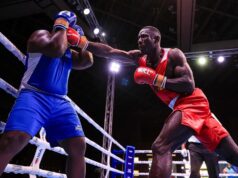



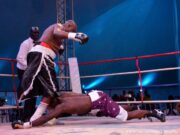











▪️After the 1987 African Games historic achievement in Nairobi, the Kenyan boxers failed to win even a single gold medal in Cairo
09/11/2025
Expectations were high when Kenya’s 12-man boxing team left the country for the 1991 African Games in Cairo, Egypt.
The Kenyans had stamped their authority in the 1987 African Games in Nairobi, winning an unprecedented eight gold and two bronze medals to retain the overall title they had won at the 1978 African Games in Algiers.
Contrary to the high expectations from Kenya’s boxing fraternity, the bubble burst in Cairo. For the first time since Kenya’s participation in the inaugural African Games in 1965 in Congo Brazzaville, there was no gold for Kenya!
A silver by heavyweight Joseph Akhasamba and three bronze from light-flyweight James Wanene, light-middleweight Kenneth “Valdez” Ochieng and middleweight Charles “Ironman” Waithaka were the only four medals brought back home by the Kenyan boxers.
Akhasamba, who had moved up to heavyweight after winning light-heavyweight gold in the 1990 Commonwealth Games, dropped a suspicious points decision in the finals to Nigeria’s David Izonritei.
Wanene, Valdez and Waithaka bowed out in the semis but the defeat of Valdez was controversial. He dominated Egypt’s Salem Bakary but surprisingly it was the Egyptian who sailed to the finals.
Valdez did not take his defeat by the Egyptian lightly.
“My opponent was always holding me but I was surprised the referee did not warn him, he knew I was better than him so he resorted to holding me because if he didn’t do that I was going to knock him out, l beat him clean,” Valdez told me on return home.
The other victims of dubious officiating were light-welterweight Caleb Kuya and welterweight Nick ” Computer” Odore, prompting officials from the International Amateur Boxing Association (AIBA) now renamed International Boxing Association (IBA) to question the standard of refereeing and judging. They reportedly suspended some of the judges who officiated Kuya’s and Odore’s bouts.
In addition to Kuya and Odore, other Kenyan boxers who returned home empty-handed were flyweight Duncan Karanja, bantamweight and skipper Maurice “Kawata” Maina, featherweight David “The Destroyer” Gakuha, lightweight John “Duran” Wanjau, light-heavyweight Omar Ahmed aka Kasongo and super-heavyweight Chris “Teofilo” Sirengo.
So, what went wrong in Cairo?
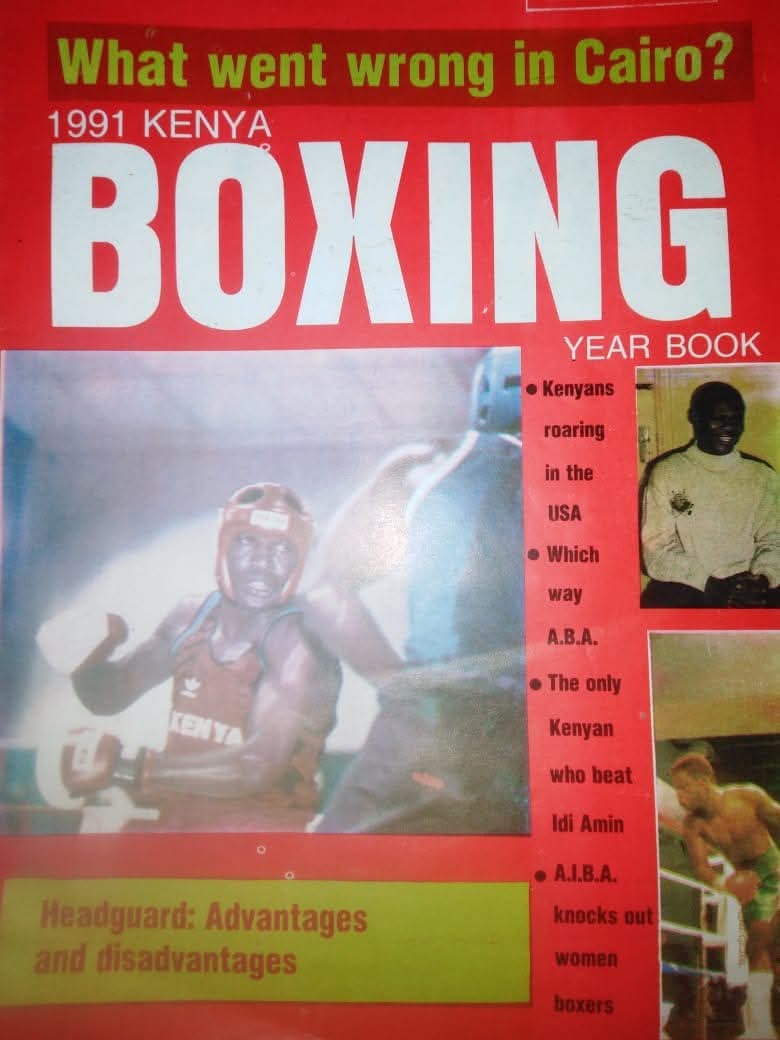
In the KENYA BOXING YEARBOOK I produced in 1991, and which is my source for this story plus more info l gathered later, among the factors cited for the Cairo debacle were biased officiating, poor coaching, unfair selection in two weight categories, over-training, lack of build-up matches and low morale following the mismanagement of the entire Games contingent by the Management Committee.
Boxers expressed lack of confidence in coaches Peter Mwarangu and Charles Anjimbi whom they said must go.
The boxers suggested Eddie “Papa” Musi, Patrick “Mad” Okoth who was in Cairo as trainer, KCC’s Elias Gabiraari, Posta’s Peter Morris, Nanyuki’s Peter Manene and former Prisons’ boxer Sammy Kipkemboi should be considered to replace Mwarangu and Anjimbi.
“Our coaches have run out of ideas, no new techniques and they’re also rude to us when we’re in the ring,” said a senior boxer, adding:”The only thing they tell us is to go flat out without giving us any strategy.”
A former international John Omollo, then a zoology lecturer at the Kenyatta University, said there was need to review the training system.
“They should start using video films for training including aerobic machines,” said Omollo. He further dug deeper with body blows at the two coaches.
“Our coaches have no ideas, even during my days in the ring I had no respect for them. Coaching is not just road work and sparring as it happens in Kenya.
“Boxers need to be taken to a classroom and lectured on the finer details of the sport.”
A former boxer at Nakuru Amateur Boxing Club, Philip Mainge, was not left out in sharing his views on what he felt was lacking in the coaching system in Kenya.
Said Mainge: “Our coaches must give lectures on different skills and how various blows land through the target like hooks, uppercuts, sliding below punches and overall ring craftsmanship.
“The boxers must be taught how to tackle a crouching opponent, a tall and short boxer, a southpaw, a swinger just to mention a few of the different types of boxers.”
Mainge also said the pads had been overused by the coaches.
“The pads give some boxers imaginary confidence. Watching them hitting the pads one would take them to be highly skilled boxers but when in the ring they don’t hit the target as they do on the pads.
“The other thing is that boxers in the national team have complained of injured hands. This is because the coaches push the pads forward so that a boxer hits with that powerful thud as the coach keeps on turning the pad in different directions oblivious of the harm therein.”
The two coaches were however unshaken by the heavy round of criticism.
“Our achievements speak for themselves” said Mwarangu, fondly known to the boxers as Orango.
The Dallas-bred Anjimbi told me: “Johnny wasare hawa wapige kelele zao, usiku watalala, look at Maina (Maurice) for example. Maina refused to follow instructions. He boxed badly, he was slow and inaccurate.”
Maina and Wanjau were the only defending champions in Cairo among the eight gold medallists in the 1987 African Games in Nairobi.

Former internationals, Sammy Kipkemboi and Albert Matito, also joined the chorus for an overhaul of the technical bench.
Said Matito:”The standard of boxing in Kenya now is very low. Something needs to be done before things run out of hand.” Kipkemboi felt former internationals should be included as coaches of the national team.
The ABA of Kenya blamed the Ministry of Culture and Social Services for being uncooperative on their preparations of the team.
Kenya failed to send a team to Namibia for East and Central Africa Championships. This was one of the tournaments earmarked in their preparations for Cairo, and therefore the ABA felt it was the government’s responsibility to ensure they were in Namibia.
A furious President Moi took a swipe at the ministry, saying it was shameful for a country which had produced the first black African boxer to win an Olympic gold medal to miss the Namibia tournament.
All in all, the team in Cairo was strong enough to enable Kenya retain their title save for the controversy surrounding the selection of Maina and Sirengo.
Ring analysts felt Commonwealth Games heavyweight champion George “Foreman” Onyango was given a raw deal despite explaining he could not take part in the trials because he was unwell.
The coaches, ring analysts argued, should have included Onyango and gauge his performance against Sirengo during the sparring sessions. Onyango had earlier defeated Sirengo in a league match between Police and Breweries. Sirengo too had defeated Onyango before that league match.
It’s reliably understood the coaches differed on the selection of Onyango and Maina. Mwarangu reportedly insisted Breweries’ Sirengo should be replaced by Onyango but Anjimbi, affectionately known as Anji to the boxers, put his foot down.
Anjimbi said if Sirengo is to replaced by Onyango, Prisons’ Maina should also be dropped.
Maina’s selection caused a stir having lost in the trials to Duncan Karanja in the flyweight division but moved up to bantamweight to replace George Omondi of Rivatex who had beaten Breweries’ Bernard Njuguna in the trials.
Finally club interests among the two coaches prevailed with Maina and Sirengo travelling to Cairo for the African Games.