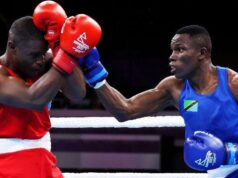



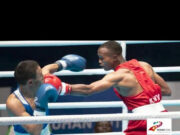



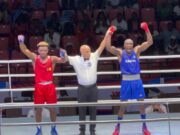







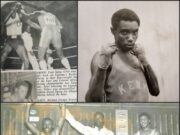

▪️Uganda recaptured the regional crown following the controversial victory of heavyweight Dodovic Owiny over Kenya’s former body builder Fred Sabat
September 23, 2026
Forty-seven years ago, East Africa’s greatest boxing rivalry between Kenya and Uganda reached a furious, chaotic climax inside a packed Nairobi City Hall.
The 1979 East and Central Africa Boxing Championships (Fescaaba) final was more than just a tournament; it was a tension-charged war between two boxing superpowers.
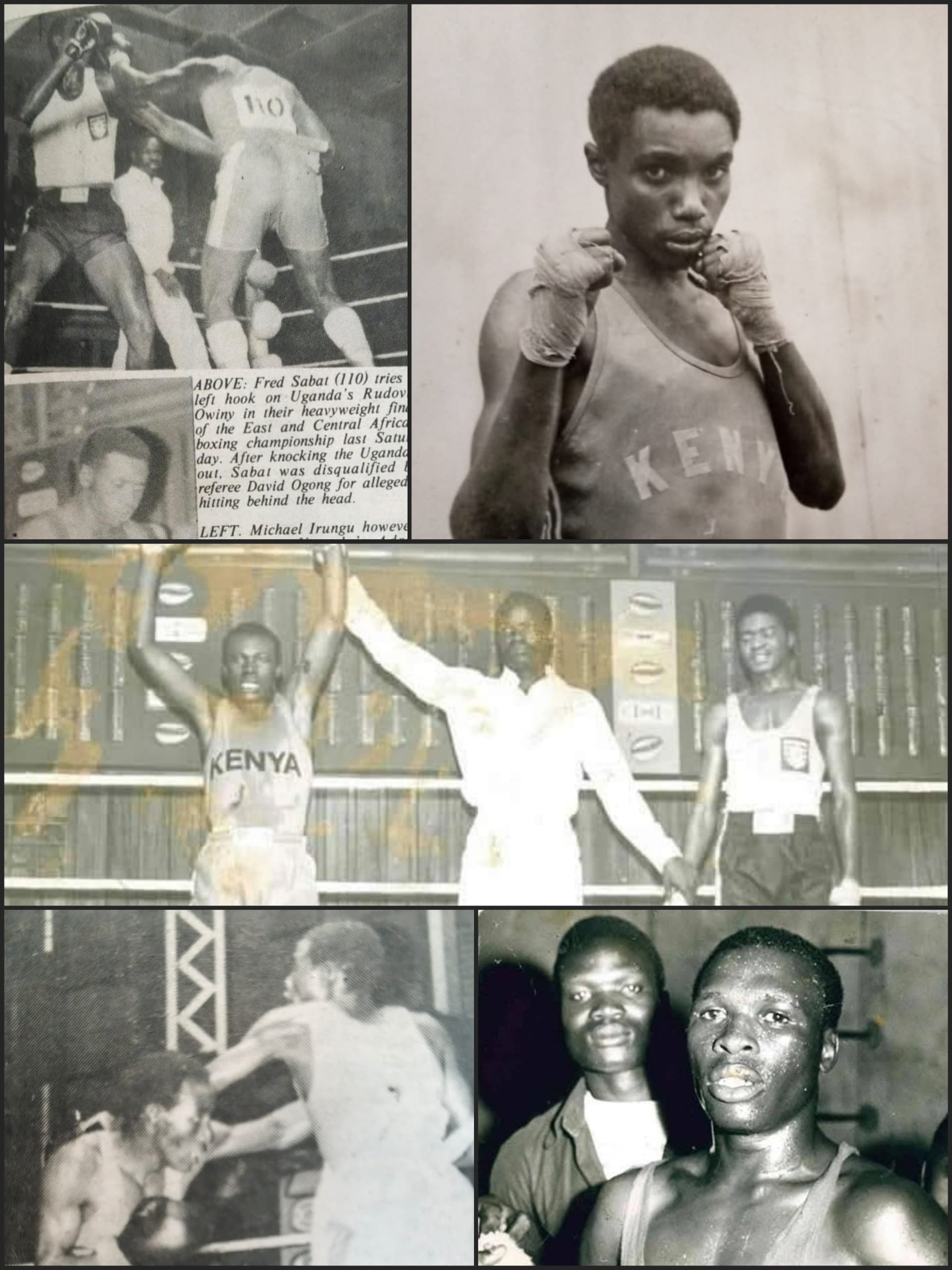
The drama built to a razor-thin deadlock. Both Kenya and Uganda stood even with five gold medals apiece after a scrappy light-heavyweight bout saw Uganda’s Abubaker Semuyanja outpoint Tanzania’s John Magesa. The entire tournament rested on the final heavyweight showdown: Kenya’s Fred “Sachi” Sabat, a former bodybuilder, versus Uganda’s towering titan, Dodovic Owiny.
Kenya’s depth at the time was staggering. The country boasted enough elite talent to field three separate world-class national teams.
While this core group battled in Nairobi, a parallel Kenyan squad was in Libya for the African Championships, featuring icons like Napunyi “Tottoh” Oduori, George “Mosquito” Findo, Patrick “Mont” Waweru, Ali “Ojukwu” Athumani, and Philip “PC” Mathenge or Machine Gun if you like.
In Nairobi, the home team featured nine finalists, anchored by the boxing brothers—Steve “Destimo” Muchoki and Mike “Stone” Irungu—both fresh off gold medal performances at the 1978 Commonwealth Games in Edmonton, Canada. They were flanked by Nakuru’s punching machine Isaiah “Danicho” Ikhoni, another Nakuru product featherweight John “Duran” Wanjau, and ring marshal Kamau “Pipino” Wanyoike.
Uganda countered with a menacing 10-man finalist lineup led by the devastatingly powerful welterweight John “The Beast” Mugabi, alongside flyweight Adron Butembeki, the incredibly durable Cuban Businge, light-middleweight Paul Muyodi, and middleweight Dick Katende.
Kenya, Uganda, Tanzania, and Malawi were the four countries in Nairobi but the rivalry between the two powerhouses ensured the glamour remained untarnished. Seychelles, Zambia, Somalia and Ethiopia pulled out at the last minute.
Speedy Muchoki set Nairobi ablaze early, executing a masterclass of ring geometry, clever sidestepping, and clinical footwork to stop Tanzania’s Clement Chacha in the second round.
Not to be outdone, his younger brother Mike Irungu sent the deafening “Dallas brigade” into a frenzy, dropping Uganda’s Adron Butembeki in the opening round of the flyweight bout with a devastating right hand. Chants of “Irosh funga kazi!” shook the rafters. The terraces were alive with a raucous Nairobi crowd, fueled by the frothy liquids of Ruaraka and the unblinking, hyper-focused gaze powered by the golden Meru herb.
Power punching bantamweight Isaiah Ikhoni dominated Uganda’s Cuban Businge enroute to a unanimous points victory in his debut for the national team.
Uganda quickly struck back. Mohammed Balinda outpointed John Wanjau, and lightweight Samuel Isiko – surprise winner over fancied Kenyan Michael Mwangi in the semis – defeated Tanzania’s Omar Gulaya.
The tension surged as Kenya’s African Games light-welterweight champion Kamau “Pipino” Wanyoike, a southpaw master of deception, danced his way to a points victory over Vitalis Nyamor.
Yet Uganda responded instantly when John “The Beast” Mugabi knocked out Kenya’s Steve Okumu in the very first round at welterweight, avenging his previous semi-final loss to a Kenyan when Pipino Wanyoike beat him at the 1978 African Games.
Uganda’s light-middleweight Paul Muyodi gave them their fourth win outpointing Kenyatta University graduate John Omollo before middleweight Charles “Dixie Kidi” Oduori halted Uganda’s charge, defeating Dick Katende on points.
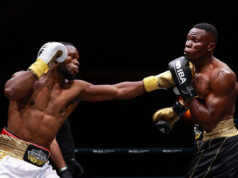
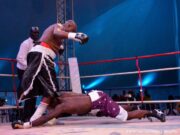
With wins trading back and forth, the stage was set for the heavyweights. The final bout was pure theater. Fred Sabat hit the canvas twice in the opening round as the towering Owiny used his reach to dominate. But the Kenyan bodybuilder recovered his poise in the second, roaring back to floor Owiny with a vicious left hook that shook City Hall to its foundations. By the third round, the crowd was a wall of sound, pushing Sabat forward. The Kenyan was firmly in the driver’s seat, winning the exchanges and hunting for the finish. With the clock ticking down, Sabat unleashed a swift, shattering left punch that sent an exhausted Owiny staggering backward toward the ropes. Then came the fatal error. As Owiny was already falling toward the canvas, Sabat, blinded by adrenaline, made a costly blunder. He threw a final hammer blow that struck the Ugandan on the back of the head, accelerating Owiny’s descent until he landed flat on his stomach.
Interestingly, Ugandan referee David Agong counted out Owiny and then disqualified Sabat, igniting a storm of protests from furious Kenyan fans and officials who vehemently protested the decision. They accused Agong of blatant, flagrant bias to save his compatriot. The disqualification handed Owiny the victory, allowing Uganda to steal the overall championship crown in the most bitter and acrimonious finish the tournament had ever seen. Agong was smuggled out of City Hally under tight police escort as irate Kenyan fans bayed for his blood.
The Amateur Boxing Association of Kenya (ABA) Secretary-General Harrison Kalonzo, himself an R&J, shook his head in disbelief on Agong’s decision.
“The disqualification leaves a lot to be desired. What I don’t understand is why the referee counted out Owiny first and then disqualified Sabat, he should have disqualified Sabat if he landed a foul punch,” said a disappointed Kalonzo.
The team manager of Kenya’s team Fred Mwangi filed a protest but ABA chairman Major Marsden Madoka later decided they move on because the decision would not be reversed.
Such was the excitement, controversy, patriotism and quality boxing which characterized the Golden Era between the two East African boxing giants at the time.