








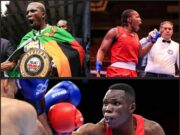

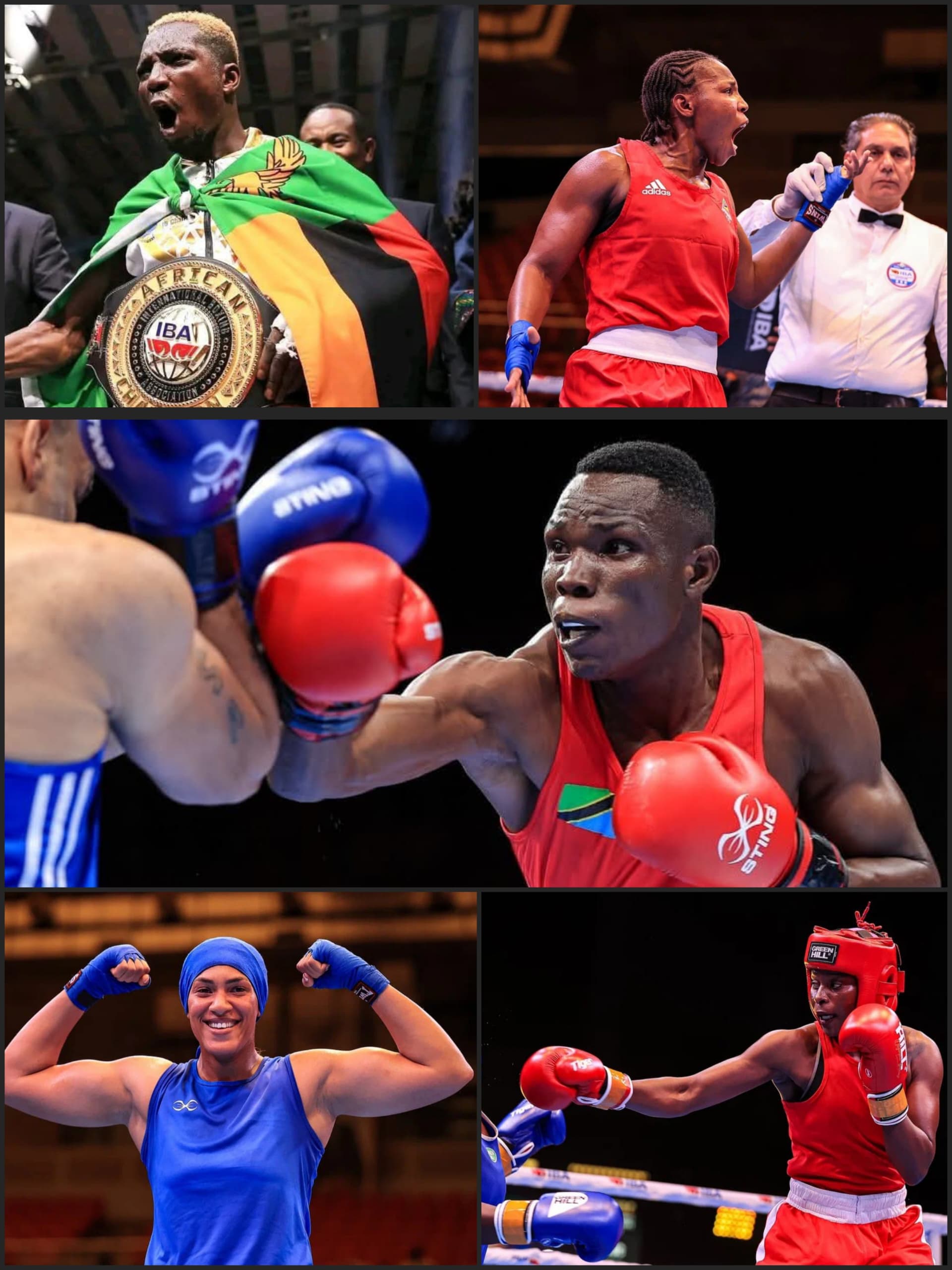
▪️Top African boxers including Moroccan superstar Khadija Mardi reveal IBA’s prize money has built their futures
▪️”The IBA’s prize money in a single fight is way above what pro boxers in Africa are earning in several fights,” says Boxing Federation of Tanzania Secretary-General Makore Mashaga
November 19, 2026
For generations, the cruelest irony of African amateur boxing was that glory rarely paid the bills. Talented pugilists carried national flags onto global podiums, returned home with glittering medals draped around their necks, and stepped right back into financial struggle.
As Ghanaian standout pugilist Theo Allotey bluntly put it: “We can’t eat medals. We need money to improve our lives because we can’t be in boxing forever.”
Later this month, a new wave of African warriors will board flights to Istanbul, Türkiye, carrying proof that those lean days are fading fast.
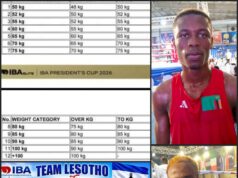
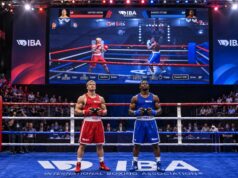
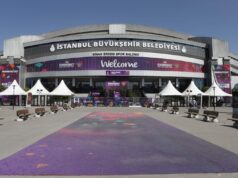
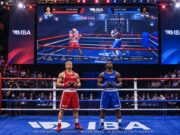
From November 27 to December 4, 2026, the Turkish metropolis will host the inaugural IBA President’s Cup, an ambitious tournament launching the IBA Elite series to bridge the gap between amateur and professional boxing paydays.
With preliminary bouts unfolding at the Bağcılar Göztepe Sports Complex and grand finals set for the iconic Sinan Erdem Dome, African boxerx will be chasing a staggering $3 million prize pool across 12 men’s weight divisions.
African boxers, accustomed to scarce regional ranking events, poor financial support from their governments, limited domestic tournaments and sponsorship, and crippling travel costs, are gleaming with anticipation as Istanbul represents more than a tournament—it is a financial lifeline. Gold medallists in each division will command $100,000, silver medallists $50,000, and bronze medallists $25,000, while even preliminary round winners pocket $1,000 per victory.
Crucially, the IBA’s 50-25-25 revenue-sharing model ensures that half goes directly to the boxer, while 25% each flows straight back to their coach and national federation—injecting vital capital into Africa’s cash-strapped boxing ecosystems.
As teams from Lusaka, Accra to Maseru pack their bags for Türkiye, they need only look at the trailblazers who came before them to see what a single tournament can buy.
Under the leadership of IBA President Umar Kremlev, the injection of unprecedented prize money into amateur boxing has quietly sparked a real estate and investment boom among Africa’s greatest ring icons.
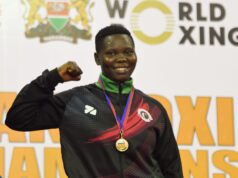
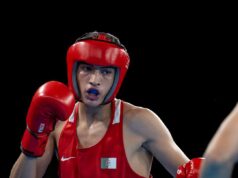
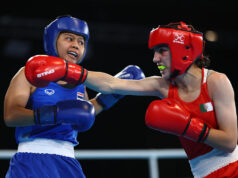
In Casablanca, Morocco, where real estate prices tower out of reach for most athletes, three-time African gold medallist and 2023 world heavyweight champion Khadija Mardi lives in a spacious four-bedroom house she bought outright with her gloves.
Mardi made history in New Delhi in 2023 as the first African woman to capture a world boxing title, earning a $100,000 payout that changed her family’s trajectory forever. Speaking from her living room while cradling her youngest daughter, Chams, the mother of four girls—Ilham, Fatima Zahra, Soultana, and Chams—credited the IBA’s financial revolution for giving her permanent security.
“I never expected to live in my own house, especially in Casablanca where buying a house is very expensive, but through Kremlev I own one now,” Mardi said.
Beyond her home, a $50,000 silver-medal windfall from the 2022 World Championships in Istanbul—combined with regional payouts of $15,000 in Yaoundé, $10,000 in Maputo, and $3,000 in Kinshasa—put a family car in her driveway.
Mardi, who remains undefeated on African soil, said the ring is no longer a hobby. “Boxing is my business. I do nothing else but boxing.”
The impact of IBA payouts has been equally been felt in Southern Africa. Mozambican three-time African light-middleweight champion and world silver medallist Alcinda Dos Santos remembers nights when her family survived on a single meal a day and huddled indoors while rainwater leaked through a dilapidated roof.
“When it rained, we all got wet inside the house,” Dos Santos recalled. “It got better. Now I have my own beautiful house living comfortably with my family members, and we no longer suffer from the rain.” Beyond shelter, the prize money allowed Dos Santos and her peers to return to school and plan for life after the final bell.
Her compatriot, three-time African middleweight champion Rady Gramane, took her $25,000 bronze-medal windfall from the 2022 Women’s World Championships straight to the trading floor.
“I invested in shares on the stock exchange and they are yielding a lot along with the money I have earned in other championships,” Gramane noted, while urging the governing body to ensure payouts are disbursed promptly during tournaments so that boxers can maximize their gains immediately.
In Lusaka, Zambia, Paris Olympic quarter-finalist Patrick “Baddo” Chinyemba – now in the USA fighting as a pro boxer – achieved what most 23-year-olds in his city can only dream of without taking on crippling bank debt: he finished building his own three-bedroom home.
By stacking $10,000 from the 2022 African Championships in Maputo, $3,000 from reaching the 2023 World Championship quarter-finals in Tashkent—the first time the IBA extended payouts to quarter-finalists—and $20,000 from clinching the IBA Africa flyweight belt at the historic 2024 Champions’ Night in Addis Ababa, Chinyemba amassed $33,000.
Today, his wife Shalom and their young daughter Precious run freely through a permanent home built entirely by his fists. “My wife is so happy, ever smiling by having her permanent home in Lusaka,” Chinyemba said. “She has now become more interested in boxing, always asking me when is my next fight!” Chinyemba won a further $75,000 reaching the semi-finals of the 2025 Men’s World Championships in Dubai. His highest paycheque came in at the right time when he was planning to build rental houses in Lusaka.
Across East Africa, the sentiment is identical. Kenya’s most decorated female boxer, Elizabeth Andiego, praised the payouts for rewarding years of quiet sacrifice as she eyes future IBA.Pro cards. Andiego’s compatriot Nick Okoth bought land from his $5000 earned at the 2022 African Championships in Maputo. Meanwhile, in Tanzania, Commonwealth Games bronze medallist Yusuf Changalawe used his Addis Ababa Champions’ Night earnings to purchase land for his own house—a move Boxing Federation of Tanzania Secretary-General Makore Mashaga noted would have been impossible on local professional purses.
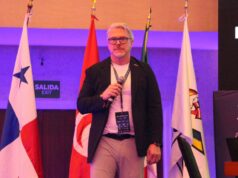
“The IBA’s prize money in a single fight is way above what pro boxers in Africa are earning in several fights,” Mashaga observed.
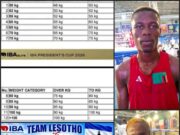
Now, the baton passes to a hungry new generation. Riding momentum from the 2026 Africa Elite Championships in Kinshasa—where IBA Africa Interim President General Ferdinand Ilunga Luyoyo personally stepped in to bankroll travel and accommodation for 17 cash-strapped national teams—Zambia is sending continental gold medallists Mwengo Mwale, Albert Ngulube, and Gerald Kabinda to Istanbul. Alongside them, Lesotho’s Glasgow Commonwealth Games bronze medallist Pooana Khoahli leads a merit-selected Basotho squad chasing life-changing rewards.
When the opening bell rings at the Bağcılar Göztepe Sports Complex on November 27, African fighters won’t just be throwing punches for national pride or IBA World Ranking points. They will be fighting for plots of land, university tuition, stock portfolios, and roofs that don’t leak—proving once and for all that in modern African boxing, heavy hands build solid foundations. IBA has indeed changed the lives of African boxers through the commercialisation of boxing.