




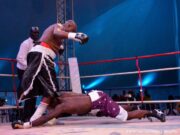
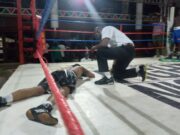











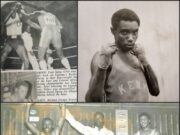


▪️In the eighth round, Robinson unleashed a perfectly timed and devastating left hook that landed flush on Doyle. The challenger collapsed to the canvas and failed to respond
June 24, 2026
The events of June 24, 1947, remain among the most heartbreaking and sobering moments in the annals of boxing. It is a tragic reminder that despite its skill, courage, and glory, boxing remains a sport where the risks are very real and sometimes devastating.
On that fateful evening at Cleveland Arena in Ohio, World Welterweight Champion Sugar Ray Robinson (Walker Smith Jr.) defended his crown against the determined challenger Jimmy Doyle (James Emerson Delaney). The contest promised an exciting championship battle between two talented fighters, and for seven rounds it delivered exactly that.
However, what began as a showcase of elite boxing skill ended in unimaginable tragedy.
The Fight That Ended in Heartbreak
During the eighth round, Robinson unleashed a perfectly timed and devastating left hook that landed flush on Doyle. The challenger collapsed to the canvas and failed to respond.
Referee Jackie Davis immediately began the count, but it quickly became apparent that the situation was far more serious than an ordinary knockout. Doyle remained unconscious and was rushed to St. Vincent’s Charity Hospital.
Doctors worked desperately to save his life. Dr. Spencer Braden performed emergency surgery in an attempt to remove a blood clot from Doyle’s brain. Despite their efforts, the brave challenger never regained consciousness.
Approximately seventeen hours later, Jimmy Doyle passed away.
The boxing world was stunned.
A championship fight that had drawn more than 11,000 spectators had become the scene of one of the sport’s greatest tragedies.
Sugar Ray Robinson’s Troubling Premonition
What makes the story even more haunting is what reportedly occurred before the fight.
According to Robinson’s own account, he experienced a vivid and disturbing dream the night before the contest. In the dream, he saw himself killing Jimmy Doyle in the ring.
The nightmare affected him deeply.
Robinson was so shaken that he seriously considered withdrawing from the fight. He shared his concerns with his trainer, as well as religious advisers including a priest and a minister.
Both clergymen reassured Robinson that dreams and premonitions should not be interpreted as certain predictions of future events. His trainer echoed the same belief, reminding him that he was a professional athlete preparing for a championship defense.
From their perspective, there was no medical evidence suggesting Doyle was in danger, and there was no practical reason to cancel a sanctioned world title bout based solely on a dream.
Reluctantly, Robinson accepted their advice and proceeded with the fight.
Why did they allow the fight to continue?
Simply because they viewed the dream as a product of anxiety, stress, and pre-fight nerves rather than a supernatural warning. In 1947, neither athletic commissions nor those around Robinson would have considered a premonition sufficient grounds to cancel a championship contest.
Yet after Doyle’s death, the story became one of the most chilling episodes in boxing history and has been debated ever since.
A Champion’s Compassion
The tragedy weighed heavily on Robinson for the rest of his life.
Jimmy Doyle had entered the fight hoping to earn enough money to purchase a home for his mother, a promise he had long hoped to fulfill.
When Robinson learned of this, he made an extraordinary gesture.
The champion donated $6,000 to Doyle’s mother, enabling her to purchase the home her son had dreamed of providing.
It was an act of humanity and compassion that revealed the character behind Robinson’s greatness.
Though he was not responsible for the accident, Robinson carried the emotional burden of that night for many years.
Historical Significance
Jimmy Doyle’s death became one of the most discussed tragedies in professional boxing history.
It intensified discussions surrounding fighter safety, medical examinations, ringside physicians, neurological assessments, and post-fight medical care.
The incident served as a powerful reminder that every boxer who enters the ring accepts enormous risks in pursuit of greatness.
While boxing has evolved considerably since 1947, the memory of Jimmy Doyle continues to influence conversations about athlete welfare and safety standards.
What Historians and Experts Have Said
Many boxing historians have cited the Robinson-Doyle tragedy as one of the defining moments that exposed the dangers of the sport.
Historian Bert Sugar once observed:
“Boxing can be magnificent and tragic at the same time. The Robinson-Doyle fight reminds us of both realities.”
Veteran boxing writers have often noted that Robinson’s nightmare has become one of the most haunting stories ever associated with a championship fight.
Many experts believe it demonstrates the emotional burden fighters carry long before they step into the ring.
Memorable Boxing Quotes
“Boxing is the theatre of courage, but courage always comes with risk.”
“Every fighter climbs through the ropes seeking victory, knowing the dangers that await.”
“Great champions are remembered not only for how they fought, but also for how they carried themselves after tragedy.”
Closing Remarks
Nearly eight decades later, the death of Jimmy Doyle remains one of boxing’s most painful lessons.
It was a night when victory became meaningless, when a champion’s triumph was overshadowed by human loss, and when the boxing world was forced to confront the harsh realities of the sport it loves.
Sugar Ray Robinson would go on to become one of the greatest fighters who ever lived, but June 24, 1947, remained a memory he could never escape.
Jimmy Doyle’s life was tragically cut short, yet his story continues to remind us that behind every fighter is a family, a dream, and a future worth protecting.
His legacy lives on as a solemn symbol of why safety, responsibility, and compassion must forever remain at the heart of boxing.
Debate Questions
1. Should Sugar Ray Robinson have followed his instincts and withdrawn from the fight after experiencing the disturbing dream?
2. Were the priest, minister, and trainer correct in treating the premonition as simple pre-fight anxiety?
3. Could modern medical technology have prevented the tragedy that befell Jimmy Doyle?
4. Has boxing done enough to protect fighters since 1947?
5. Is the Robinson-Doyle tragedy the most haunting event in championship boxing history?
@Brain Boxing Sport