Home Blog Page 89

ALGERIAN BOXING LEGEND MAKHLOUFI IS DEAD

0

ALGERIAN BOXING LEGEND MAKHLOUFI IS DEAD

Former Algerian boxing legend of the 1970s, Abdelkader Ould Makhloufi, died on Tuesday at the age of 80, the Algerian Boxing Federation (FAB) said.

Considered a legend of Algerian, African and Arab boxing, like his compatriot, the late Loucif Hamani, the native of Boufarik marked the noble Algerian art with his great performances in the ring, notably winning the title of professional African champion (featherweight category), on December 15, 1973 in Algiers, by dominating the Ghanaian Joe Teteh. He would retain his African crown for four years (1973-1977).

In 1975, he reached the world summit by obtaining the title of vice-world champion under the aegis of the prestigious World Boxing Council (WBC) after his fight lost against the world champion, the Japanese Shibata.

After a long and rich boxing career, which began at the age of 16 at the Mitidja Boxing Club, Abdelkader Ould Makhloufi embraced a career as a trainer, leading the national boxing team for several years (1979-1983), winning several titles and medals in various Arab and African competitions.

“It is with great sadness that the president of the Algerian Boxing Federation, Abdelkader Abbas, learned the unfortunate news of the death of the former national boxing glory Abdelkader Ould Makhloufi,” the federal body said in a statement.

Mr. Abdelkader Abbas, on behalf of the members of the federal office, extends his deepest condolences to the family of the deceased. May God Almighty welcome the deceased into his vast paradise and may his soul rest in peace. “To God we belong and to Him we return.”

Courtesy The Maghreb Mediator

BOXING FEDERATION OF KENYA TO UNIFY COACHING SYSTEM

0

Kenya boxing is set for a major overhaul with the introduction of a unified coaching system this year.

National team head coach Musa Benjamin said the unified coaching system will culminate in Kenya having its own identity and boxing philosophy like the Cubans did in the early 1960s by standardizing their coaching system, a project which was fully backed by the government.

The Cuban training system emphasizes technique, work ethic and discipline with their style revolving around elaborate footwork to enable them be constantly on the move with more emphasis on defence over offence and a pawing jab to find openings.

Floyd Mayweather used the Cuban defensive philosophy making it very difficult for his opponents to hit him.
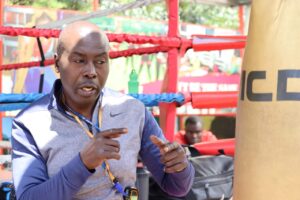
The Kenyan head coach said the successful implementation of the unified coaching system will be a major milestone in the development of boxing in the country.

“From the grassroots to the national level coaches countrywide will use the same coaching system,” Musa Benjamin told boxersworld.co.ke in an exclusive interview.

Question: Boxing Federation of Kenya intends to unify the coaching system just like the Cubans did in early 1960s standardizing their coaching system so that all coaches from the grassroots to the national level are on one page. How do you intend to implement this massive project?

Answer: To achieve this goal, BFK intends to hold National Level Coaches training in all the active county associations across the country to prepare them for this change. This will be done with the help of both the County and National Government.

We will then invite foreign trainers from boxing power houses to start the exercise of imparting lessons to the selected coaches on the unified coaching system.

After they’ve gone through national level course, they will be in a better position to grasp lessons from the foreign coaches on what is involved in the standardized system. They will then be well equipped to impart that knowledge to the boxers in their clubs and at the grassroots level regarding the unified system. This will make our work easier when some of them graduate to the national team because Kenya boxing will then be having its own identity instead of us again wasting time to take some of them back to the basics.

Q: Expound further what it entails to unify the coaching system and its benefits


A: The main aim here is to have a particular boxing philosophy/identity right from the beginning, school boys/girls up to the elite level.

The products of such a system will be good in basics and will have mastered the fundamentals of the game. As you know club coaches in Kenya right now use different training systems but with the new changes, they will be using the unified system across the board, and this makes it easier for the coaches and boxers to gel faster in a national training camp because they will all have gone through the unified system in their respective clubs. Once it begins to take shape boxing fans will be able to notice Kenya’s identity in the ring through a distinctive style and punches. Of course styles in the ring vary depending on the opponent you’re facing but that identity will still be there. One can tell that’s a Kenyan fighting.

Q: Why has BFK decided to unify the coaching system in Kenya?

A: To simply have a proper and smooth flow of good boxers to the various national teams, juniors, youth and elite. And to increase depth also.

Q: What challenges have you encountered as the national team head coach that BFK has now decided to introduce a unified coaching system?

A: The biggest challenge has been getting boxers at this level with very poor basics/foundation. Correcting and improving them becomes a herculean task.

Q: To succeed in this ambitious plan, BFK will definitely require the expertise from some of the advanced boxing nations like Cuba and Uzbekistan, for instance. This means hiring a foreign coach to take up the role of a Technical Director. Who will foot the bill?

A: ⁠ Since BFK has currently no sponsors, a humble request will be made to the government. There’s also a government to government partnership between Kenya and Cuba which we will try to exploit.

Q: Once you get started, how long do you think it will take to successfully implement the plan?

A: This is a very ambitious project and will definitely take time to complete and of course more time to see the results. This means if we hire a foreign coach to assist us in the unified coaching system it will take us at least two years to implement the plan.

Q: You have often told me one of the major problems with Kenya boxing right now is poor basics at the grassroots level. Elaborate please.

A: There are a lot of prospects at the grassroots but very few qualified,technically and tactically sound coaches to nurture these talents. This results to less skillful boxers coming onto the scene. Boxers are rushed to take part in tournaments when they’re not ready and have not mastered the fundamentals of boxing as well as deciding which style they will adopt.Q: Thank you for your honesty on the problem at the grassroots. This means some coaches don’t have the basic knowledge on how to handle rookies and share the ABC of boxing.

A: ⁠Partially true. We end up with half-baked boxers without good ‘boxing brains’ and this also affects our performance at the international stage.

Q: I have noticed some of the Kenyan boxers at the big stage just throw punches at random without timing and rhythm wondering whether they’ve mastered the art of scoring points.

A: They are adopting different styles. It’s a process. Our boxers need to find the right balance between attack and defence.

Q: In your honest opinion, what’s the biggest problem with the Kenyan boxers when taking part in international competitions outside the country?

A: Due to lack of exposure in build-up tournaments, our boxers are yet to grasp how to handle the different boxing cultures and styles like having good movement in the ring, keeping fighting distance and getting into good counter-punching positions. They ought to know when to use lighter punches to set up for the big punches, knowing when to press and retreat and when to throw punches in bunches. The unified coaching system will help us a great deal because we will now have our boxing philosophy that will be very helpful at the big stage but they will also need to be constantly exposed to implement the various styles they’ve been taught in the new system. This lack of exposure has affected us a great deal unlike the 60s to 80s when Kenyan boxers were regularly exposed in tournaments like the annual King’s Cup Championships in Bangkok. This is where we need sponsors to come on board and assist us take part in the several tournaments held in Europe and Asia. Owing to lack of exposure some of our boxers have found themselves making their international debut in big events. For instance in 2023 our top female welterweight Friza Anyango made her debut in the World Championships in India. In her first fight she met Olympic champion Imane Khelif. You all saw what happened she couldn’t cope with a boxer of Imane’s calibre.

Q: I agree with you Musa exposure is crucial for Kenyan boxers to excel. Therefore as you prepare to introduce the unified coaching system, a lot must be done with the private sector also chipping in to ensure the Kenyan boxers are exposed as well as having an elaborate junior and youth programme to go hand in hand with the unified system.

A: A vibrant and proper junior and youth structures and introduction of boxing in schools is vital here. Regular youth competitions and exposure will help improve our ringcraft and mould future champions to take over from the elite boxers when they retire. The biggest hurdle here is money. That’s why we need the support of the corporates to help us in revamping our boxing by investing on the junior and youth programme and exposing our boxers. We’re very grateful to our government for supporting us participate in various international competitions but due to the fact that the government is also burdened in financing other crucial sectors, we can’t rely on them for everything. I’m humbly reminding would-be sponsors there’s still a lot of potential in Kenya boxing. It’s only boxing and athletics that have brought us medals in the Olympics so this year let them come on board to boost out kitty. Our President (Anthony “Jamal” Otieno) has really sacrificed using a lot of his own money to support boxing. Not many leaders in our local federations can spend like Jamal has done but now it’s high time the sponsors chip in to lift us higher.

Q: Away from the unified coaching system, share with us your experience in the national team’s 2023 training stint in Havana, Cuba ahead of the Africa Olympic qualifiers in Dakar, Senegal. That must been a precious moment for all of you.

A: It was a memorable and nostalgic experience to visit the greatest school of boxing in the world. The training in Cuba will forever remain etched in my mind.

My major observation comparing what I saw there and what we have is lack of equipment and a proper training facility for our national team. Effecting the training program with less equipment becomes challenging.

There is a serious investment in the government-owned facility we were using. The facility is in a huge compound with hostels, basketball court, dispensary, equipped strength & conditioning gym, office block besides the boxing training gym.

In the gym, they have nine boxing rings (improvised ones included) and 45 different punching bags.

They have doctors, physios, nutritionists, strength & conditioning coaches and about 10 boxing coaches with the national team at all times.

They are literally in fully paid-up camp the whole year and take part in 12 to 20 exposure tournaments across the globe in a season.

While comparing notes, the Cuban coaches were categorical that it was going to be difficult for us to effectively compete with them considering our poor preparations and lack of facilities. Our boxers queue to take turns on the punching bag whereas in Cuba each boxer has his punching bag during the training sessions. In sparring here we have one ring and in Cuba as I said earlier they have nine rings.

Photos by Duncan Kuria

AFRICA’S EMERGING STARS: Mathias Munyaka, who is a member of Mbotela Boxing Club, is an outstanding Kenyan boxer knocking on the door to stardom

0
Promising featherweight Mathias Munyaka (right) and his coach at Mbotela Boxing Club, Raphael Kamuya aka Kamwana.

AFRICA’S EMERGING STARS:

Mathias Munyaka, who is a member of Mbotela Boxing Club, is an outstanding Kenyan boxer knocking on the door to stardom

He boxed with tact, style and confidence and won the hearts of fans at the Umoja Gym during the finals of the Nairobi Junior and Youth Tournament on Saturday, January 4, 2025.

Mathias Munyaka is one of Africa’s Emerging Stars whose future in the ring is bright provided his potential is nurtured well and monitored constantly by the national selectors.

Munyaka put up a brilliant show to outpoint equally impressive William Mugalia of Kasarani Youth Boxing Club in an entertaining featherweight bout.


He is now looking forward to the National Junior and Youth Boxing Championships which will be organised by the Boxing Federation of Kenya (BFK).

Mbotela Boxing Club coach Raphael Kamuya aka Kamwana was satisfied with the performance of his boxer Munyaka.

“He boxed according to my instructions. He was patient and did not rush at his opponent and perfect timing in his punches, I’m sure he’ll eventually join the national youth team,” said Kamwana.

Equally impressed was Kibra Boxing Club coach Hassan Salim. “The boy is very good, he’ll go far. He’s an all-round boxer able to switch from orthodox to southpaw with amazing effectiveness,” said Hassan who is also the Assistant Competition Secretary of Nairobi County Boxing Association.

The 17-year-old Munyaka moves to fourth form at Uhuru High School when schools re-open next week.

What’s his major goal for now?

“I want to be one of the best boxers in Kenya and represent my country,” said Munyaka who started learning boxing in 2020 under the tutelage of Kamwana, one of the successful grassroots coaches in Nairobi. Among the top boxers he has groomed are internationals, heavyweight Peter Abuti of Kenya Defence Forces and lightweight Ethan Maina of Kenya Police. Others include KDF’s big-hitting light-middleweight Alvin Oduor and talented welterweight Joshua Clive.

Like most grassroots coaches in Africa, Kamwana’s nagging problem is lack of equipment.


“We have a shortage of punchbags, skipping ropes, speedballs, sparring gloves, training kit and competition uniform,” said Kamwana, appealing to sponsors to support his progressive club.

“There’s a lot of money in Kenya I see being splashed by politicians and funeral contributions when sportsmen pass on, that generosity should be extended to us and other clubs because Kenya has a lot of potential in boxing,” said Kamwana who also also needs an operation budget to assist him in transport and food for his boxers during competitions.

Full results of the finals of Nairobi Junior and Youth Boxing Tournament held on January 4 at Umoja Gym.

*11-12 yrs 35-36kg:* Ramsey Wahu (Kibra Youth) was stopped in round one by Mukuru’s Lawrence Kirima

*13-14 yrs 33-34 kg:* Joseph Kamau ((Kariobangi) outpointed Jericho’s Morgan Omondi

*9-10 yrs 24-25 kg:* Teruii Opondo (Jericho) outpointed John Muthee (Mukuru)

*17-18 yrs 57kg:* Mathias Munyaka (Mbotela) outpointed William Mugalia (Kasarani Youth)

Brian Arinda (Mukuru) outpointed Elvis Lincons (Kasarani Youth)

*17-18 yrs 54 kg:* Vincent Wamboi (Kasarani) outpointed Chris Maina (Kasarani)

*13-14 yrs 56kg:* Keth Edmon (Kayole W) outpointed Ellyada Mabior (Jericho)

*17-18 yrs 67 kg:* Charles Odhiambo (Mukuru) outpointed Ian Oyaro (Mathare)

*11-12 yrs 40kg:* Elvis Karanja outpointed Mbogwa David (Jericho)

*15-16 yrs 50kg:* Morgan Baraka (Kangemi) beat Douglas Omondi (Kasarani Youth) RSC abandoned third round

*14-16 yrs 46-45kg:* Goodshepherd Muchiri (Jericho) outpointed Geremy Kangethe (Kasarani)

*9-10 yrs 45-46kg:* Festus Kiprono (Jericho) beat Paul Otieno (Kariobangi) RSC round one

Tevin Mwaura (Jericho) outpointed Emmanuel Kosgey (Jericho)

Stefany Wamboi (Jericho) lost on pts to Janet Wairimu (Mukuru) pts

*9-10 yrs 26-27kg:* Jamal Said (Mathare) stopped Rahim Mahmud (Kariobangi) round one.

*Ladies 13-14 yrs 48kg:* Grace Atieno (Mukuru) stopped Grace Apio (Kariobangi) round one.


boxersworld.co.ke

BSA BOARD TO MEET ALL LICENSEES

0

BSA BOARD TO MEET ALL LICENSEES

The newly-appointed board of Boxing South Africa (BSA) has called all licensees – boxers, trainers, seconds and managers – to a meeting on Monday and Tuesday next week.

This virtual meeting, which is going to be held between 18h00 and 20h00 on both days, follows two weeks after the board led by its chairperson Ayanda Zamantungwa Khumalo met with the National Professional Boxing Promoters Association (NPBPA).

Apart from Khumalo, Mthokozisi Radebe, Sydney James, Vince Blennies, Rina Subotzky Jude, Saudah Hamid Chetty and Siyakha Simelane are also members of the new BSA board.

Courtesy inksport

SPORTS MINISTER GAYTON MCKENZIE UNVEILS NEW BOXING SA BOARD

0

SPORTS MINISTER GAYTON MCKENZIE UNVEILS NEW BOXING SA BOARD

SA professional boxing champ and full-time teacher Razell Mohamed in one of the nation’s many women boxers eager to see improvements in the nature of their participation in the sport. The new Boxing South Africa Board has been announced by Sports, Arts, and Culture Minister Gayton McKenzie, to bring some success to the sport after years of instability at the federation.


The new Board of Boxing South Africa has been announced by Sport, Arts, and Culture Minister Gayton McKenzie to bring some success to the sport after years of instability at the federation.

BSA has been without a Board since September last year, when McKenzie dissolved it. In the months following, the Department started the shortlisting process for the nominated candidates by conducting a period of public consultation with various stakeholders, including boxing promoters, as required by legislation, and the public consultation process allowed the public to object to any short-listed individual.

After this process, the panel interviewed short-listed candidates and provided a final list of recommended candidates, from which the Minister appointed seven individuals.

The new Board will see Ayanda Khumalo as the new Chairperson as well as Mthokozisi Radebe, Sydney James, Rina Jude, Saudah Hamid, Siyakhula Simelane and Vincent Blennies take up their positions.

“Boxing was one of the saving graces of the sport during apartheid, and we cannot allow this sport with so much history and heritage to wither on the vine”, said McKenzie. The minister noted the appointment of this Board, “as a moment of great pride for me and Deputy Minister Peace Mabe, and is another step forward for the Government of National Unity under President Cyril Ramaphosa.”

Someone who had a keen interest in the new appointments is a top boxing promoter and manager of South Africa’s leading female boxers, Colleen McAusland. She says they will officially be meeting the new Board on Tuesday, 7 January 2024 via an online meeting, but for now, she is pleased with who has been chosen.

“We are happy with who has been appointed to the Board of Boxing South Africa by Minister Gayton McKenzie. We are hopeful that it’s going to take boxing to where it used to be. As licensees we are hoping for the best, we have really been through a lot of ups and downs with the previous boards. So we are hoping that this one is going to be a good one.”

McAusland says they will continue fighting for gender parity in the sport in 2025 and hopes the women on the Board can assist them with getting the equality the female boxers deserve.

“We are hoping that Ayanda can make sure that our female boxers can get paid the same as their male counterparts,” said McAusland. “That they get the same opportunities, and that they get recognised the same as the men do in our sport.”

Courtesy: gsport4girls

🥊 NENEZ BOXING ARCHIVE: The day Dallas Mercenaries Ibrahim “Surf” Bilali and Mike “Spinks” Mutua fought at Nakuru

0
Thriller at Madison Square Garden in Nakuru where Dallas products, Ibrahim "Surf" Bilali (left) and his close friend Mike "Spinks" Mutua (right), fought in a league match in 1981.

🥊 NENEZ BOXING ARCHIVE:

The day Dallas Mercenaries Ibrahim “Surf” Bilali and Mike “Spinks” Mutua fought at Nakuru

The eagerly awaited Kenya National Boxing League light-flyweight fight between Ibrahim Bilali and his close friend Mike Mutua had been the talk of town with fans of both boxers in Nairobi confident their idols will win.

They were both clubmates at Railways Starehe Boxing Club in Muthurwa Estate nicknamed Dallas where they were coached by Patrick “Mad” Okoth and Johnny Imbigo.

They knew each other very well. Bilali had by then been poached by the founder of Railways Starehe Charles Anjimbi who moved to Breweries from Dallas.

Anjimbi was impressed by Bilali’s sparkling show when he won the light-flyweight title in the national novices championships at Desai Memorial Hall.

The 16-year-old Bilali was then a form three student at Highway Secondary School in South B, and was sharp in class as well.

He was shorter than Mutua but very fast with dancing footwork and had already defeated him in the 1980 Junior Championships.

Bilali had by then won 13 fights and lost once to Undugu’s Joram “Hercules” Apudo but he later avenged the defeat.

Mutua, who had won 11 fights and lost three, enjoyed reach advantage over Bilali and was a southpaw but was not taking the fight lightly.

“Bilali is speedy and a clever boxer, it’s going to be a good fight for Nakuru fans,” said Mutua whose morale was boosted by his points victory over the more experienced Frank Ochieng during a league match between Kenya Police and Railways Starehe at Jericho Social Hall. It was Mutua’s second win against Ochieng having defeated him in the 1980 Kenya Open semi-finals and then Mutua lost to Army ‘s Ephraim Kanyari in the finals.

Ochieng, a good buddy, later relocated to the United States for further studies, and not much has been heard of him.since he moved to the US.

The other fight which had created interest was the bantamweight bout between Breweries’ 1972 Munich Olympian Felix Maina and southpaw Yahya “Chuchu” Mwami, brother to US-based Ali “Ojukwu” Athumani and Nasser “Silencer” Athumani.

Come the day of the Breweries vs Railways thriller at Nakuru’s Madison Square Garden, and fans were treated to action-packed light-flyweight encounter between Bilali and Mutua.

Bilali was on the move, bobbing and weaving to avoid Mutua’s onslaught. His reach advantage did not help him much as Bilali time and again showered combinations from body and then moved upstairs. Bilali’s speed, nimble footwork and more effective punches also helped him a great deal to win the fight by a unanimous decision.

Mwami outpointed Felix Maina at bantamweight but his victory was not enough to stop the bottlers from defeating Railways 18-13 points.

Bilali maintained his consistency and was capped in the Kenya vs Uganda international match at Jamhuri Park showground later in 1981, outpointing Godfrey Sempebwa.

Bilali’s victory over the Ugandan was the beginning of a success story for the son a Koran teacher.

The following year in 1982 in April without any exposure, Bilali punched his way to the finals of the prestigious King’s Cup Championships winning gold together with Kamau “Pipino” Wanyoike.

Bilali’s next stop was Brisbane, Australia for the Commonwealth Games. He was joined by his Dallas buddy Mike Mutua who qualified during the trials held at Desai Memorial Hall. Both Bilali and Mutua won gold medals in the Brisbane Commonwealth Games with Hussein “Juba” Khalili winning Kenya’s third gold medal.

The 1983 Africa Boxing Championships took place in Kampala, Uganda. I was at the ringside covering the one-week event, and once again Bilali put up a classic show to win the Africa flyweight title.

Bilali’s most notable and memorable achievement was at the 1984 Los Angeles Olympics, scooping a bronze medal in the flyweight division to win Kenya’s fifth medal at the Olympics, the other four coming from legendary Philip Waruinge who won bronze and silver at the 1968 and 1972 Olympics with his younger brother Sammy Mbogwa and Dick “Tiger” Murunga winning bronze medals in the 1972 Munich Olympics.

SOUTH AFRICA’S STAR BOXER DILA VUYOLWETHU SPARKLED IN 2024

0

SOUTH AFRICA’S STAR BOXER DILA VUYOLWETHU SPARKLED IN 2024


What a successful season it was for South Africa’s star boxer Dila Vuyolwethu aka Skolo.

Dila won medals in all tournaments she participated in the 2024 boxing season, putting the icing on the cake with her first ever medal in the AFBC African Men’s and Women’s Boxing Championships held in DR Congo’s capital city, Kinshasa.

There’s no doubt the charming and affable Dila has come of age ever since she made her international debut in the AFBC Youth Men’s and Women’s Championships in Casablanca, Morocco in 2018 winning a bronze medal in the flyweight division. Dila lost 5-0 in the semi-finals to Algeria’s Yasmine Khither.

“I was still new in the international stage, some sceptics expected me to fold back but I was confident, I just lacked experience,” Dila told boxersworld.co.ke on her impressive show in Morocco.

“I was so excited winning a medal in my debut for my country.”

After the Africa Youth Championships in Morocco, Dila then 18 years old, maintained her consistency, winning flyweight gold in the Mandela Centenary youth tournament featuring Swaziland and Lesotho in Eastern Cape. Her brilliant performance also earned her the best boxer award in the female category.

Dila’s ascendancy in 2018 continued unabated, winning her second gold medal in Region Five Games in Botswana.

She graduated to the national senior team in 2019 but a shoulder injury temporarily scuttled her relentless march to the top.

Dila’s morale was further dampened in 2020 following the death of her beloved grandmother Ann Rose Dila.

“The death of my grand mum killed me emotionally” said Dila but through her unwavering determination and resilience she bounced back with a bang in 2021 during which won the national title and was unbeaten in the national team selections emerging as the top light-flyweight.

Dila’s march to glory was now unstoppable. At the inaugural International University World Cup Combat Games in Turkey she bagged a bronze medal and a silver in the Zone 4 Championships in Maputo.

Two unsuccessful attempts in the AFBC African Men’s and Women’s Championships in 2022 and 2023 toughened Dila’s resolve to do better, culminating in her first medal – a bronze – in the premier Africa boxing event held in Kinshasa, DR Congo in 2024.

“I can say that’s my most memorable achievement because I didn’t win any medal in the Africa Championships in 2022 and 2023. Standing in the podium in Kinshasa meant a lot to me.”

Dila was defeated 4-1 points in the minimum weight semi-finals by Morocco’s debutant El Harouad Hafsa but she was not convinced.

I was with Dila in Kinshasa and spoke to her after the draws on her views about the Moroccan boxer Hafsa who was making her international debut.

“I don’t know the opponent and she doesn’t know me so we’re going to be meeting for the first time I’m looking forward to this fight,” said Dila, and remained calm despite the fact that she was more experienced than the Moroccan rookie.

“That is an advantage I’m more experienced but again I can’t underrate my opponent this is boxing anything can happen.”

During the fight, Dila was more dominant than the hit-and-run Moroccan. I spoke to her after the defeat.

“Nothing went wrong on my side, I did as I was told I controlled the pace of the fight while fighting on the front foot,” said Dila.

She went on: “Well I thought I had done enough to win the fight having my opponent getting a mandatory standing count, man I thought I did everything.

The opponent did not do anything she kept running away from me and playing dirty, pressing me down and holding but I was the one cautioned by the referee, it’s really unfair but it’s okay.”

Kinshasa was the first time a major tournament in Africa was taking place without headguards. Dila was very much okay fighting minus the headgears.

“I think the decision of headguards being taken out was the best on my part, we fight freely now and there’s no much difference,” she said.

“Generally I’m very happy with my performance in 2024, it was the best year for me,” said Dila whose boxing idol is Mexico’s Canelo Alvarez.

“I won my first medal in the Africa Championships and my third gold medal in the South Africa University Games at Orient Theatre in Eastern Cape.”

In addition to winning gold and bronze, Dila also scooped silver in the inaugural Mandela African Boxing Cup tournament in Durban, South Africa. Her fight minimum weight final fight against DR Congo’s Benedicte Diyoka was stopped in the first round following a recurrence of a shoulder injury she sustained in the semi-finals against Namibia’s Ndapandula Ngesheya.


When did Dila get involved with boxing?

“I started boxing in 2009 at home. I’m from a fighting background, my father was a boxer and my uncle too so it’s the only thing we knew and grew up to love the game. The person who taught me how to fold a fist was my uncle Vakele Dila in our backroom.”

Besides boxing, Dila is also busy chopping at the University of Fort Hare in Eastern Cape.This year I’m doing my fourth and final year, I want to specialise in Forensic Sciences as a Toxicologist,” said Diia who hails for the Eastern Cape, the home of boxing in South Africa.

I ask Dila about her nickname Skolo and what it means.

With a wide smile, she responds:”My fans nicknamed me Skolo, it’s a Xosa word for school, they say I always take my opponents to school because I’m smart upstairs when in the ring.”

As she looks forward to the new season, Dila is confident she will be retained in the national team but if things don’t work in her favour, she has a plan B.

“If by any chance I don’t make the team, I will turn professional, the world is ready to witness my greatness,” said the diminutive Dila with a deserved sense of pride.

Togambay and Chuthamat named Best Asian Elite Boxers for 2024

0

Togambay and Chuthamat named Best Asian Elite Boxers for 2024

After superb performances this year, Kazakhstan’s Sagyndyk Togambay and Chuthamat Raksat of Thailand have been named the Best Asian Elite Men and Women Boxers for 2024.

Togambay became the Asian champion at 92kg after a second-round stoppage of Parviz Karimov, dominating on his way to gold, while Chuthamat bettered Thi Ngoc Tran Nguyen from Vietnam for the women’s 50kg title.

IBA Youth World champions Torekhan Sabyrkhan and Alimire Abudureyimu, representing Kazakhstan and China, were named the Best Asian Young Men and Women Boxers too.

The junior accolades went to Akhmadi Arvaz from Kyrgyzstan and Maftuna Yangiyeva of Uzbekistan, while the best schoolboy and schoolgirl on the continent this year were deemed to be Iran’s Farzan Ahmadi Afzadi and India’s Deepali Thapa.

Temirlan Muqatayev of Kazakhstan and Uzbekistan’s Feruza Kazakhova were also named the Best Asian U22 Men and Women Boxers of the year.

These nominations were endorsed by the Asian Boxing Confederation (ASBC) Board of Directors.

Ishanguly Meretnyazov from Turkmenistan was named Best Asian Referee, while Tajikistan’s Mehroj Umarov won the Best Asian Judge accolade and Syria’s Shbib Mohamed Kamel was named Best Asian International Technical Official.


Best Coach awards went to Uzbekistan’s Tulkin Kilichev for men’s and Raul Angel Fernandez Liranza, the coach of the women’s national team for China.

Tajikistan’s Akmal Ubaidov was named Discovery of the Year, Liang Yuan of China was named Best Technical Delegate and Kazakhstan Boxing Federation was honoured with the title of Best Asian National Federation of 2024.

Aziz Kozhambetov, ASBC Interim President added: ‘The upcoming 2025 is expected to be a critical year. We are planning to organize all our Championships as per the 2025 ASBC competition calendar and on a very high level as usual. We will be happy to see your esteemed teams in all our Championships!’

NAIROBI COUNTY START THE YEAR ON TOES AS BFK BOSS JAMAL SPELLS OUT JUNIOR PLANS

0

NAIROBI COUNTY START THE YEAR ON TOES AS BFK BOSS JAMAL SPELLS OUT JUNIOR PLANS

Nairobi, the Mecca of boxing in Kenya, has started the year running with the Junior Boxing Championships taking place at Umoja Gym from today (January 2) to Saturday.

As Nairobi takes the lead, Boxing Federation of Kenya Competition Secretary John Waweru said they’re finalising the national calendar which will be released this weekend.

“We’re putting in the finishing touches on our calendar, it will be a busy season,” said Waweru aka CS.


And BFK President Anthony “Jamal” Otieno has reiterated their commitment on Junior and Youth programme saying it’s all in the Ndondi Mashinani project.

“We recognise the fact that for any country to do well, emphasis must be on a steady junior and youth programme. That’s why we are working out our plans with my team,” said the Bahati Estate -bred BFK boss.

“We will have a team monitoring the talented boxers and compile their data,” said Jamal, adding: “We will even talk to their parents to see if we can chip in with their education in case they’re stuck because we value the education of our children, our policy is boxing must go hand in hand with education.”

Jamal said plans are underway to see if they can invite Zimbabwe’s junior and youth boxers for an international friendly match this year.

On the Nairobi County Junior Tournament, the official in charge Hassan Salim said 90 boxers below the age of 15 years will trade leather from today to Saturday.

“We’re so happy with the turnout it shows we have the passion and this gives us hope future champions will emerge from this tournament,” said Salim who is also the coach of Kibra Boxing Club and the Assistant Competition Secretary of Nairobi County Boxing Association.

The Junior boxing tournament was first held in 1971 at the Prisons Gym opposite Wilson Airport.

Organised under the auspices of the Amateur Boxing Association of Kenya (ABA) then under the leadership of Brigadier Cromwell Mkungusi, the tournament unearthed several future champions among them world champion, Dallas Mercenary Steve “Destimo” Muchoki, YMCA’s James Njoroge and Prisons’ ring artists Kamau “Pipino” Wanyoike, Napunyi “Nappu” Oduori and Patrick Lumumba.

🥊 NENEZ BOXING ARCHIVE:  Olympic champions Soviet Union hammer Kenya and Uganda in their first East African tour in 1970

0
Caption Philip Waruinge (right) and Uganda's Deo Musoke in a past tournament

🥊 NENEZ BOXING ARCHIVE:  Olympic champions Soviet Union hammer Kenya and Uganda in their first East African tour in 1970

Soviet Union boxers returned home unbeaten in their first East African tour in December, 1970.

Then known as USSR, the Soviets tour of East Africa was widely publicised taking into account they were the reigning Olympic Games champions having won three gold, two silver and one bronze at the 1968 Mexico Olympics. Uganda and Kenya were then a formidable force to reckon with in the ring.

USSR’s first stop was in Kampala for their highly anticipated match against the Commonwealth Games boxing champions Uganda at the Nakivubo Stadium. They beat Uganda 6-4 bouts in a fiercely fought encounter marred by controversial decisions involving the Ugandans in bantamweight, light-welterweight and light-heavyweight divisions.

The Olympic champions won the opening light-flyweight bout through A.Semyonov who outpointed Commonwealth Games champion James Odwori. In the ensuing flyweight bout, Uganda’s captain and Olympic bronze medallist Leo Rwabogo KO’d Pavel Yershov with a stinging left punch to the stomach in the first round.

At bantam, Olympic silver medallist Eridadi Mukwanga dropped a controversial points defeat to Novikov while Commonwealth Games featherweight silver medallist Deo Musoke was stopped in the second round by Olympics bantamweight gold medallist Valerian Sokolov who moved up to featherweight.

Sokolov, who outpointed Mukwanga in the final at the Mexico Olympics, floored Musoke with a heavy left cross to the chin. A groggy Musoke clung to the ropes as he received an eight standing count, forcing the Russian referee to stop the fight.

At lightweight Peter Odhiambo, making his international debut, beat Boris Kuznetsov who was disqualified in third round for persistent holding.

Ugandans booed Russian referee for what they felt was unfair disqualification of their hero, Commonwealth Games champion Mohammed Muruli in his light-welterweight bout against Zaitsev. Muruli was leading on points when the referee disqualified him for butting after two public warnings.

The Soviets maintained their winning ways with a hard-fought 7-4 bouts win over Kenya at City Hall on December 11 in a Jamhuri Day contest.

Kenya’s winners were flyweight Isaac Maina who beat Pavel Yershov, light-welterweught Airforce man making his international debut Joseph Onyango, light-middleweught David Attan and middleweight Stephen “Kimbo” Matiani who was the captain of the Kenya team coached by Sammy Ouma.

New cap, light-flyweight Haraka Wanjala from Mombasa, Commonwealth Games bantamweight silver medallist Sammy Mbogwa, featherweight John Nderu, lightweight Kamau Mbugua, welterweight John Olulu, light-heavy Henry Muchorwa and heavy Fred “Sachi” Sabat were Kenya’s losers.

Nderu replaced two-time Commonwealth Games gold medallist and twice Olympic Games medallist Philip Waruinge who was axed from the team on disciplinary grounds. Waruinge failed to report at their residential training camp Kenyatta University (then Kenyatta College in 1970). Muchorwa took the light-heavyweight berth from Steve Thega who had yet to recover from a nose operation. Thega suffered the injury in the October West Germany tour with Isaac Maina, Sammy Mbogwa and David Attan.

In a special contest for 13-year-olds in the Kenya v USSR match, Daniel “Nytil” Njoroge of Eddie Musi’s Bangla Desh Boxing Club outpointed James Njoroge of YMCA and in the 15-year-olds Joseph Bobby Ouma beat A. Mola.

Meanwhile, for your information, it was in 1970 that Kenya Breweries Boxing Club was born and the Nairobi Province (now Nairobi County) Boxing Association was formed with Chris Siganga elected president and Alex Okello secretary-general. Okello was then the president of Kenya Amateur Basketball Association.

MOST COMMENTED