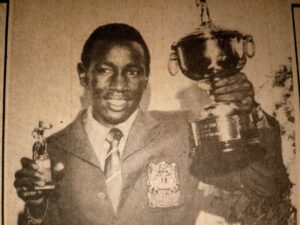
MR. SIYABULELA CECIL MKWALO ELECTED AS AFBC VICE PRESIDENT
The African Boxing Confederation (AFBC) Board of Directors convened on January 18, 2025, to address critical matters, including the election of a new Vice President. Following extensive discussions, the Board elected Mr. Siyabulela Cecil Mkwalo to assume the role of Vice President.
The position became available following the removal of the former Vice President, General Luyoyo Ferdinand, due to actions deemed illegal and against the AFBC constitution, as well as measures that compromised the organization’s unity and integrity. General Ferdinand’s suspension followed an illegal meeting held in Kinshasa on October 24, 2024. After an in-depth investigation by the Ethics Committee, the decision to remove him from office was made. The AFBC Congress further approved his removal during its session in Dubai on December 6, 2024.
Mr. Mkwalo brings an extensive background in boxing and sports administration, making him an ideal candidate for this key leadership role. He holds a Master of Sport Science from the University of KwaZulu-Natal, where his research focused on the role of government in the provision and delivery of sports. His academic achievements also include a Bachelor of Sport Science, complemented by numerous certifications in leadership, conflict management, and strategic planning.
With over two decades of experience in the sports sector, Mr. Mkwalo has held prominent roles, including his current position as the President of the South African National Boxing Organisation. He has served as a team manager for the South African national boxing team during international competitions, including the World Youth Championships in Bulgaria. Additionally, he has played a pivotal role in developing boxing structures across South Africa, introducing women into the sport, and decentralizing boxing into eleven districts in KwaZulu-Natal.
As a member of the AFBC Board of Directors since 2022, Mr. Mkwalo has demonstrated his commitment to the growth and governance of boxing in Africa. His leadership, strategic planning skills, and passion for the sport have earned him respect within the boxing community.
The AFBC Board also discussed other vacant positions and will finalize decisions on these roles in the near future.
Mr. Mkwalo’s appointment is expected to strengthen AFBC’s leadership and reinforce its mission to promote the sport of boxing across the continent. The AFBC remains steadfast in its commitment to transparency, inclusivity, and the advancement of African boxing.
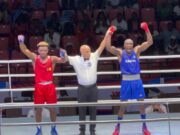
Madagascar's Miora Tina Karene (left) will square it out with Tunisia's Wafa Hafsi (right) in the first ever AFBC Pro Boxing on January 24 in Tunis.
AFRICAN BOXERS EXCITED ON NEW AFBC PRO BOXING
ni
Madagascar’s Miora Tina Karene Andriamiarisoa is psyched up for her five-round minimumweight tough duel against Tunisia’s African Games silver medallist Wafa Hafsi in the first ever Africa Boxing Confederation (AFBC) Pro Boxing contest scheduled for Tunis on January 24 at the Sidi Boussaid Gymnasium.
She knows fighting the Tunisian boxer at home will be not be like a beach picnic.
“I expect a difficult fight against my talented and experienced opponent, as a silver medallist in the African Games she’s not a boxer to be underrated,” Miora Tina told boxersworld.co.ke in a telephone interview.
“She’s a formidable fighter whom I respect enormously for her success, it will be an honour to face her I’m ready to give my best.”
A double bronze medallist in the 2017 and 2024 Africa Championships, the 27-year-old Miora Tina has a record of 34 wins and two defeats in amateur boxing. At the 2024 Africa Championships in Kinshasa, she lost in the semi-finals to the eventual gold medallist Nyembo Gisele of DR Congo.
In addition to her silver medal in the Accra African Games, Hafsi is also a bronze medallist in the 2023 Africa Championships and a bronze medallist in the 2022 Mediterranean Games.
She’s also looking forward to this big day in Africa boxing.
“We boxers are so happy that eventually we have our own pro boxing, we thank our federation president (Barbouche Zied) for being part of this big initiative and having us host the first series,” said Hafsi.
Tunisia Boxing Federation President Barbouche Zied says the January 24 AFBC Pro Boxing Show will be transmitted live on social media. “This is a historic moment in Africa boxing we’re not taking it lightly,” says Zied.
Miora Tina too – like most African boxers – is excited that finally the continent has introduced its own version of professional boxing, and for the first time she’ll fight in a five rounder and be paid immediately after her bout.
“This is the progress we’ve been yearning for in Africa, we’re proud of our African body for this great project,” said Miora Tina, adding: “The integration of professional boxing into AFBC is a major step forward to us boxers. This finally gives African boxers a platform to shine while benefiting from often overlooked financial support.”
Miora Tina said the newly-introduced AFBC Pro Boxing is the most cherished gift to boxers this year from AFBC.
“This project is not limited to improving economic conditions of the current boxers, it also inspires the new generation of boxers to believe in their dreams. It’s a step in the right direction to turn passion into a profession.”
_The brains behind the introduction of AFBC Pro Boxing Ferdinand Ilunga Luyoyo (third from right) has assured African boxers more pro boxing fights are underway. “We want our boxers in Africa to benefit from their sweat, it’s just the beginning let them know we care about the wellbeing of our boxers,” says Luyoyo, the Interim President of AFBC
The late Peter Kangethe (right) in a mock sparring session with Kamau Mbugua as coach Sammy Ouma looks on at Prisons Gym in 1971 when the national team was preparing for their return match against Nigeria at City Hall.
NENEZ BOXING ARCHIVE: Peter Kang’ethe fare thee well one of Kenya’s top light-flyweights of the 70s
Steve “Destimo” Muchoki, Kenya’s best ever light-flyweight, who ruled the division for seven years and was unbeaten locally until he turned pro in 1979.
The late Peter Kangethe, who passed on three weeks ago, was buried on Thursday (January 16) this week.
I first met Kangethe in 1971 when Kenya’s team was training at the Prisons Gym opposite Wilson Airport. They were preparing for a return match with Nigeria in December that same year.
He was a friendly boxer keen on sharing his knowledge with us youngsters then.
That was when Kangethe was at his peak.
He shocked his more experienced teammates and coach Sammy Ouma when he outpointed Nigeria’s highly regarded Saliu Ishola in the opening light-flyweight bout of an international friendly match won 7-4 by the Nigerians in Lagos in November, 1971.
In addition to Kangethe, other three Kenyan winners were top internationals, bantamweight Sammy Mbogwa, light-middleweight David Attan and light-heavyweight Steve Thega who scored a shocking points victory over 1972 Olympics bronze medallist Isaac Ikhuoria.
Big-talking Nigerians landed in Kenya with their usual noise making it known to the hosts they would hammer them proper in the return match under their coach Hogan “Kid” Bassey, a former world champion in pro boxing.
However, Kangethe was not cowed by the bullish Nigerians.
“Hawa tutachapa, walitulalia huko kwao na hiyo joto pia ilituweza (we will beat these Nigerians they robbed us at home and the humidity was too much for us),” Kangethe told us in our chit chat with among other junior buddies, Napunyi Oduori and Kamau Wanyoike after watching them train under coach Sammy Ouma at Prisons Gym.
He lived up to his promise when the Kenyans whipped Nigeria 9-2 bouts in a packed City Hall in this Jamhuri Day match in December, 1971.
Kangethe set the Kenyans on the winning trail, putting up a classic show to beat Saliu Ishola again in the light-flyweight berth. He did not only defeat Ishola but rightly named the Best Boxer of the night in this one-sided match I watched from the City Hall balcony with my late dad, a staunch boxing fan.
Among other winners included flyweight Peter Munyogi, bantamweight Sammy Mbogwa, light-welterweight John Olulu, welterweight Dick “Tiger” Murunga, light-middleweight David Attan and light-heavyweight Steve Thega.
The Kenyans emerged victorious with an aggregate of 13-9 bouts (35-31 points).
It was a total massacre as the Nigerians returned home quietly to lick their wounds in Lagos.
Kangethe made his international debut in 1970 in Kampala when he replaced an overweight Isaac Maina at flyweight during the first leg of the Millington Drake Trophy, an annual two-leg contest which was always fiercely fought with the Ugandans then having an edge over Kenya.
Police captain Alex Omwomo aka Wachawe (left) receives the winners trophy from chief guest, Commissioner of Police Bernard Hinga, at Kaloleni Social Hall in 1971. Police beat coach Charles Anjimbi’s Railways Starehe 19-13 points in an inter-club contest.
Pitted against Olympic bronze medallist, Leo Rwabogo, Kangethe proved to be no match for the tough Ugandan who stopped him in the second round at flyweight as the Ugandans hit the Kenyans 8-3 bouts. The most shocking defeat being that one of legendary featherweight Philip Waruinge who was stopped in the third round round by his rival Deo Musoke. He had defeated the Ugandan hands down in the 1970 Commonwealth Games final in Edinburgh, Scotland.
Waruinge, who avenged the defeat by Musoke easily beating him in the return match in Nairobi, was later to open up to me in our chit chat in Nakuru. He said he took matters too easy irrigating his throat – before the fight – with few tots of Waragi, Uganda’s famous drink which took its toll in the ring on the illustrious Kenyan boxer.
Kangethe’s next call up to the national team was in November, 1970, when the Kenyan boxers were preparing for the first ever visit to East Africa by the Soviet Union team.
He was picked in the light-flyweight division together with Mombasa-based Haraka Wanjala whom the selectors eventually preferred to Kangethe because he proved to be sharper than him during training at Kenyatta University (then Kenyatta College).
Wanjala lost his debut bout for the national team, beaten 7-4 bouts by the visitors at City Hall.
The following year (1971), Kangethe maintained his steady rise, scoring a major upset points victory over the 1968 Africa Championships silver medallist Lawrence Kariuki during an inter-club match between Prisons – the giants of Kenya boxing at the time – and Police in early 1971 at the City Stadium.
He dominated Kariuki throughout the three rounds to the amazement of coach Peter Mwarangu.
Kangethe’s victory was however not enough to stop the mighty Prisons from whipping Police 8-2 at the City Stadium. Heavyweight E.Wanjala was the other Police team winner.
Prisons’ eight winners were flyweight Peter Manene, bantamweight Sammy Mbogwa, featherweight John Nderu, light-welterweight Stephen Baraza, welterweight Ali Said aka Ali Baba, George Ambuga aka Labour, middleweight Stephen “Kimbo” Matiani and light-heavyweight Steve Thega.
Kangethe maintained his superb performance, outpointing the more experienced Sammy Mwangangi when Police demolished Railways Starehe 19-13 points in an inter-club match at Kaloleni Social Hall attended by chief guest Bernard Hinga, the Police Commissioner, who presented the winners trophy to Police captain Alex Omwomo aka Wachawe.
For his impressive victory over Mwangangi, Kangethe was named the Best Boxer of the evening.
He again beat Sammy Mwangangi of Railways Starehe in an inter-club match. Kangethe was representing his employer, General Service Unit (GSU) at the Police Pavilion.
Kangethe was now all set for the inaugural East African Championships in May, 1971, at the Nairobi City Hall. The participants were from Kenya, Uganda, Tanzania, Zambia and Ethiopia.
He was among the boxers who assembled at Railways Training Institute to prepare for the East African tournament. Also, in the squad was the new kid on the block St Teresa’s schoolboy Dick Felix, a product of prominent coach Eddie “Papa” Musi. The coach was a South African immigrant who was handling Nairobi City Council club training at the social hall in Kariobangi Estate nicknamed Bangladesh. Together with clubmate Felix Maina they took Kenya’s boxing fraternity by storm. Dick Felix won the novices and intermediate flyweight titles and Maina clinched the intermediate light-flyweight title at Kaloleni Social Hall. Kisumu boy Zack Amalemba then with Prisons also caught the selector’s eyes when he won the intermediate heavyweight title. Amalemba and Dick Felix earned their first first call ups to the national team preparing for the East African Championships.
So impressive was Felix the southpaw during training sessions that coach Sammy Ouma and trainer Mwangi Mugo decided he had to slash weight and move down to light-flyweight to battle it out with Haraka Wanjala. Kangethe moved up to flyweight.
Mini-trials for the regional tournament in a few weight divisions were held at Prisons Gym. Felix was pitted against Wanjala in the light-flyweight berth while Kangethe fought long-serving Prisons international and a product of Nakuru ABC, Peter Manene who had been recalled to the national team. As expected, Felix and Manene had the last laugh punching their way to the final team for the regional tournament.
Ring analysts felt Kangethe should have been left to vie for a place in the team in his usual light-flyweight class. They deduced he had brighter prospects of defeating Wanjala in the trials. They also thought Felix should have remained at flyweight where he was more comfortable.
Making his international debut, Felix was eliminated by Uganda’s newcomer John Byaruhanga in his first fight while Manene went down to James Odwori – a Kenyan then boxing for Uganda – in the semi-finals of the regional tournament.
Later in the year, Kangethe earned another chance to represent the national team in the Lagos tour after defeating among others Haraka Wanjala at the Police Pavillion trials in Nairobi South C. Owing to a tight schedule in school, Dick Felix was unavailable for the Lagos trials.
Besides Kangethe, other light-flyweights who had sprung up by then included Nakuru’s 1970 novices champion John Nganga aka “Fyatuka”, Hassan Mohamed also from Nakuru and GSU’s Peter Ndirangu who deposed Kangethe towards the end of 1972 in the Kenya Open at Pumwani Social Hall. He outpointed Kangethe in the finals, earning a place in the 1973 African Games national team in Lagos, Nigeria.
Kangethe’s defeat by Ndirangu was the beginning of the end in his short spell with the national team.
In the ring, Kangethe was quite fast with good footwork but at times threw many unnecessary punches that hardly landed on target. Ndirangu was slow, boxed flatfoot but a hard hitter. Hassan, who was at Prisons together with Nganga, was tall with an effective jab which he used well to keep his shorter opponents at bay.
Gradually, Hassan proved to be better than Ndirangu, making his debut in 1973 in the first leg match of the Urafiki Cup (formerly Millington Drake Trophy) against Uganda in Kampala. He lost to fellow newcomer Baker Muwanga. In the return match, Hassan was replaced by the latest sensation Steve Muchoki who swept them all like a tornado, earning his first call up to the national team in the return leg Urafiki Cup match against Uganda at City Hall in November, 1973.
Muchoki put up a splendid performance to outpoint Baker Muwanga. A product of Railways Starehe in Muthurwa Estate nicknamed Dallas. Muchoki then ruled the light-flyweight division for seven years, remaining unbeaten locally until he turned pro in 1979 with a world title under his belt.
Muchoki was as cunning as a rabbit in the ring very difficult to hit, master at in-fighting, accurate puncher with lightning speed and wonderful footwork spiced with clever side-steps which at times left some of his opponents punching the ropes.
Kangethe went on representing GSU, losing to Muchoki in the 1978 Kenya Open finals at Nakuru’s Madison Square Gardens. He later founded ICRAF Boxing Club which featured in the second division of the national league, and when pro boxing was introduced in 1983 he also played a pivotal role as a referee/judge until his demise.
Two-time Olympian Merven Clair of Mauritius (left) and Togo's De Souza Kokou Vinyo will square it out in the light-middleweight division in the January 24 Tunis card.
MERVEN CLAIR BACKS INTRODUCTION OF AFBC PRO BOXING
Mauritius’ celebrated boxer Merven Clair can’t wait to step into the ring on January 24 in Tunisia for the first ever AFBC Pro Boxing contest at the Sidi Boussaid Gymnasium in Tunis.
The two-time Olympian fully supports the introduction of pro boxing by the African body.
“It’s an honour for me to participate in the first ever AFBC Professional Boxing Gala Night as I have taken part in so many amateur competitions with only medals at stake but now I’ll be fighting for money. It’s a very good initiative for the African boxers,” Clair told boxersworld.co.ke in a telephone interview.
Clair said the introduction of AFBC Pro Boxing could not have come at a better time when the global economic situation is wobbling.
“I’m very impressed our African boxing body has introduced a professional boxing event as this will help us financially when right now things aren’t good worldwide,” said Clair.
“When the African boxers go to Europe, we hardly make any money as they have more support and thorough preps than us, so this is a very good idea for AFBC having their own professional boxing event to benefit African boxers. I hope they have arranged more series. I also appeal to sponsors to support this initiative meant to benefit African boxers.
“I call upon all boxing stakeholders including African Presidents to support AFBC Pro Boxing and make it bigger with attractive prize money to improve the lives of African boxers. I’m sure with good organisation, honesty and discipline and without any interference for sure this is a wonderful project. I appeal to the organisers to pay us immediately after our fights to avoid any delay.”
The 32-year-old Clair, who is a two-time Olympian, will fight Togo’s De Souza Kokou Vinyo in the light-middleweight division in the January 24 AFBC Pro Boxing extravaganza in Tunis.
What does he have to say on his opponent?
“I don’t know anything about my opponent, what I can say I have a lot of experience in African boxing despite the fact that it’ll be my first time to fight in six rounds. I heard that he’s a good boxer but what I can say I’ll go there for a win.”
A tactical southpaw boxer who draws his inspiration from American superstar Floyd Mayweather, Clair started boxing at the age of 13 through the influence of his uncle Herve Clair, a former boxer himself who won gold at the 1998 Indian Ocean Games in Reunion.
“My uncle inspired me to take up boxing, I wanted to be like him,” said Clair who equalled his uncle’s feat by winning gold in the 2015 Indian Ocean Games in Reunion.
Indeed Clair has emulated his uncle Herve and even superseded his achievements in the ring.
Today, Clair is a proud winner of several medals in various tournaments:
*AFBC Men’s and Women’s Championships:* Silver in 2017 and 2022, and bronze in 2023.
*African Games:* Welterweight gold in 2019 in Rabat, Morocco
*2024 Mandela African Boxing Cup:* bronze
*2016 and 2020 Olympics*
*Indian Ocean Games:* Gold in 2015 and 2019
*National championships:* Gold from 2014 to 2019 and silver in 2012
*Strandja Memorial Tournament in Bulgaria:* Bronze in 2017.
Against a backdrop of the alluring Mediterranean Sea, this the Sidi Boussaid Gymnasium, venue of the pro boxing show in Tunis on January 24. AFBC Pro Boxing – the brainchild of the industrious Congolese AFBC Interim President Ferdinand Ilunga Luyoyo – is now the talk of town in Tunis. Hundreds of fans are expected to flock the Gym to witness this historic event.
Tyson Fury at his best was a huge man with small-man skills. Fun to watch and highly skilled. Unfortunately, Fury wasn’t always at his best because of mental issues and drug abuse. That he was good enough to beat Wladimir Klitschko and knock Deontay Wilder out twice while dealing with his issues is impressive.
Post-Wilder, Fury is not the same guy. Wilder put a lot of damage on him, and at his age and having lost the ability to pull the trigger when needed, he is better served to retire. Of course he will fight Anthony Joshua, and maybe even keep going after that, for money. But he isn’t the same guy anymore. As happens with all fighters.
Detractors love to rag on fighters once they decline, and Fury is loathed by many. I prefer to look at the most exciting trilogy of the last decade between him and Wilder and just feel gratitude. Two guys went in to win, aggressive and throwing bombs, putting on a show as warriors, as gladiators. That is rare in the sport these days. Wilder was not a great fighter, but his power was very real. I respected him more after the trilogy. He went in to stop Fury. That trilogy was the stuff of legend.
Fury vs. Oleksandr Usyk was two old guys sparring. Neither guy wanted to take it; they both were there for the big check. Fury should stop, but he won’t. Too much money. And maybe he and AJ will be a good fight. Who knows?
-Theshotyoudontsee
Kieran Mulvaney’s response: I was nodding along in agreement until your characterization of the Fury-Usyk fights. No offense, but what were you watching? Plenty of folks – including us here at BoxingScene – saw Usyk-Fury I as Fight of the Year last year, and while the rematch was less exciting, it was enthralling and Usyk’s performance was, I thought, sublime.
As for the rest, I agree entirely. Far too many fans are enthusiastic about jumping on a fighter once he loses or puts in a bad performance, but the reason halls of fame – including the International Boxing Hall of Fame – wait for several years after an athlete retires before considering them is so they can assess his or her career in totality.
I suspect history will be pretty kind to Fury. As you said, that trilogy with Wilder was tremendously violent and captivating, but it basically hastened the end of the careers of both men. Fury could probably beat most opponents who aren’t Usyk, but he does appear to have lost those extra few percent that made him so dominant. That said, I don’t for even one second believe he is actually retired yet.
USYK, BETERBIEV, WILDER AND LOMACHENKO ALSO SHOULD RETIRE SOON
I think Tyson Fury should retire. I also think Oleksandr Usyk should retire soon as well – like take on the winner of Daniel Dubois vs. Joseph Parker to become undisputed, then have a farewell match close to his home and retire this year.
I think Artur Beterbiev, win or lose, should retire after his rematch with Dmitry Bivol. I think Deontay Wilder and Vasiliy Lomachenko should be done as well. How many of these guys, including Tyson Fury, will choose health over the boxing high, though?
In team sports, when you no longer perform at a high level, you are forced to retire because you cannot compete for a roster spot anymore. In individual sports, there needs to be a realization you are done. In combat sports, self-destruction is far more common than self-realization is. I am tired of seeing boxers I have watched in their primes become shells of themselves.
-landotter
Kieran Mulvaney’s response: I’m broadly with you. The tail ends of boxers’ careers – even, and in some ways especially, those that have been tremendously successful – can be challenging to navigate and watch. I’m often very much on the side of retiring earlier than later, and I also would like to see all four of the men you mentioned follow that path.
I can see Usyk doing exactly as you suggest, and the vibes from Lomachenko seem to be that he is on the cusp of hanging them up, too. I’m worried about Wilder continuing, as he has looked the very definition of a shot fighter in his last two outings. Of the four you named, he strikes me as by far the most likely to be harmed by continuing boxing.
I think Fury could remain competitive with, or even be favored over, almost all heavyweights. In isolation, I’d say that he shouldn’t have to retire just because he lost to the best heavyweight of his generation. But he won’t get another shot at Usyk, he is already richer than God, and he does appear to be declining, so why continue?
That said, it isn’t my life or my decision, and Fury in particular seems to suffer real mental health issues when he isn’t in the ring. The problem in boxing is that there will always be someone who encourages a boxer to continue even when all the evidence suggests they shouldn’t, as long as there’s a buck to be made.
DEONTAY WILDER COULD DO MUCH BETTER THAN FACING CURTIS HARPER
Dang, dude, who the f is that guy? (“Deontay Wilder signs for comeback fight versus Curtis Harper”) So many other better options: Derek Chisora, Joe Joyce, Jarrell Miller , Andy Ruiz, Martin Bakole, Anthony Joshua and Filip Hrgovic. Truly a bum squad.
-MrShakeAndBake
Matt Christie’s response: There would unquestionably be better options for Deontay Wilder if he hadn’t looked truly atrocious in his last two fights. And I understand your sentiment; for us poor fans on the opposite side of the ropes merely watching the punches rather than taking them, Wilder versus an unknown is not exactly mouthwatering.
But Wilder is currently looking out for himself, and justifiably so. Plucking Curtis Harper from obscurity speaks to Wilder treading carefully while being acutely aware that the end is nigh. Without a victory to shout about, even Turki Alalshikh would struggle to justify matching Wilder with another leading contender.
Frankly, Wilder would be insane to go from getting knocked silly by Zhilei Zhang to facing someone like Martin Bakole, an opponent who would surely do the same to the Bronze Bomber at this stage of his career.
Harper is archetypal comeback fodder. His role here is to get spectacularly knocked out and give Wilder some of his old confidence back. Add another KO to the trusty old highlight reel and suddenly his options increase – that’s how heavyweight boxing works.
There is no guarantee that will happen given how poor Wilder looked in his most recent outings – and when a boxer appears that shot, and they still want to fight, it’s something of a relief when they’re not being thrown in with someone who could leave them seriously hurt. Personally speaking, however, the best option of all for Wilder is retirement.
NOT BOTHERED BY NAOYA INOUE VS. YE JOON KIM
Sam Goodman was a credible opponent. He can’t fight [due to his injury], and Naoya Inoue has to stay busy. Inoue should not be waiting around for an opponent, and it is short notice, so no one will take that fight. Crappy fight for his fans, but I’d rather a fighter stay active. Look at the Terence Crawford-Errol Spence rematch that never took place.
-STREET CLEANER
Tris Dixon’s response: I agree. I’d rather we get Inoue out early this year and that the fight sets him up and gets him rolling into an active 2025. We know the importance of activity, but there’s also an importance of spending a week or two in the spotlight that being in a big fight gives you.
And we know Ye Joon Kim was waiting in the wings in case anything happened to Goodman, the same way TJ Doheny was on hand and on the bill ahead of Inoue’s fight with Luis Nery last May in case anything happened to Nery. I like it that the Japanese promoters have fighters on standby so the show goes on.
In fact, I wish more if not every promoter had backup plans and fighters training in reserve, so we aren’t left in limbo if someone can’t make it to a fight. Remember when Vitali Klitschko came in for Kirk Johnson at short notice to fight Lennox Lewis? What a great late-notice upgrade that was. Inoue-Kim is not that, but it is better than nothing.
ARTUR BETERBIEV IS MORE ACTIVE THAN HE’S BEEN IN A LONG TIME
I was having a glance at Artur Beterbiev’s BoxRec page, and this rematch with Dmitry Bivol is his quickest turnaround fight [about four and a half months] since he went from Alvaro Enriquez to Tavoris Cloud back in 2014 [Note: About five weeks separated those fights. There were also relatively short gaps between many of Beterbiev’s other appearances in 2014 and 2015 ]. He’s been a once-a-year fighter for a while now. Will this aid him or be a detriment?
-Joseph
Tom Ivers’ response: Any fighter will tell you that inactivity is a serious problem. It stops momentum and can almost make you feel like you’re not part of the sport when you’re sitting on the sidelines watching everyone else fight. In the case of Artur Beterbiev, his inactivity has mostly been down to him suffering serious injuries in his last few training camps.
Going into the rescheduled first fight with Dmitry Bivol, Beterbiev was recovering from a torn meniscus. I have no idea how much sparring or pressure he would have been able to put on his injured knee during training, and I would be very surprised if he was anywhere near 100 percent on fight night.
Prior to his clash with Bivol, Beterbiev had to postpone his title defense against Callum Smith due to a bone infection in his jaw. Again, I’m sure this would have affected his preparations for the rescheduled date against Smith. Regardless of the injuries and inactivity, Beterbiev has always found a way to perform on fight night. The very best find a way to switch on under the bright lights.
For the rematch, with Beterbiev active for once and reportedly injury-free, I see a much better version turning up. Staying active is what every fighter desires, and I feel like it can’t possibly hinder the performance of Beterbiev. Let’s hope Beterbiev stays injury-free in the next few weeks and we get to see both men at their best on fight night.
TEOFIMO LOPEZ IS A HYPOCRITE FOR TURNING DOWN SUBRIEL MATIAS
David Greisman’s response: This has been one of my favorite – and by “favorite” I mean “most maddening” – types of excuses we’ve heard from various fighters over the years. It’s all too common for a boxer to denigrate an opponent many people want him to face but then face someone even worse off.
For example, Gervonta Davis in 2017 said Vasiliy Lomachenko wasn’t enough of an attraction at the box office, though that didn’t stop Tank from going on to face the likes of Jesus Cuellar, Hugo Ruiz and Ricardo Nunez. (For the record, because I know both fanbases get very protective of their fighters, I think both Davis and Lomachenko shoulder the blame for that fight not happening over the years.)
And what about Canelo Alvarez saying in 2022 that David Benavidez had accomplished “nothing” at super middleweight aside from beating one titleholder in Anthony Dirrell, even though Benavidez had done more at 168 than future opponents such as John Ryder, Jaime Munguia and Edger Berlanga.
So yes, Lopez sounds quite hypocritical for turning down Matias as unworthy when Matias, a former titleholder, is far more worthy than Claggett was.
It’s wholly possible that Lopez knows he needs to do better now, that he needs to pick better fights than the Claggetts of the world, and better even than opponents like Matias. It would certainly be ideal for the lineal junior welterweight champion and WBO titleholder to take on unification bouts with Hitchins, Alberto Puello or Jose Valenzuela, or any of the other top contenders.
Of course, you and I and so many others have plenty of reasons to doubt this is Lopez’s logic. He’s looking for reasons to turn down fights in general, and this fight in particular. And that’s a shame. Because while there are more important matches than a fight with Matias, this would be a good fight for Lopez.
Lopez has struggled with opponents who box and move. Matias is an all-action fighter. Lopez vs. Matias would be a fun fight. And that could help put Lopez back in fans’ good graces. It would get him active again. It would help him become more of the attraction that he already feels he is. And it would be one less fight left on the Top Rank contract that he so desperately wants out of.
ERISLANDY LARA AT LAST IS PUTTING PEOPLE TO SLEEP IN A GOOD WAY
What is strange is that in Erislandy Lara’s old age, he has started knocking people out (“Erislandy Lara not thinking of retirement at 41 years old”). Five of his last six fights are stoppages. Some might say it is the quality of his opposition at 160lbs.
-BrankoB
Lucas Ketelle’s response: Erislandy Lara is so good, he spent most of his career not having to show us that. It is clear that Lara in his 40s no longer has the same legs he once did, but he still has the power. One could make an argument that he is the best middleweight right now and a pound-for-pound fighter, but it is also hard to justify a fighter in the twilight of their career being looked at in such a way.
Middleweight is an alright division but has lacked compelling matchups. IBF and WBO titleholder Janibek Alimkhanuly is solid. Hamzah Sheeraz has the feeling of being a breakout star, but 160lbs has felt barren in the years since Gennadiy Golovkin and Saul “Canelo” Alvarez left the division.
Tunisia Boxing Federation President Barbouche Zied ignores external threats and assures Africa's boxing fraternity the eagerly awaited January 24 AFBC Pro Boxing Contest in Tunis will take place.
Countdown to the first ever AFBC Pro Boxing Contest in Tunis, Tunisia, January 24, 2025
AFBC PRO BOXING WILL GO ON, SAYS TUNISIA FED’ PRESIDENT
The Sidi Boussaid Gymnasium, venue of the January 24 pro boxing show in Tunis.
Come rain or shine, the inaugural AFBC Pro Boxing show will go on as scheduled on January 24 at the Sidi Boussaid Gymnasium in Tunisia’s capital city, Tunis.
This is the firm position of Tunisia Boxing Federation President Barbouche Zied.
His remarks are in reaction to Africa Boxing Confederation President Eyassu Berhanu who has said the Tunisia pro boxing contest has not been sanctioned by the African body which he said has the exclusive ownership rights related to competitions.
The Interim President of the AFBC group which does not recognise Berhanu’s leadership, Ferdinand Ilunga Luyoyo, has brushed aside the threats saying the Ethiopian is no longer the head of the African boxing body following a meeting in Kinshasa last October which passed a vote of no confidence on his leadership. IBA however insists Berhanu, for now, still remains the constitutionally-elected AFBC President.
Luyoyo and his team are organising the event in conjunction with the Tunisian federation.
“Tunisia is a sovereign country which respects international conventions and which respects itself and does not accept any interference in their national affairs,” Zied told boxersworld.co.ke in an interview.
He went on: “We are always open for dialogue and we never accept being threatened. Concerning my colleague Eyassu, he is always welcome as president of the Ethiopian boxing federation and I will be very happy to welcome Ethiopian boxers to Tunisia.”
Zied fully supports Luyoyo’s efforts to empower African boxers financially through the introduction of AFBC Pro Boxing.
“The General has showed his great love for African boxing,” said Zeid, adding: “He made a lot of effort to save our African union, moreover he did a great job during the African Championships in Kinshasa last year. Together we will overcome all difficulties to ensure a financially rewarding future for our African boxers.”
Zied said they have the backing of the government, and that plans are at an advanced stage for this grand event to held against a beautiful backdrop of the Mediterranean Sea.
“We’re ready to celebrate African brotherhood which means a lot to all Tunisians bringing Africa together,” said Zied who promised a packed house during the January 24 pro boxing showdown.
“The gymnasium will certainly be full on the day of the fights for the simple reason that boxing is the most popular individual sport in Tunisia, especially since the first Tunisian Olympic medal – a bronze – was won by the famous boxer Habib Gualhia in 1964 in Tokyo. Tunisia is a boxing nation and has a lot of tradition in the noble art, spectators will attend in large numbers to witness this fraternity party.”
Zied said Tunisia is proud to host what he describes as a great initiative by Luyoyo in the development of Africa boxing.
“Tunisian boxing federation is honoured to launch AFBC Pro Boxing, it will be a golden opportunity for African boxers to showcase their abilities and subsequently open a door for professionalism which will be a financial source for our boxers,” he said.
COMBATIVE LUYOYO HITS BACK AT EYASSU WITH A DIGGING BODY BLOW AS TUNISIA WAR HOTS UP
IBA must move fast to contain this circus in African boxing with a sucker punch
Ferdinand Ilunga Luyoyo, the aggressive Interim President of the Africa Boxing Confederation wing opposed to Eyassu Berhanu’s leadership in the troubled African boxing body, has reacted angrily with a barrage of punches aimed at Berhanu who has dismissed the January 24 AFBC Pro Boxing card in Tunisia as an illegality. He warns national federations of dire consequences if their boxers participate in the Tunisia boxing show.
Luyoyo has, however, laughed off Berhanu’s threats, likening him to a punch-drunk boxer throwing punches with both eyes closed.
He challenged Berhanu to state what he has done for Africa boxing since winning the elections on a walkover in 2023 other than creating disunity in national federations.
“We’re planning to organise tournaments to benefit our African boxers without relying on IBA support but Eyassu is against this progress, he tried to sabotage Africa Championships in Kinshasa last year telling countries not to participate but he failed, what does he want now,” wondered Luyoyo.
Luyoyo went on: “He told us he’s a billionaire he’ll use his own money to support Africa boxing we’ve not seen this happening, he has not brought a single sponsor on board despite bragging he’s well connected. Instead the so called billionaire is shamelessly relying on IBA to fund his activities.”
Luyoyo’s letter addressed to AFBC affiliates and IBA reads: “Dear Presidents and Secretary Generals,
I am writing to you to denounce and refute the content of the latest correspondence
sent to you and the Tunisian Government by Mr. Eyassu
which aim to sow doubt and confusion around the organization of the Professional
Boxing Gala that the AFBC is staging in Tunis on January 24, 2025 to celebrate
friendship, solidarity and brotherhood between members of the African boxing family.
“The Tunis Gala is the result of the will of the majority of the federations present at the
AFBC Extraordinary Congress in Dubai on December 6, 2024, and subsequently
validated by the AFBC Board of Directors at its meeting held the day after the said
Congress. The modalities of execution had been put in place by the AFBC Competitions
Commission, the body that ultimately authorizes our competitions.
“I am rather surprised and astonished by the stubbornness of Mr. Eyassu who continues
to present himself as president of the AFBC. I would like to remind you that this
gentleman lost the confidence of the majority of National Federations during their
meeting held in Kinshasa on October 24, 2024 in a solemn declaration and confirmed
by a decision of the AFBC Extraordinary Congress held in Dubai on December 6, 2024.
“l note that he is observing the same attitude as that displayed on the eve of the African
Championships we successfully organized in Kinshasa from October 16 to 27, 2024.
This is proof that Mr. Eyassu is not there for the good of boxing.He systematically opposes the organization of boxing competitions
when he himself is incapable of doing so and will hide behind the competitions
organized by the IBA to justify his catastrophic record. We remember that he declared
the African Championship in Kinshasa illegal and advocated its boycott, but in the end the IBA officially recognized this well organised tournament in its annual report at the Congress on December 7,
2024 in Dubai.
“I therefore ask you not to allow yourselves to be distracted by this gentleman who
continues to act against the regulatory principles that govern our noble sport because
the authorities empowered to manage sporting conflicts and violations will now deal
with him.”
In his letter to the National Federations, Berhanu warned them of disciplinary action if their boxers participate in the January 24 AFBC Pro Boxing card in Tunis.
He said Luyoyo and his team have no legal mandate to organise any boxing event in Africa.
Berhanu’s letter to all AFBC affiliates dated January 14, 2025, states they have not sanctioned the Tunisia event being organised under Luyoyo’s leadership.
In addition to all NFs, Berhanu’s letter is copied to IBA, AFBC Officials Committee, Coaches Committee, boxers, Ministry of Youth and Sports and Tunisia Boxing Federation.
The letter states in part: “Article 44.1 of the constitution stipulates that any boxing competition must adhere to IBA technical regulations. This unauthorized event does not meet these standards.
“Therefore participation in this event is strictly forbidden. Member federations must comply with this directive issued by the AFBC. Failure to comply with this decision will result in disciplinary action including loss of privileges as outlined in Article 10.1(d) of the constitution which mandates the forfeiture of participation rights in AFBC and IBA-sanctioned events.”
Ring analysts are of the opinion the International Boxing Association (IBA) has taken too long to contain this sad state of affairs in African boxing, and that it’s now the right time they move in swiftly to sort out the mess once and for all with a stinging sucker punch.
The big rift in AFBC is not only between Berhanu and Luyoyo but it has spread to the Board of Directors, the important decision-making organ of the AFBC with some board members supporting Berhanu and others on Luyoyo’s side.
In the wake of this senseless antagonism, the AFBC has not achieved much, organising only one tournament last year – the Africa Championships in Kinshasa, DR Congo.
As the AFBC officials continue to engage in their selfish and shameful power struggle, their counterparts in Asia, Europe and Americas are busy staging their own big tournaments in a seamless organisation of activities under steady, mature and sound management with sponsors to boot as African boxers remain starved of regular and money-spinning competitions occasioned by incompetent leadership.
Meanwhile, the Tunis 10-bout card will be headlined by three-time Africa champion Pita Kabeji of DR Congo taking on Tunisia’s Mohamed Riahi in a six-round cruiserweight main fight.
Two other African champions from DR Congo, female flyweight Nyembo Gisele and middleweight David Tshama are also in the mix. Gisele meets Tunisia’s 29-year-old 2017 Africa Championships bronze medallist Amel Chebbi and Tshama battles Libya’s Asim Dawku.
In some of the other bouts, Mauritius’ celebrated two-time Olympian and 2019 African Games champion Merven Clair has a date with Togo’s Kokou De Souza at light-middleweight, Tanzania’s light-welterweight King Lucas Mwajobaga will fight Angola’s Liduema Elder with Uganda’s middleweight Ojok Alfred clashing with Tunisia’s Hamza Ghazouani.
The men’s bouts will be six rounders of three minutes and five rounds of two minutes each for female boxers.
Tunisia's Amel Chebbi(left) takes on Africa flyweight champion DR Congo's Nyembo Gisele (right) who has said she will roast the Tunisian boxer in the first ever AFBC Pro Boxing card on January 24th in Tunisia.
Countdown to the first ever AFBC Pro Boxing contest in Tunis, Tunisia, January 24, 2025
NITABETA YEYE KABISA, DECLARES DR CONGO’S NYEMBO GISELE
Reigning Africa flyweight champion Nyembo Gisele of DRC can’t wait to be among the pioneers of the first ever AFBC Pro Boxing contest scheduled for Tunisia’s capital city, Tunis, on January 24.
She is excited to feature in this historic boxing showdown that ushers in the Africa Boxing Confederation (AFBC) Pro Boxing, the brainchild of Ferdinand Ilunga Luyoyo, the President of AFBC’s group opposed to the leadership of Eyassu Berhanu who is against the Tunisia card arguing it lacks legitimacy but he’s been dismissed by the Luyoyo faction who describe him as a lame duck President “whose punches cannot hurt even a mosquito”.
“Nitabeta yeye kabisa mnyumbani kwao (I’ll beat her badly her at her own backyard),” Gisele told boxersworld.co.ke in a telephone interview from Lubumbashi.
A gold and silver medalist at the 2024 and 2023 Africa Championships, Gisele said she’s prepared for her Tunisian opponent Amel Chebbi in a five-round flyweight bout.
“I’ll be in Kinshasa on Wednesday for intensive training before leaving for Tunisia,” said Gisele who is also the reigning Zone 3 champion and a bronze medallist in last year’s African Games in Accra, Ghana.
“She’ll know DRC boxers don’t joke in the ring, I’ll punish her not just winning,” thundered Gisele who did not rule out several trips to the canvas for the Tunisian boxer.
It’s fire!!! for fire!!! as the world looks forward to the first ever AFBC Pro Boxing aimed at empowering African boxers financially.
Meanwhile, Libya will host the AFBC Men’s and Women’s African Boxing Championships in March . This is Africa’s flagship event hosted last year in Kinshasa, DRC.
LUYOYO’S AFBC PRO BOXING A LANDMARK PROJECT IN AFRICA
The de facto President of Africa Boxing Confederation (AFBC) group opposed to President Eyassu Berhanu’s current leadership, Ferdinand Ilunga Luyoyo, is set to make history on January 24 in Tunisia’s capital city, Tunis.
Known for his combative approach on governance issues, Luyoyo will curve a niche for himself as the brains behind the introduction of AFBC Pro Boxing which is aimed at empowering African boxers financially.
“We have to start from somewhere, we can’t just be relying on IBA to do everything for us, we can also initiate our own tournaments,” said Luyuyo in an interview with Africa’s newest and fast-rising boxing site, boxersworld.co.ke, which has partnered with AFBC for the execution of this grand project.
Luyoyo, who is also the Congolese Boxing Federation President, is not new to pro boxing. He has a wealth of experience in the bare-chested game and owns Luyoyo Promotions which manages DR Congo’s newly-crowned World Boxing Council (WBC) Africa cruiserweight champion Junior Makabu Ilunga who last December knocked out Egypt’s Wagdy Attia in the third round to win the vacant WBC Africa cruiserweight title at the Stade de Martyrs in Kinshasa. The fight was organised by Luyoyo Promotions.
“Africa is rising, this is just the beginning, we intend to stage a series of AFBC Pro Boxing contests this year to inspire and empower our African boxers,” said Luyoyo, adding, “In future we would also like to see boxers from Europe, Asia and USA coming to Africa to compete against our boxers in prize money tournaments. With proper coordination between AFBC and our governments we will make it happen, there’s a lot of money in Africa.”
Luyoyo was also instrumental in the successful organisation of last year’s AFBC African Men’s and Women’s Boxing Championships in DR Congo’s capital city, Kinshasa.
“We did it by ourselves without IBA’s funding unlike some of us who always run to the international body for financial support,” said Luyoyo.
“We need to give IBA a break at times, they’re doing a wonderful job worldwide, personally I really appreciate their contribution that’s why it’s important for us in Africa to initiate and fund our projects. We thank IBA a lot for their support.”
DR Congo's three-time Africa champion Pita Kabeji (left) meets Tunisia's Riahi Mohamed Amine (right) in the main fight of the January 24 Tunisia card.
AFBC STILL WOBBLING AS LUYOYO, BERHANU POWER STRUGGLE INTENSIFIES
A furious exchange of fire has once again erupted between the warring factions in the Africa Boxing Confederation (AFBC) with each group digging deeper in the trenches claiming leadership of the wobbling African boxing body.
The latest explosive exchange has been ignited by the January 24 professional boxing card to be staged in Tunisia organised by the group aligned to Congolese Boxing Federation President General Ferdinand Ilunga Luyoyo who insists he is the legitimate leader of AFBC.
But in a swift counter attack, the constitutionally-elected AFBC President Eyassu Berhanu has now taken the battle to Tunisia. An incensed Berhanu is firing on all cylinders.
In a letter to Tunisia’s Minister of Sport, Berhanu decsribed as illegal the Tunisia 10-bout card titled “Solidarity and Fraternity Boxing Gala” to be held at the Sidi Boussaid Gymnasium in the capital city, Tunis on January 24.
“I want to make it unequivocally clear the AFBC does not recognise or support any activities organised by General Luyoyo and his team as they operate outside the legal framework of our organisation,” said Berhanu in the letter to the Minister of Sport.
He went on: “We kindly request the Ministry of Sport to take immediate action to prevent any illegal boxing activities organised by General Luyoyo and his unauthorized team. The AFBC remains steadfast in maintaining the integrity of boxing in Africa and we appreciate your cooperation to ensure that only lawful and recognized activities are conducted in the name of sport.”
Berhanu has maintained he remains the President of the troubled African boxing body. The Secretary-General of the Luyoyo-led group, Andre Basile Kalong has dismissed Berhanu’s reaction as “kicks of a dying horse” and that his letter to the Tunisian government will be treated with the contempt it deserves.
“We’re surprised he has the audacity to write to the Tunisian government yet he is incapable of organizing any competition, he doesn’t have the power to write any letter because he’s no longer in charge of the African body,” said Andre, adding: “Eyassu came to power bragging he’s a billionaire but we’ve realised he has nothing, he has just been piggyback riding on tournaments funded by the IBA, even the head quarters in Addis Ababa is funded by the IBA, he is just a desperate opportunist.”
While the IBA has said Berhanu is the constitutionally-elected AFBC President, Basile differs.
Said Basile: “We have one AFBC which is headed by General Luyoyo. He received the mandate from the majority of African National Federations in Kinshasa and confirmed during the AFBC Extraordinary Congress in Dubai on 6 December 2024.
“General Luyoyo therefore remains AFBC Interim President and an experienced professional boxing promoter, he is the key organizer of the Tunisia card in collaboration with the host Tunisia Boxing Federation.”
It remains to be seen for how long this power struggle in AFBC will continue with the International Boxing Association (IBA) still mum in the wake of this bitter acrimony.
In the Tunisia card, three DR Congo Africa champions, female flyweight Nyembo Gisele, middleweight David Tshama and cruiserweight Pita Kabeji will feature in the Tunisia boxing show with Kabeji meeting Tunisia’s Riahi Mohammed Amine in a six-round cruiserweight main fight.
“All the fights will be six rounds of three minutes each for men and five rounds of two minutes for women,” said Basile.
The full Tunisia card is as follows:
48 kg Women :
Wafa Hafsi (Tunisia) vs Andriamiarisoa Miora Tina Karene (Madagascar)
52 kg Women :
Amel Chebbi (Tunisia) vs Nyembo Gisele (DRC)
57 kg Women :
Amal Mathloufi (Tunisia) vs Betist Josefien Angel (Sierra Leone)
60 kg Men:
Ngollo Ngassay Cheril Etienne (Congo) vs Mohamed Ben Mansour (Tunisia)
63.5 kg Men :
King Lucas Mwajobaga (Tanzania) vs Liduema Elder (Angola)
71 kg Men :
Clair Merven (Mauritius ) vs De Souza Kokou Vinyo (Togo)
71 kg Men :
Asim Dawku (Libya) vs Tshama David (DRC)
75 kg Men:
Ojok Alfred (Uganda) vs Hamza Ghazouani (Tunisia)
80 kg Men:
Youssef Rafrafi (Tunisia) vs Ngon a Ngon Brandone (Cameroon)
86 kg Men:
Pita Kabeji (DRC) vs Riahi Mohamed Amine (Tunisia)





















 ni