IOC GRANTS PROVISIONAL RECOGNITION TO WORLD BOXING
The Executive Board (EB) of the International Olympic Committee (IOC) provisionally recognised World Boxing (WB) as the International Federation (IF) within the Olympic Movement governing the sport of boxing at world level, during a remote meeting held today.
Following an assessment of the situation of World Boxing, it was noted that, among the criteria for recognition that the IF has satisfied, World Boxing:
With regard to the sports criteria:
is composed of 78 National Federations from the five continents; and four continental confederations are already established;
has provided evidence that 62 per cent of the boxers and 58 per cent of the boxing medallists at the Olympic Games Paris 2024 are affiliated to National Federations that are members of World Boxing;
applies the sports integrity process implemented during the Olympic Games Paris 2024 by the Paris Boxing Unit, including with independent oversight; and
has obtained AIMS membership, as approved by the SportAccord Executive Committee and the AIMS General Assembly;
With regard to the governance criteria:
has put in place the structure and documentation for good governance (including the World Boxing Code of Ethics, Conflict of Interest Policy and declaration form, Anti-Corruption Policy, and Finance and Audit Committee Terms of Reference), and has demonstrated strong willingness and effort in enhancing good governance and implementation, to be compliant with the appropriate standards;
has provided assurance with regard to its revenue-generating process on the basis of multi-year commercial partnership agreements covering the period 2025-2028;
has recognised CAS jurisdiction; and
has successfully applied for World Anti-Doping Code Signatory Status, which has been accepted by WADA, and the World Boxing contract with the ITA is fully implemented.
The assessment concluded that World Boxing has continued to make progress regarding the identified areas of consideration in order to be recommended for IOC Provisional Recognition as the IF within the Olympic Movement governing the sport of boxing at world level.
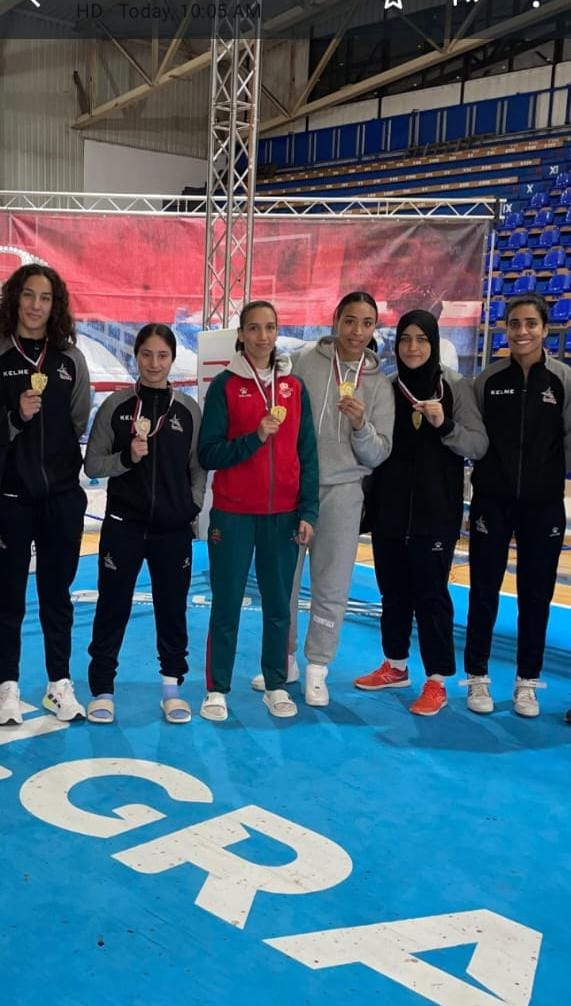
MOROCCAN FEMALE BOXERS TRAINING IN MONTENEGRO FOR SERBIA WORLD TOURNAMENT
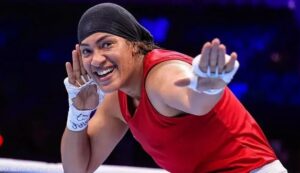
Defending world heavyweight champion Khadija Mardi
Morocco are aiming to surpass their impressive performance in last year’s Women’s World Boxing Championships in New Delhi, India.
The Moroccans have pitched camp in Budva, Montenegro, for this year’s Women’s Worlds in Nis, Serbia between March 8-16.
Team manager Nabil Hilmi, who is now the vice-president of Royal Moroccan Boxing Federation (FRMB), said they will train in Budva for two weeks ahead of the World Championships.
Hlimi said Morocco will be represented by eight boxers in Serbia among them their star pugilists in the 2023 Worlds in New Delhi, Khadija Mardi and Yasmin Mouttaki. Mardi became the first Arab and African female boxer to win a gold medal in the World Championships and Mouttaki settled for bronze.
“They have taken part in a build-up tournament in Belgrade, now they’re training in Budva before the competition,” said Hlimi.
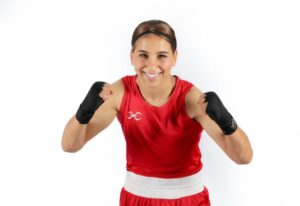
World bronze medallist Yasmin Mouttaki
In addition to defending heavyweight champion Mardi and Mouttaki, other boxers in the team are minimumweight Rabab Cheddar, flyweight Imane Azami, two-time Africa bantamweight champion and Paris Olympics quarter-finalist Wydad Bertal, welterweight Mounia Toutir, light-middleweight Saida Lahmidi and light-heavweight Hasna Larti.
Cuba’s Juan Carlos is the head coach assisted by Barki Ahmed.
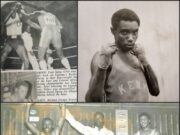
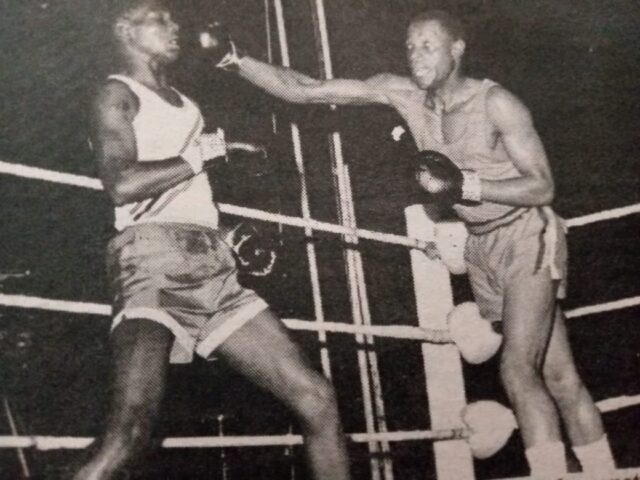
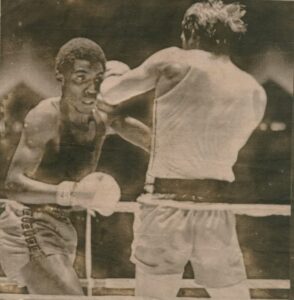
Philip Mathenge (right) outpoints Tanzania's Lucas Musomba in the light-welterweight Fescaaba finals to win one of the nine gold medals for Kenya at the KICC, Nairobi in 1976.
NENEZ BOXING ARCHIVE: The late Philip “PC” Mathenge, who passed on this month, shot to prominence in the 1972 Kenya Open tournament at Pumwani Social Hall, Nairobi.
Philip Mathenge the soldier
Philip “PC” Mathenge was one of the rising stars who announced their arrival in the competitive and exceptionally challenging boxing scene then in the East African nation during the 1972 Kenya Open Championships at Pumwani Social Hall.
He punched his way to the finals outpointing Mombasa’s Yunis Sebby in a thrilling light-welterweight bout.
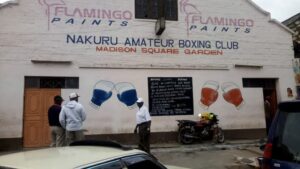
Nakuru ABC, popularly known as Madison Square Garden, is where Philip Mathenge learnt his trade before moving to Kenya Prisons and later KDF.
In addition to Mathenge and Sebby, among other newcomers who made their presence felt were coach Eddie “Papa” Musi’s sensation who shook legengary Philip Waruinge in the Munich Olympics trials, George Oduori named the Best Boxer for putting up a textbook show in the featherweight finals, light-flyweight Peter Ndirangu and another new talent from Nakuru ABC lightweight Edward Kinuthua who caused an upset by defeating fancied Commonwealth Games bronze medallist Kamau Mbugua in the semi-finals and then beat Sammy Kirangu in the finals.
After the Kenya Open, the next big event was the Lagos African Games trials at Pumwani Social Hall. Mathenge was among the boxers selected in the crowded light-welterweight division that had an array of strong boxers among them Yunis Sebby, Boniface Kahoro, and long-serving international Alex Omwomo aka Wachawe or if you like Jack Malloy.
Mathenge was however unsuccessful in the African Games trials. Omwomo, who was beaten by Yunis Sebby in the Kenya Open, bounced back to clinch the Lagos ticket for the 1973 African Games with a hard-fought points win in the finals over Kenya Navy sailor Boniface Kahoro now based in the USA.
Three-time Kings Cup champion Kamau “Pipino” Wanyoike shocked Philip Mathenge in the 1975 Inter-Services Tournament.
Mathenge may not have made it in Kenya’s team for the African Games but his impressive boxing had his opponents in the light-welterweight berth sit up and take notice. They all knew the smart Nakuru boxer – a busy bee in the ring with a repertoire of non-stop onslaught and a smashing jab – was waiting in the wings to don the national vest.
It was not easy though to penetrate through to the Kenya team as Mathenge realised due to the stiff competition during that Golden Era in Kenya boxing.
For the inaugural Urafiki Trophy first leg match against Uganda in May 1973, it was Boniface Kahoro who was selected in the light-welterweight berth.
Others in the Kenya team included Prisons Boxing Club light-flyweight debutant Mohamed Hassan, flyweight George Findo, bantamweight Billy Kiremi, featherweight George Oduori, welterweight John Opiyo, light-middleweight David Attan, middleweight Joseph Kabegi, light-heavyweight Peter Dula and heavyweight Fred “Sachi” Sabat. Urafiki Trophy replaced Brunner-Urafiki Cup formerly Millington Drake Trophy contest between Kenya and Uganda.
The Ugandans, then the reigning Commonwealth Games and Africa champions, hammered Kenya 8-3 bouts at the Lugogo Indoor Stadium. Among the highlights, light-flyweight Baker Muwanga – featuring in his second international tournament after winning bronze in Romania – outpointed Kenya’s Mohammed Hassan, featherweight George Oduori lost to Ayub Kalule and light-heavyweight Mathias Ouma edged out Peter Dula 3-2 at light-heavyweight while Kenya’s heavyweight Fred Sabat stopped debutant Ocen in the first round.
Mathenge had another shot at the national team during the Fescaaba trials at the Desai Memorial Hall but was KO’d in the first round by Karilus Owino of Breweries.
As the national team embarked on preparations for the return leg match of the Urafiki Trophy against Uganda in November, 1973, the Amateur Boxing Association of Kenya, under the chairmanship of Brigadier Cromwell Mkungusi and Secretary-General Cornelius Monteiro, named 24 boxers to go into residential training at the Railways Training College (now Railways Training Institute) with Ali Akubasu picked as coach and trainer Eddie “Papa” Musi. Railways Training Institute supported the ABA with full board accommodation while Breweries sponsored the return leg match.
Mathenge was in the provisional team of 24 boxers with Prisons teammate Kamau Mbugua in the light-welterweight class. Mbugua moved up to pave way for George Oduori in the lightweight division. In the selection trials for Kenya vs Uganda match at Prisons Gym which mostly featured two rounds, Mbugua fought Mathenge with Mbugua winning the nod of the selectors.
Steve Muchoki, middleweight Mohammed Abdallah Kent and heavyweight Sylvester Onyango were the newcomers. Muchoki beat Peter Ndirangu, Kent had an edge over Joseph Kabegi and John Kibe of the Army and Sylvester Onyango was preferred to Sabat.
Three-time Kings Cup champion Kamau “Pipino” Wanyoike shocked Philip Mathenge in the 1975 Inter-Services Tournament.
While Muchoki and Kent made successful debuts against Uganda with Kent scoring an upset points win over the highly regarded Mustapha Wasajja, Onyango was beaten by Ben Masanda. George Oduori defeated Ayub Kalule 3-2 and Kamau Mbugua was KO’d by Vitalis Bbege in the second round of their light-welterweight duel. Kenya beat Uganda 6-5 bouts but the Ugandans won the new Urafiki Trophy by an aggregate of 35-31 points victory.
Two weeks after the Kenya vs Uganda encounter, Mathenge was back in the ring in the final Commonwealth Games trials against Uganda’s former international Peter Odhiambo who had returned home to Kenya and joined the Army. Odhiambo outpointed Mathenge in the finals but it was Mathenge eventually selected because Odhiambo was not eligible having previously represented Uganda’s national team and had not stayed in Kenya over one year.
The Soviet Union national team then came calling for the Jamhuri celebrations tournament in December, 1973. The European champions at the time first walloped Kenya 6-2 bouts at the City Stadium, flyweight George Findo and light-heavyweight Peter Dula the only two Kenyan winners.
Mombasa, Kenya’s beautiful Coastal city was the next destination for the visitors, and that’s when Mathenge finally made his international debut in the second match in Mombasa, losing his lightweight bout to southpaw Rovenbaum.
Mathenge carried the fight to the Soviet boxer in the first round which ended in a cut on Rovenbaum’s nose. The Soviet boxer recovered his poise in the remaining two rounds to carry the day. Though he lost, Mathenge put up a remarkable performance that gave the ABA of Kenya and fans more hope as focus switched to the 1974 Commonwealth Games in Christchurch, New Zealand in January.
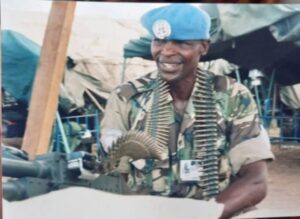
Most machine guns fire between 500 to 1000 rounds per minute. Indeed, Mathenge was on fire in the Commonwealth Games with his signature non-stop flurries against his opponents, prompting a New Zealand radio commentator to coin the nickname Machine Gun for the aggressive Kenyan boxer who was a soldier with the Kenya Defence Forces.
Mathenge first outpointed Canada’s Michael Briere in the last 16 and saw off England’s Thomas Donn in the quarter-finals before going down on points to Guyana’s Anthony Martey to settle for a bronze medal. Other three Kenyan medallists were gold medallist Steve Muchoki with bantamweight Isaac Maina and featherweight Sammy Mbogwa collecting bronze medals.
The 1975 season saw the rise of promising featherweight Patrick “Mont” Waweru, bantamweight Napunyi Oduori, light-welterweights Ali “Ojukwu” Athumani and Kamau “Pipino” Wanyoike who caused a major upset in the preliminaries of Inter-Services tournament at Police Pavillion South C.
Boxing for Prisons, Wanyoike, who won the junior bantamweight title in 1973 at Pumwani Social Hall, shocked Mathenge with a deserved points win to make it to the finals.
Interestingly, Mathenge and Pipino were good buddies out of the ring, and sparred several times when Mathenge was at Prisons before moving to KDF.
“I knew PC’s style very well, what I did was to be faster than him and use my footwork moving in the right direction, he was poor at hitting a moving target,” Pipino, now a farmer at his rural home in Komothai, Kiambu Country, told boxersworld.co.ke in an interview.
Mathenge bounced back forcefully in 1976 winning light-welterweight gold medal in the East and Central Africa Championships at the KICC in Nairobi and qualified for the Montreal Olympics.
Kenya topped in the Fescaaba tournament with nine gold, a silver and bronze followed by Tanzania and Ethiopia. Uganda and Zambia pulled out due to lack of funds. In the finals, Mathenge outpointed Tanzania’s Lucas Musomba.
The rivalry between Mathenge and Wanyoike Pipino was renewed in the 1978 African Games trials at Desai Memorial Hall. This time around, Pipino was more polished than in their first encounter in 1975. The southpaw Pipino was so swift and fast dominating all the three rounds. It was sad seeing Mathenge losing again to the younger Pipino but that’s sports.
You win some and lose some. Luckily enough, the selectors recognized Mathenge’s potential and moved him up to welterweight in the Kenya team named for the African Games in Algiers, Algeria. Mathenge proved himself, bringing home one of the two bronze medals with bantamweight Douglas Maina.
Pipino and middleweight Stephen “Black Bomber” Moi won gold medals while light-flyweight Steve Muchoki, featherweight Napunyi Oduori, lightweight Michael Mwangi and heavyweight Joseph Kabegi returned home with silver medals.
Mathenge’s last major assignment with the national team was at the 1979 Africa Championships in Libya where he fought his way to the finals, dropping a suspicious points defeat to Libya’s Salah el Mehri in the finals and was content with a silver medal.
Kenya won the overall title in Libya with four gold medals (Sande Odanda, George Findo, Ali Athumani and Abdulrahman Athuman), two silvers (David “Wonderboy” Gacheru and Philip Mathenge) and one bronze medal by bantamweight Napunyi Oduori.
Kenya’s first and the only world amateur champion Steve “Destimo” Muchoki described Mathenge as an amiable teammate in the national team.
“PC was a very friendly person and an intelligent boxer. l recall when we were preparing for the 1974 world championships in Havana, I sparred severally with him and learned quite a lot from Mathenge especially how to fight with a southpaw as well as ducking and straight jabs,” said Muchoki who was one of the top boxers to attend Mathenge’s burial.
“He was not selfish and shared freely whatever he knew with us, he was not agile in his movements and not a fighter. I can say he also contributed to my success in Havana.”
I first met Mathenge at Prisons Gym when he joined the service in 1972 from the famous Nakuru ABC, and we became good buddies.
Watching him sparring with some of the top internationals at Prisons, it was obvious PC was not just your ordinary boxer. He was destined for the big stage.
Mathenge was among several of Nakuru boxers who moved to Prisons in search of greener pastures, and later switched to Kenya Defence Forces.
He was very much at home at Prisons with some of Nakuru doyens such as Olympic Games bronze medallist Sammy Mbogwa, Commonwealth Games bronze medallist Kamau Mbugua, Olympic Games quarter-finalist and Africa champion John Nderu, Peter Manene and John Kamau, all of whom were employed by Prisons in the 1960s.
Mathenge joined Prisons almost the same time with another Nakuru product John “Fyatuka” Ng’ang’a.
The late Mathenge was buried on February 12, 2025 at his home in Nakuru in Kenya’s Rift Valley Region.
Fare thee well our brave comrade. You played your part in the ring and brought up your children well as a responsible father.
WBC PRESIDENT ANNOUNCES GROUNDBREAKING BOXING GRAND PRIX AT BETERBIEV vs. BIVOL II PRESS CONFERENCE
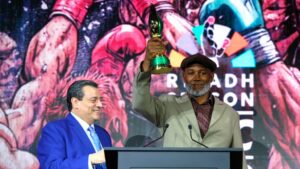
Riyadh, Saudi Arabia – February 20th, 2025 – During the highly anticipated press conference for the Beterbiev vs. Bivol II fight, World Boxing Council (WBC) President Mauricio Sulaiman made a historic announcement: the launch of the Riyadh Season WBC Boxing Grand Prix. This groundbreaking tournament, a long-held dream of Jose Sulaiman, will be the first-ever Boxing World Cup, designed to discover and showcase the next generation of boxing superstars.
President Mauricio Sulaiman emphasized the crucial support of His Excellency Turki Alalshikh and Dr. Rakan in making this ambitious project a reality.
“This Grand Prix is a testament to the vision and passion of my father, Jose Sulaiman,” stated President Mauricio Sulaiman.
“Fourteen months ago, the boxing world has changed due to the arrival of Saudi Arabia, Riyadh season and the leader, his Excellency Turki Alalshikh. When I had the honor to meet Turki Alalshikh, I recognized his passion for the sport and its boxers. When I shared with him my father’s dream, he said immediately, ‘Let’s make it happen.’”
“With the incredible support and vision of His Excellency Turki Alalshikh, Dr. Rakan, his team and Sela, we are bringing to life a tournament that will revolutionize the sport and unearth incredible new talent. This is the first ever event in which the young talents are going to have the opportunity to come out from unknown parts of the world to shine through the Grand Prix.”
The Riyadh Season WBC Boxing Grand Prix will feature:
Four Weight Categories: Featherweight, Super Lightweight, Middleweight, and Heavyweight.
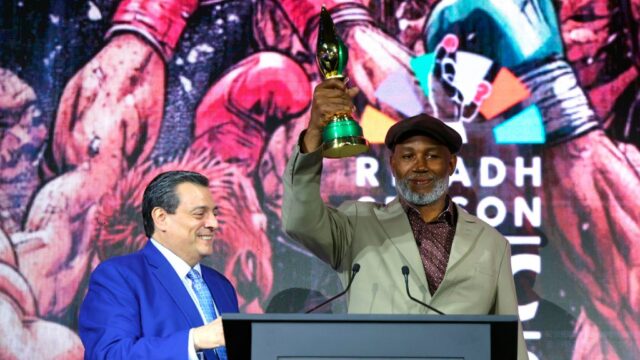
Adding to the prestige of the event, heavyweight boxing legend Lennox Lewis presented the “Jose Sulaiman Trophy,” also known as the Flame of Hope, which will be awarded to the Grand Prix champions. This iconic trophy symbolizes the spirit of competition and the pursuit of excellence in boxing.
The WBC Boxing Grand Prix promises to be a landmark event in the world of boxing, offering a platform for emerging talent and delivering thrilling matchups for fans worldwide. Further details regarding dates, venues, and participating athletes will be released in the coming weeks.
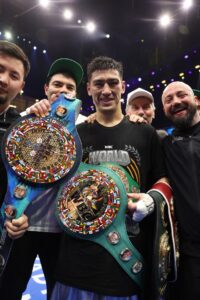
Dmitrii Bivol became the new Undisputed World Light Heavyweight Champion, by defeating Artur Beterbiev by majority decision, in a great fight that took place this Saturday on the card “The Last Crescendo”, at the Kingdom Arena in Riyadh, Saudi Arabia.
Beterbiev defeated Bivol by majority decision in the first fight last October, but this Saturday, the tables were turned by Bivol, who did a great job to win on two scorecards 116-112 and 115-113, with a third tie 114-114.
This rematch between Bivol and Beterbiev was relentless. There were 12 rounds of intense action, in which Bivol’s boxing and intelligence prevailed over Beterbiev’s drive and strength.
At the end of the fight, the Judges assessed the victory to Bivol, leaving open the possibility of a third fight.
With this result, Bivol avenged the first defeat of his professional career, leaving his record at 24-1, with 12 knockouts. Beterbiev lost his unbeaten streak, leaving his record at 21-1, with 20 knockouts.
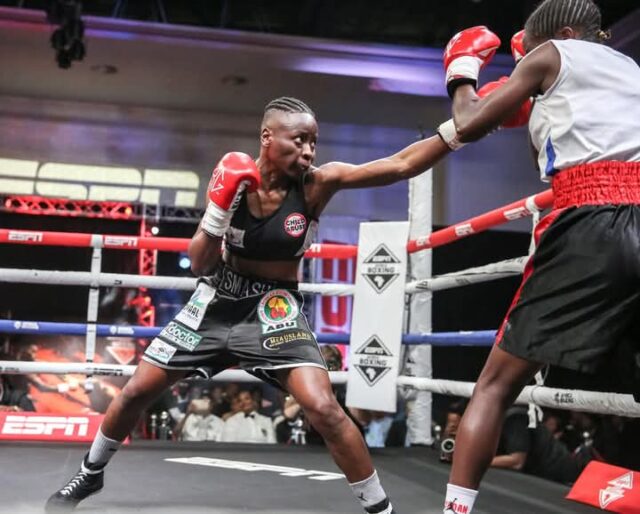
South Africa's Simangele "Smash" Hadebe (left) in a previous fight. Hadebe will vie for the WBC Silver flyweight title on April 5 in Mexico.
WBC CONFIRMS SIMANGELE HADEBE FIGHT IN MEXICO
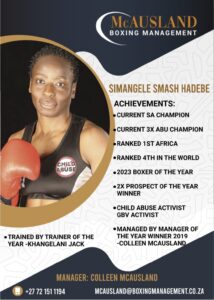
World Boxing Council (WBC) Vice-President Houcine Houichi has confirmed April’s WBC Silver flyweight title fight between South Africa’s Simangele “Smash”Hadebe (14-3-2, 5 KOs) and Mexico’s Gabriel “La Bonita” Sanchez (11-6-0, 1KO).
“Gabriela Sanchez vs Simangele Hadede is confirmed for April 5th, 2025, in Puebla (Mexico) and promoted by Latin KO Promotions. It’s for the Silver flyweight title,” Houichi, who is also the Africa Boxing Union President, told boxersworld.co.ke
Hadebe’s manager Colleen McAusland is so happy finally her boxer is vying for the WBC silver flyweight title after previous fights failed to materialise.
“This is a big one for us in our journey to the top, winning this title will change her life and her siblings too,” said McAusland.
An activist for Gender Based Violence (GBV) herself having been a victim in her childhood, Hadebe will maintain her campaign for protection against the girl child and women in Mexico by donning shorts with the stop child abuse logo.
“I’ve gone through this child abuse a painful mental torture so I can’t stop my activism on GBV,” said Hadebe.
Previous attempts for Hadebe to vie for major international titles did not materialise. She was to have fought Gabriela Sanchez for the IBF Intercontinental title last year but she pulled out and was paired against against another Mexican boxer Almer Meraz in 2023 for WBC International flyweight title which also fell through.
Currently ranked number four in the world, Hadebe is looking forward to the big day with a lot of expectations.
“This is what I’ve been waiting for in my devoted ambition to become a world champion, I’m on my way there,” said Hadebe who is the reigning Africa Boxing Union (ABU) and South Africa flyweight champion.
She became the first South Africa female boxer to win the vacant ABU flyweight title in 2022 by beating Tanzania’s Halima Vunjabei, a feat which earned her the Female Boxer of the Year Award. She has twice successfully defended the ABU title against Tanzanian opponents, Stumai Muki and Jesca Mfinanga.
Head coach Musa Benjamin parades Kenya’s strongest ever team for Women’s World Championships in Serbia
Kenya’s team heading to Serbia for next month’s Women’s World Boxing Championships._ _Standing from left head coach Musa Benjamin, lightweight Emily Juma, welterweight Friza Anyango, light-flyweight Veronica Mbithe, flyweight Lencer Akinyi, bantamweight Amina Martha,_ _light-welterweight Cynthia Mwai, featherweight Pauline Chege and light-heavyweight Liz Andiego. Squatting is Faith Nafuna.
Kenya’s national boxing team head coach Musa Benjamin has selected a star-studded team for the 2025 Women’s World Championships scheduled for Nis, Serbia, next month. It’s the strongest ever nationai female team to represent the East African nation in a major international tournament.
The eight-member team comprises Mandela African Boxing Cup middleweight gold medallist and two-time Africa Championships silver medallist Elizabeth Andiego who is also the captain, Africa Military Games welterweight champion Friza Anyango, Kenya’s first ever female boxer to win a medal in the African Games, bantamweight Amina Martha who won bronze in the continental Games in Accra, African Military Games light-flyweight silver medallist Veronica Mbithe, featherweight Pauline Chege, lightweight Emily Juma, light-welterweight Cynthia Mwai and flyweight Lencer Akinyi who together with Emily Juma and Cynthia Mwai are making their international debut.
It’s Kenya’s fifth time to take part in Women’s World Boxing Championships having previously participated in the 2010, 2012, 2022, 2023 editions.
I interviewed national team head coach Musa Benjamin on their preparations and prospects in Serbia.
*What are you mostly focusing on during your training?*
Besides the muscle, cardio and neurological conditioning, a lot of emphasis is on scoring and defense as well as getting in and out of range without compromising one’s position. The team leaves on the 4th of March in time for sports entry check, technical meeting and draws.
What are Kenya’s prospects in Serbia?
We’re going with high hopes of performing well despite inadequate preparations. We have three debutants we hope will put up their best performance. We might also be lucky for the draw to favour some of our boxers.
What challenges are you facing now in your training?
A non-residential training camp poses several challenges. It’s impossible to have the requisite three sessions a day, and you can’t also monitor the boxers because we’re not in a residential training camp. Lack of equipment is also a big headache.
If you had a choice how would have preferred to prepare for Women’s World Championships?
The team would have trained and competed against the established women boxing countries in various tournaments both in Africa and outside before going to Serbia.
With such inadequate preparations is it possible to challenge the top boxing nations in Serbia?
Nothing is impossible in the ring provided the boxers are physically and mentally ok but of course it’s not easy to compete against the top nations without training camps and exposure tournaments.
What do you think is needed for African female boxers to excel regularly in such major tournaments?
African governments and well wishers must invest in women’s boxing. The potential is there but nurturing and guiding them to the top requires serious support. Long-term training camps, proper motivation and exposure tournaments before the big championships is mandatory
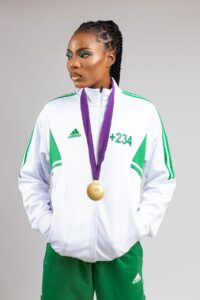
Nigeria's African Games lightweight champion Cynthia Ogunsemilore appeals to IBA to include her in Champions' Night series, dismissing doping allegations at the Paris Olympics as pure lies by IOC
COACH ADURRA HITS BACK AT CRITICS WITH HEAVY PUNCHES ON DOPING RUMOUR
It’s all cheap journalism by some of Nigeria’s gutter press, says a defiant Adurra.
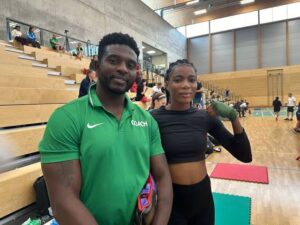
Adurra and Ogunsemilore in Germany training camp ahead of the Paris Olympics
Nigeria’s boxing coach at the 2024 Paris Olympics Adurra Olaleyin has scoffed at critics linking him to the doping allegations at the Paris 2024 Olympics involving African Games lightweight champion Cynthia Ogunsemilore.
“This is simply character assasination, they are looking for positions in the Nigerian board, and I’m not going to allow them,” Adurra, a silver medallist at the 2006 Commonwealth Games, told boxersworld.co.ke from his San Antonio base in the USA.
“They can say whatever they want, it’s a free world. I will release a comprehensive statement in due course.”
“This is total nonsense! It’s a serious allegation of which there will be consequences for it. I don’t have to explain myself again to anyone but I will take lega action that will speak louder than words could,” said a fuming Adurra.
Nairasports, an online Nigerian sports publication, has linked Adurra to Ogunsemilore’s doping revelation in the Paris Olympics.
The 22-year-old Nigerian star boxer, who won bronze at the 2022 Commonwealth Games, allegedly tested positive for furosemide, a banned substance classified as a masking agent.
The out-of-competition sample was conducted by International Testing Agency (ITA) on behalf of the International Olympic Committee (IOC).
Ogun, as she is popularly known in the boxing circles in Nigeria, said the story is pure malice.
“The story is a big lie, I have a lot of respect for my coach Adurra.”
On how she’s getting on with life since her Paris Olympics disappointment, Ogunsemilore said the going is hard but assured me she’ll survive.
“I’m appealing to the International Boxing Association not to forget me, I want to take part in the Champions Night,” said Cynthia, adding: “That was just a plot to deny me winning a gold medal in Paris, I’ve never doped.”
Ogunsemilore was programmed to fight Shih Yi Wu of Chinese Taipei in her Olympic debut before the yet unsubstantiated doping allegation by the IOC.
AFRICAN WOMEN’S BOXING PIONEER IRENE NTELEMO RESHAPED THE LANDSCAPE FOR BOTSWANA AND BEYOND
Botswana has tasted success on the international stage in boxing with titles and medals aplenty since the sport sprung in the 1960’s.
However, development in women’s boxing was largely ignored. Irene Ntelamo was pivotal in that change in attitude. She partnered with Healer Modiradilo, one of the nation’s athletes at the Atlanta 1996 Olympic Games, to form a boxing club and by 2007 was training to be a referee and judge. In 2010, Ntelamo was recognized for her work by being named the best referee in her country.
But it would just be the start for Ntelamo who would receive further recognition administratively. She served on the Botswana Boxing Association (BBA) Executive Committee as the Vice Secretary General at a time where she was the only female administrator from 2009. She then became Secretary General of the BBA until 2017.
That overlapped with her time as a member of the IBA Women’s Commission from 2014 to 2018 and later had a two-year stint on the IBA Women’s Committee. Currently, Ntelamo is a Director on the Board of the African Boxing Confederation (AFBC).
These equality positions were not just handed to the Motswana – she saw a large gap in development and played her part in improving this.
‘My journey into boxing began with a desire to break the gender barrier,’ said Ntelamo. ‘I wanted to engage in something unique that would match my character as well as prove that women are capable.At the time there were no female boxers, so I joined and did other duties like administration and preparation for tournaments. I saw boxing as a powerful tool for women’s empowerment and self-discipline, and I wanted to create opportunities for women to participate in the sport and achieve their full potential.’
She went on to say, ‘In Botswana, women faced unique challenges. Traditional gender roles often limit women’s participation in sports; a lack of access to quality equipment, training facilities, and financial support; concerns about safety and security, particularly in rural areas; and the stigma surrounding boxing as the sport is considered brutal.’
In response, she contributed to the establishment and launch of the Women Boxing in Botswana initiative in 2011, which saw a surge in female participation. Eventually, this would pay off with the 2019 African Games gold medal for Keamogetse Kenosi in the featherweight division. Four years later, she would add a bronze to her medal cabinet.
She established the Women Commission as part of the BBA structure in 2015 too, ushering in attitudes of tolerance and acceptance between men and women in the sport. This was partly achieved by better representation across the structures – with one of the key highlights seeing Pearl Morake appointed as the first female coach in the BBA.
Ntelamo’s work was applauded, and it led to greater opportunities on the continent and internationally. In Africa, she said the biggest issues facing women include limited access to resources and opportunities, women being underrepresented in leadership positions, and an underlying discriminatory attitude based on ‘social and cultural biases’ across nations.
‘While significant progress has been made, these challenges still persist to some extent,’ she said.‘However, there is a greater awareness and focus on addressing them now.’
But it goes beyond that – the lack of female coaches and officials is a pressing concern for her, as is the lack of media coverage and disparity in prize money and sponsorship opportunities. Other areas where improvements can be made include creating sustainable programs for women, strengthening grassroots initiatives to support talent identification, and improving mental health services.
While Ntelamo has a strong opinion regarding what can still be done, she is very encouraged by what has been done so far.
‘The AFBC and IBA have made significant strides in supporting women’s boxing including organizing women-only events, allocating more funding for programs, and promoting gender equality policies,’ she said. ‘The next steps include establishing mentorship programs between young boxers and experienced leaders; providing training programs for female coaches and officials; and further analyzing data on women’s participation in boxing.’
‘For me, boxing is a theory of life,’ Ntelamo went on. ‘You have opponents competing against you, supporters to cheer and motivate you to win and the stage to prove your worth.’
Time after time Ntelamo has proven her worth as a woman in boxing and has now cleared the path for others following her path.
Golden boy Patrick "Baddo" Chinyemba (right) KO'd Ghana's Theo Allotey in the fourth round to win IBA Africa flyweight title in Addis Ababa in 2024. Chinyemba, Zambia's boxing posterboy, is one of the boxers who shone during the tenure of President Dan Chiteule.
SOKONI ELECTED ZAMBIA BOXING FEDERATION PRESIDENT
Bornface Sokoni (left) the new Zambia Boxing Federation President and on the right is SG Bornwell Gift Banda who retained his seat on a walkover.
Bornface Sokoni is the new president of the Zambia Boxing Federation.
Sokoni defeated Mashekwa Nalumango by 25-19 votes in the federation elections held at the National Sports Council of Zambia offices on Saturday, February 15.
Former President Dan Chiteule – elected in 2021 – did not seek re-election because he is unwell. His vice-president Nalumango threw down the gauntlet to challenge Sokoni who stood firm to carry the day.
Bornwell Gift Banda retained his Secretary-General position unopposed. Banda was elected in 2023 following the resignation of Limbikani Phiri.
Under Chiteule’s leadership, Zambia’s national team has achieved immense success.
Olympian Margret Tembo (left) won minimumweight gold at the 2022 AFBC African Men’s and Women’s Championships in Maputo, Mozambique. Below is lightweight gold medallist in Maputo Felistars Nkandu
At the 2022 Africa Championships in Maputo, Mozambique, Zambia placed third with four gold and three bronze medals. Scooping the gold medals were minimumweight Margret Tembo, flyweight Patrick Chinyemba, lightweight Andrew Chilata and female lightweight Felistars Nkandu.
Chinyemba and Chilata maintained their sparkling show punching their way to the quarter-finals of the 2023 World Championships in Uzbekistan, and last year, Chinyemba and welterweight Gerald Kabinda won two gold medals in the African Games in Accra to help Zambia finish fifth overall with two gold, three silver and two bronze medals. Chinyemba also won the IBA Africa flyweight title in the first ever IBA Champions’ Night series in Africa held in Addis Ababa.
At the Paris Olympics, Chinyemba and Tembo represented Zambia but Chinyemba’s hopes of ending Zambia’s 40-year medal drought in the Olympics went up in smoke when he lost to Cape Verde’s David Pina in the quarter-finals.
The following were elected in Saturday’s Zambia Boxing Federation elections: