Home Blog Page 51

PACQUIAO-BARRIOS CARD TO FEATURE FUNDORA-TSZYU REMATCH, ISAAC CRUZ RETURN

0

PACQUIAO-BARRIOS CARD TO FEATURE FUNDORA-TSZYU REMATCH, ISAAC CRUZ RETURN

Manny Pacquiao will end his retirement at 46 to challenge Mario Barrios for the WBC welterweight title July 19 in Las Vegas, sources confirmed to The Ring.


The legendary boxer will return to the ring nearly four years after his supposed final fight when he dropped a decision to Yordenis Ugas.

Pacquiao is one of the sport’s all-time greatest fighters. He’s the only boxer to win titles in eight divisions, capturing them from 108 to 154 pounds.

But his last time in the ring was a December 2022 exhibition in South Korea where he looked far from the dynamo that took the ring by storm.

Pacquiao (62-8-2, 39 KOs) has retired several times before only to return to the ring. His last victory — and great performance — was a July 2019 decision over Keith Thurman.

Pacquiao will attempt to become the second oldest champion in history, surpassing even the late George Foreman who shocked the world when he KO’d Michael Moorer to win the heavyweight crown in 1994.

Pacquiao is the fourth-oldest fighter to win a title, doing so when he defeated Thurman. Bernard Hopkins holds the record at 49.

Barrios, who turns 30 later this month, will enjoy a 16-year age advantage. The Texan is The Ring’s No. 3 boxer at 147 pounds.

Barrios (29-2-1, 18 KOs) is coming off a surprising draw with Abel Ramos in November, a fight where they traded knockdowns. Barrios’ losses came to Gervonta Davis and Thurman.

The fight has been in the works for nearly a year.

“I made history at 40 beating Keith Thurman and I feel at 45, I have a lot left in the game as I haven’t taken a lot of punishment over the last few years,” Pacquiao told this reporter in June. “I want to go out making history.”

Barrios said at the time: “I’m very excited at the possibility of this fight being made. Manny Pacquiao is a future Hall of Famer, a legend and someone I looked up to growing up. To share the ring with him would be an honor and a dream come true.”

The Sebastian Fundora-Tim Tszyu junior middleweight title rematch will serve as the PPV chief support bout, sources said. Fundora upset Tszyu in March 2024 in one of that year’s best action fights.

Isaac “Pitbull” Cruz will return on the undercard, per sources, and one possibility is a rematch with Angel Fierro, whom he defeated in a February slugfest.


Courtesy www.ringmagazine.com

SIGNS OF DECLINE TOO OBVIOUS: WHY MANY ARE NOW PICKING TERENCE CRAWFORD OVER CANELO ALVAREZ

0

SIGNS OF DECLINE TOO OBVIOUS: WHY MANY ARE NOW PICKING TERENCE CRAWFORD OVER CANELO ALVAREZ

People are switching sides from Canelo Alvarez to Terence Crawford in droves, picking Crawford to win their September 12th fight in Las Vegaso.

Unified super middleweight champion Canelo looked old, flat-footed, and slow in his win over IBF champion William Scull last Saturday night in Riyadh. What was really telling was how Canelo, 34, threw only 152 punches in the entire fight. That’s not just because of Scull’s movement. Trainer Robert Garcia is the latest person to go from picking Canelo (63-2-2, 39 KOs) to now leaning toward Crawford (41-0, 31 KOs) winning. Robert saw what we all did with Alvarez, showing signs of deterioration from his long 20-year career.

Three Poor Outings

He’d already shown signs of slippage in his fights against John Ryder and Jaime Munguiao. But after his clash against the hulking 193-lb Edgar Berlanga last September, Canelo has visibly faded. For those who saw that fight, Canelo took some big shots from Berlanga down the stretch and looked worn out in the 12th. He was lucky that boxing no longer has 15-round fights because Berlanga might have stopped him.

“Now, I switch. I always thought Canelo was going to be too big and too strong, but now I’m going to pick Crawford to win this fight,” said trainer Robert Garcia on the YouTube channel of the Boxing Scene. “Crawford is very talented. Great footwork, great combinations, and a very strong fighter.” Canelo’s performance against William Scull last Saturday has gotten a lot of fans to switch their picks.

They’ve jumped off the sinking Alvarez chip and are picking Crawford to win on September 12th. It’s like rats abandoning a ship that is about to take its final plunge. It’s not that they’re fans of the Omaha, Nebraska native’s fighting style. Indeed, many people dislike the way Crawford fights, viewing him as not entertaining to watch, except for his one fight against Errol Spence.

Boxing fans just see Canelo as being over the hill now at 34, as he’s looked poor in three consecutive fights. It started with Jaime Munguia, then Edgar Berlanga, and now Scull. Looking Old “Facing them off, he’s actually the taller man. I’m leaning toward Crawford now. I switched my opinion. I think Canelo looked too slow, too flat-footed, one punch at a time,” said Robert about Canelo’s fight against IBF super middleweight champion William Scull last Saturday night in Riyadh.

Crawford obviously saw the deterioration in Canelo as well, which is one of the reasons he’s so eager to fight him. The money is clearly Terence’s main reason for fighting Canelo, but his looking shot is important as well. If Canelo were the same size as David Benavidez and fighting like him, Crawford wouldn’t be nearly as eager to fight him. He’d still do it for the money, but he’d have a vacant, doomed man look to him if he were facing Benavidez. “I don’t think that’s going to be enough for him to beat Crawford. Crawford is too fast, too strong, and too good,” said Garcia.

courtesy of www.boxing247.com

CANELO ALVAREZ POISED TO OVERTAKE FLOYD MAYWEATHER AND BECOME FIRST EVER $1BILLION BOXER

0

CANELO ALVAREZ POISED TO OVERTAKE FLOYD MAYWEATHER AND BECOME FIRST EVER $1BILLION BOXER


Canelo Alvarez’s business manager Richard Schaefer believes he will become the first boxer to be worth $1billion by 2026.

Alvarez has had a stellar career in the sport of boxing and is one of the biggest name superstars in the modern era.

Canelo is set to become boxing’s first with a $1billion net worth.

The Mexican has already fought in a whole host of lucrative bouts, including against Floyd Mayweather, Gennady Golovkin and Shane Mosley.

He has recently signed a huge four-fight deal with Saudi chief Turki Alalshikh, which is worth a reported $500million.

It was reported he earned a mega payday for his recent lacklustre victory over William Scull, which could be close to $80m.

And he could next bank a monumental career-high purse in excess of $100m for his clash with Terence Crawford in September.

Floyd Mayweather flaunts huge winning bet on Canelo Alvarez’s lacklustre fight

Canelo Alvarez and William Scull create undesired boxing history after low-output fight

As a result, his business manager and advisor Schaefer expects him to become the first to reach that landmark, in terms of net worth.

He told The Ring: “Canelo is, without any question, the smartest businessman in boxing I have ever met.

“And we are going to get him over that next hurdle… He’s going to be the first fighter to break the billion dollar net worth.

“I have zero questions about it. When? Probably next year.

Brutal ringside footage shows Naoya Inoue getting dropped with vicious left hand

“I’m very fortunate. I started with him when he was 17 years old. I’ve known him since then and now he’s 34.

“He’s my friend. So I’m very happy to do that. I’m thrilled, excited to be working for him and with him, handling all different aspects; fight negotiations, all these other businesses, everything.”

His business manager believes he will surpass Mayweather.

Alvarez has already reached the $600m mark in terms of total earnings, and his lucrative contract could tip him over that point.

Boxing legend and former conqueror Mayweather generated over $1.2bn in earnings from his career.

But he is believed to have a net worth of around $400m, down to his investments and luxury lifestyle.

The Mexican has kept focus on the squared circle and has had a lengthy career with more lucrative bouts to come.

He also has big plans for further huge events, which could include a lucrative one-off clash with Jake Paul in the future.

And he has hinted that he could retire in a few years, despite the prospect of boundless lucrative payouts.

Canelo is set for another big and lucrative year in boxing.

He said: “I’ve fought everybody; I’ve fought the best. I’ve won many titles in different weight classes.

“I’ve been the pound-for-pound king, fighter of the year; in everything. If we talk about money, it’s never enough.

“But it’s not just about money. It’s about enjoying everything. I still enjoy boxing.

“That’s why I’m here. But if we talk about money, it’s never enough.

Courtesy talksport.com

ABDULLAH MASON-JEREMIA NAKATHILA ESPN’S CO-FEATURE ON KEYSHAWN DAVIS-EDWIN DE LOS SANTOS CARD JUNE 7 IN NORFOLK

0
ABDULLAH MASON-JEREMIA NAKATHILA ESPN’S CO-FEATURE ON KEYSHAWN DAVIS-EDWIN DE LOS SANTOS CARD JUNE 7 IN NORFOLK
Abdullah Mason will return to the site of the most eye-opening night of his career for his next fight.
The Ring has learned that the undefeated lightweight contender will face heavy-handed veteran Jeremia Nakathila on June 7 at Scope Arena in Norfolk, Virginia.
The bout between Cleveland’s Mason (18-0, 16 KOs) and Namibia’s Nakathila (26-4, 21 KOs) will be broadcast as the co-feature of an ESPN telecast that will showcase WBO lightweight champ Keyshawn Davis and Dominican contender Edwin De Los Santos in the main event in Davis’ hometown.
The highly touted Mason was dropped twice in the first round by Dominican veteran Yohan Vasquez in their fight on the Davis-Gustavo Lemos undercard November 8 at Scope Arena. Mason recovered from those two knockdowns, sent Vasquez to the canvas twice, once apiece in the first and second rounds, and won their fantastic firefight by second-round knockout.
The poised, powerful, skillful Mason has won his two bouts inside the distance since the southpaw’s victory over Vasquez (26-6, 21 KOs).
The 21-year-old contender stopped Stockton, California’s Manuel Jaimes (16-3-1, 11 KOs) in the fourth round on the Davis-Denys Berinchyk undercard February 14 in The Theater at Madison Square Garden in his first fight after he came back to knock out Vasquez.
Six weeks later, Mason floored Mexico’s Carlos Ornelas (28-5, 15 KOs) three times and beat him by technical knockout at the end of the sixth round March 29 at Fontainebleau Las Vegas.
Mason will be a heavy favorite to beat Nakathila, though Nakathila’s power will at least bring some intrigue to their matchup.
Nakathila lost back-to-back bouts by knockout to lightweight contender Raymond Muratalla (22-0, 17 KOs) and junior welterweight prospect Ernesto “Tito” Mercado (17-0, 16 KOs) in 2023. The 35-year-old Nakathila has since won three straight fights in the Namibian capital of Windhoek, where Nakathila has worked full-time as a police officer.
Before his successive stoppage losses to Muratalla and Mercado, Nakathila battered former junior lightweight champion Miguel Berchelt (then 38-2) on his way to a TKO win after the sixth round in March 2022.
The card headlined by Davis-De Los Santos will be officially announced at a press conference Friday afternoon in Norfolk.
courtesy ringmagazine.com

FIVE COUNTRIES ENTER GABON BOXING TOURNAMENT

0

FIVE COUNTRIES ENTER GABON BOXING TOURNAMENT

Five countries have confirmed their participation in the Challenge Omar Bongo Ondimba tournament scheduled for Libreville,Gabon from May 30-June 11.

They are Congo Brazzaville, Cameroon, Angola, Zimbabwe, and the Democratic Republic of Congo.

The registration deadline, initially scheduled for April 28, has been extended to May 16, 2025. It’s not too late to take advantage of this opportunity to assess your elite boxers for upcoming international competitions.

ECONOMICAL ACCOMMODATION: The Gabonese Boxing Federation has negotiated low accommodation rates with hotels in Libreville: full board is set at USD 35 per person per night, *including 3 meals* per day, prepared according to IBA dietary requirements.

LIVE YOUTUBE: All fights will be streamed live on YouTube so your national fans can follow their champions’ battles.

PRIZE MONEY: To motivate our boxers and reward their efforts, *PRIZE MONEY* will be awarded to all gold, silver, and bronze medalists.

Gold medalists will earn $1,600, silver 1,300 and bronze $800.

MLUNDWA: THE FATHER OF PROFESSIONAL BOXING IN TANZANIA

0
Emmanuel Mlundwa (right) at his peak in 1976 outpoints Uganda's Said Tebazalwa.

MLUNDWA: THE FATHER OF PROFESSIONAL BOXING IN TANZANIA

At a young age of 18 years, one of Tanzania’s most decorated boxers, Emmanuel Mlundwa, was already in the national team in 1974 while still a student at Old Moshi Secondary School.

It was at Tabora Boys High School that Mlundwa’s love affair with boxing started. He was in Tabora Boys from 1970-1973.

“It was a must for one to have a hobby, I chose boxing,” recalls Mlundwa, now the Director of Pugilistic Syndicate of Tanzania (PST) which licenses, sanctions and governs professional boxing in East Africa’s largest country.

Mlundwa’s boxing potential saw him win the 1974 National Championships light-flyweight title, stopping Adelhadrus Mukajanga in the second round.

Mlundwa (right) wins national light-flyweight title in 1974.

His success in the National Championships earned Mlundwa a place in the national team and made his international debut in the East, South and Central Africa Boxing Championships held in Dar es Salaam in 1974.

Mlundwa outpointed Uganda’s Kabaka Nasengo in the semi-finals and lost to Kenya’s renowned Steve Muchoki in the finals of the light-flyweight division.

His next major assignment with the national team was in the 1974 inaugural World Boxing Championships in Cuba where he boxed as a light-flyweight. Other Tanzania boxers in Cuba were the late welterweight Wilbert Musa, light-heavyweight Felix Joseph and late heavyweight Joseph Magera.

Mlundwa first outpointed Puerto Rico’s Alfredo Pereira in the round of 32, and in the last 16 he lost to Cuba’s eventual gold medallist Jorge Hernandez who stopped Mlundwa in less than twenty seconds of the first round.

Hernandez didn’t give Mlundwa time to map out any strategy. He unleashed a two-fisted barrage on the Tanzanian boxer who bravely avoided a trip to the canvas but was obviously shaken by the rapid onslaught from Hernandez forcing the referee to wave it off.

While Mlundwa and his compatriots did not win a medal in Havana, they were consoled by the sterling performance of fellow East Africans, Uganda’s Ayub Kalule who won gold at lightweight with Joseph Nsubuga settling for bronze and Kenya’s Steve Muchoki winning silver.

On completion of his secondary education, Mlundwa moved to Old Moshi Secondary School in 1974 for his “A” level education which was two years in form five and six. He studied pure maths, applied maths and physics.

“I started representing the national team in 1974 when I was still a student in form five. I took a lot of interest on education. It’s a very important foundation,” says Mlundwa.

Stubborn young Mulundwa

After Moshi, he studied aircraft maintenance in Ethiopia, graduating with a diploma.

From Ethiopia, his thirst for knowledge took him to London where he graduated with a BSc in computer science and electronics at Keele University.

“I urge boxers to take their education seriously because you can’t box forever. I’m proud of my achievements,” says Mlundwa who’s also an international referee/judge as well as Championships Supervisor.

Mlundwa has also shone as an accomplished referee/judge.

In addition to Cuba, among other international competitions he represented Tanzania include the 1978 African Games in Algiers and the 1980 Moscow Olympics.

In Algiers, Mlundwa powered his way to the finals losing on points to Zambia’s Lucky Mutale after seeing off Morocco’s Mbarek Zarrogui in the semi-finals.

He returned home with a silver medal with light-welterweight Lucas Msomba winning a bronze medal. Tanzania placed ninth overall with Kenya the overall winners.

At the 1980 Moscow Olympics, Mlundwa stopped Syria’s Tala El-Chawa in the round of 32 and lost to Ireland’s Hugh Russell in the round of 16, or pre-quarters if you like.

In addition to Mlundwa who was placed ninth overall in the flyweight division, other Tanzanian boxers in the Moscow Games were bantamweight Gerald Isaac, featherweight Isaac Mabushi, lightweight Omar Golaya, light-welterweight William Lymo, welterweight Lucas Msomba, light-middleweight Leonidas Njunwa, light-heavyweight Michael Nassoro and heavyweight Willie Isangura. The best performers were Gerald Isaac, William Lymo and Leonidas Njunwa all of whom placed fifth overall in their respective weight categories.

Mlundwa’s most memorable victory is in 1976 when he defeated Kenya’s celebrated Steve Muchoki, the 1978 World Championships gold medallist in Belgrade.

“l really enjoyed fighting Muchoki. What helped me is that I didn’t fear him despite the fact that he was boxing at home, I took him head-on to beat him on points.” He remains the only Tanzanian boxer to have defeated Muchoki.

Mlundwa fought Muchoki five times, winning once and losing four times to the great Kenyan boxer.

After Moscow, he had a short stint as a pro boxer, winning two fights and losing one. He then stepped out of the ring to introduce professional boxing in Tanzania in 1982 through the Boxing Union of Tanzania (BUT).

I remember in 1982 Mlundwa assisted me to arrange a fight for Kenya’s stylish boxer Modesty Napunyi Oduori who had decided to fight from home instead of Japan where he turned pro in 1981.

I sent Mlundwa a telegram from Uniafric House where I was operating from, and we maintained our communication. Eventually Napunyi fought Tanzania’s Onesmo Ngowi in the first professional boxing card in Kenya after independence in 1983 at the KICC, Nairobi. The Kenyan KO’d Ngowi in round three to capture the East Africa super-bantamweight title.

1983 contract signing ceremony in Nairobi for the first pro boxing contest in Kenya. Boxing Union of Tanzania President Mlundwa (far left) signs on behalf of boxer Onesmo Ngowi.

Mlundwa has indeed contributed a great deal in the development of boxing in Tanzania and still hopes to do more. Little wonder he has been dubbed the Father of Pro Boxing in Tanzania.

Besides Mlundwa, among other boxers who’ve brought Tanzania fame in amateur boxing include Titus Simba, the first Tanzanian boxer to win a medal at a major championships (he won silver in the 1970 Commonwealth Games at middleweight), Habibu Kinyogoli, Nassoro Michael, Michael Yomba Yomba who won bantamweight gold at the 1998 Commonwealth Games, the Matumla brothers, 2022 Commonwealth Games bronze medalists Yusuf Changalawe and Kassim Mbundwike and Tanzania’s first ever female boxer to win a medal at a major international tournament Grace Mwakamele, a silver medallist in the 2023 Africa Championships in Yaounde, Cameroon.

UGANDAN BOXERS SET TO ROCK NAIROBI AS SEMBUYA TAKES OFF

0
Ugandan pro boxers to fight in Nairobi on May 24. From left Abdul Njego, Henry Kasujja and Owen Kibira.

UGANDAN BOXERS SET TO ROCK NAIROBI AS SEMBUYA TAKES OFF

Three Ugandan boxers have promised Kenyan fans a remarkable performance on the May 24 professional boxing bonanza at Charter Hall, Nairobi.

Light-middleweight Owen Isaac Kibira aka Matrix, light-heavyweight Abdul “Breaker-Breaker” Njego and middleweight Henry “Stopper” Kasujja addressed the media today, May 5, at the Hill Park Hotel during the launch of 12 Sports Round Promotion’s activities in Nairobi.
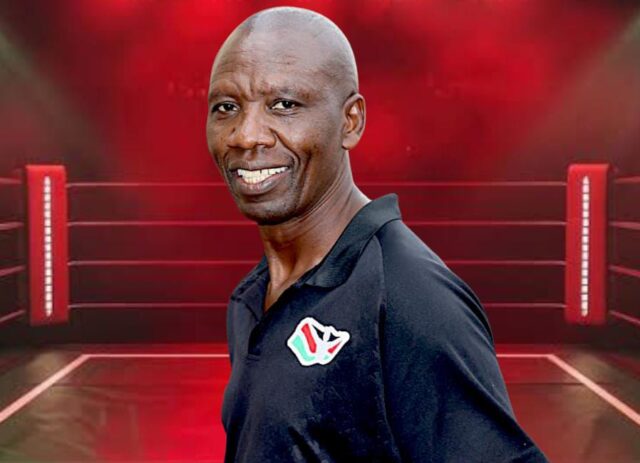
Kenya Professional Boxing Commission chairman Reuben Ndolo (centre) addressing the media during the launch of 12 Sports Round Promotions on May 5 at the Hill Park Hotel, Nairobi.

The promotion company is owned by US-based Steve Sembuya who has decided to relocate to the more prosperous and business-oriented Nairobi to avoid what he described as petty saboteurs of his promotion business in Kampala.

The 19-year-old Kibira, one of Uganda’s hottest properties in boxing, will make his pro debut in the Nairobi show against an opponent yet to be identified, Njego, 7-3-0 (5 KOs), will take on Tanzania’s Ally Hamisi Mzee while Kasujja, 11-1-1, battles Malawis Charles Misanjo, 31-25-1, in a 10-round non-title welterweight bout which will be the main fight. The 11- bout card will feature boxers from Uganda, Kenya, Tanzania, Malawi and Sweden.

All the three Ugandan boxers are already in love with Nairobi, the beautiful City in the Sun and the Mecca of Boxing in East and Central Africa.

“Nairobi is such a nice city I like it, I’m happy to be fighting here,” said Kibira, champion in the welterweight and light-middleweight divisions in the Champions League in Uganda.

Njego, the KO specialist, warned his Tanzanian opponent to be prepared for a thorough beating.

“I’ll break his jaw if he’s not careful, he’ll be lucky if the fight goes up to the third round,” said Njego.

Kasujja, the Ayub Kalule champion, said he is aiming to torment his Malawian opponent and entertain Kenyan fans.

Two-weight Champions League king Owen “Matrix” Kibira will make his professional debut in the May 24 show in Nairobi.
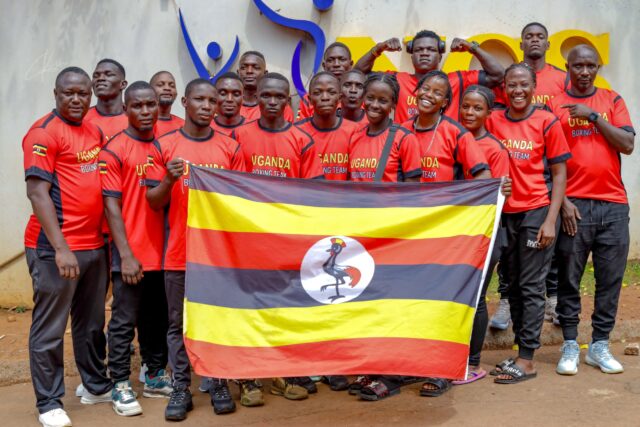
“I’m not aiming for a KO, I want Kenyans and our fans from Uganda to enjoy boxing,” said Kasujja whose name means malaria.

“I can as well infect my opponent with malaria,” quipped Kasujja.

The three boxers were accompanied by the spokesman and advocate of 12 Sports Round Promotion Joshua Sewankambo.

“We’re really delighted by the warm welcome we’ve received in Nairobi,” said Sewankambo, “this is just the beginning of our long association with Kenya, we plàn to have six more fight nights in Nairobi, over 30 fans from Uganda are coming for the Nairobi fight night.”

Ugandan female boxers, featherweight Jesca Nakiridde and bantamweight Rosette Nakigudde, will also fight in the supporting bouts including Kenya’s Denzel Onyango and Uganda’s Isaac Zebra Jr.

The function was also graced by the chairman of the Kenya Professional Boxing Commission (KPBC) Reuben Ndolo flanked by his secretary general Franklin Imbenzi and assistant secretary general Julius Odhiambo.

FURIOUS JAKABABA WARNS OKAKA AHEAD OF BUSIA LEAGUE

0
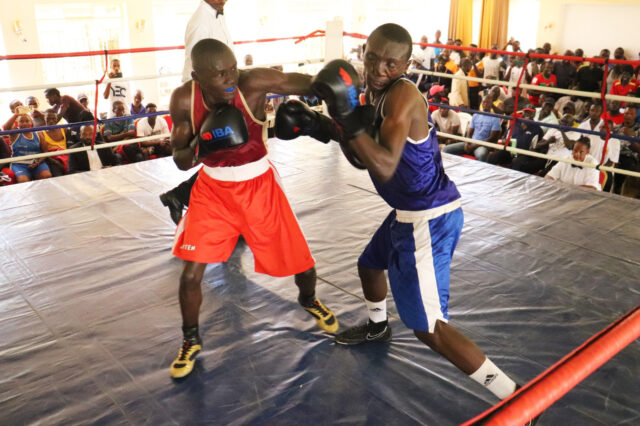
Humphrey "Jakababa" Ochieng (left) is baying for the blood of his arch-rival Robert Okaka aka Man Man Ngori. The two are set to meet for the third time in first leg of the league in Busia mid this month.
FURIOUS JAKABABA WARNS OKAKA AHEAD OF BUSIA LEAGUE

▪️“Let him talk that’s his stronghold, what I know Jakababa is now my customer, says a defiant Okaka

A furious Humphrey “Jakababa” Ochieng is baying for the blood of his tormentor and bitter rival Robert Okaka aka Man Man Ngori.

Jakababa, a member of Police “Chafua Chafua” Boxing Club, has lost twice to KDF’s Okaka, first in the national league last year in Nanyuki and in this year’s Kenya Open finals.

In their second encounter at Nairobi’s Charter Hall, soldier Okaka was a in a picnic firing on both cylinders with Jakababa failing to rise to the occasion losing on points 4-1.

Okaka is declared the winner over Jakababa (right) in the Kenya Open light-heavyweight final bout at the Charter Hall last month.

“God willing we will meet again in the league in Busia, it won’t be easy,” says Jakababa looking ahead to the first leg of the Kenya National Boxing League in Busia, on the border of Kenya and Uganda.

“This is sport I don’t take it personal but I know he does feel me in the ring, he is aware I’m a hard nut to crack,” says Jakababa.

A defiant Okaka, who has refined his boxing style, is unshaken by Jakababa’s warning.

“Let him talk that’s his stronghold, what I know is that Jakababa is now my customer,” says Okaka.

“This time he’ll be punching shadows, I’m the best light-heavyweight in Kenya,” says the two-time bronze medalist in the Africa Championships.

The opening leg of the national league is set for mid this month.

Sparks will fly in this eagerly awaited third fight between Okaka and Jakababa.

TANZANIA’S HABIBU KINYOGOLI SHOCKS FANCIED DEO MUSOKE

0
Habibu Kinyogoli in a training session with one of his boxers in Dar es Salaam.

NENEZ BOXING ARCHIVE

TANZANIA’S HABIBU KINYOGOLI SHOCKS FANCIED DEO MUSOKE

Habibu Kinyogoli’s 1971 victory over Deo Musoke catapulted him to instant fame.

It was one of the major upsets of the inaugural East Africa Federation Boxing Championships at Nairobi’s City Hall.

1970 Commonwealth Games

The two boxers met in the semi-finals with Uganda’s Musoke the overwhelming favourite over the relatively unknown Tanzanian boxer. Kinyogoli made his international debut in 1969 in Lusaka and represented his country at the 1970 Commonwealth Games in Edinburgh, Scotland.

While Kinyogoli was eventually beaten by lightweight gold medalist, Nigeria’s Abayomi Adeyemi in Scotland, Musoke punched his way to the featherweight final, losing on points to Kenya’s boxing professor Philip Waruinge.

Millington Drake Trophy Contest, Kampala

Musoke avenged the defeat towards the end of 1970 by stopping Waruinge in the third round in the first leg of the Millington Drake Trophy contest in Kampala.

Against this background, the Ugandan was not only favoured to make easy work of the inexperienced Tanzanian from the Coastal region of Kisarawe but was also one of the hot prospects for the featherweight gold medal with Kenya’s 1966 Commonwealth Games bronze medalist John Nderu.

The City Hall was packed. Musoke started the fight with both guns blazing but the gutsy Kinyogoli was unshaken. He gave in as much as he received.

“I was feeling his punches, a very strong boxer and a fighter,” recalls Kinyogoli, now 75 years old and coaching youngsters at Kinyogoli Boxing Foundation Gym at Ilalala, Dar es Salaam.

Kinyogoli says Musoke then hit him with a chopping blow to the neck, an obvious foul which went unnoticed by the referee if indeed he did it since scoring blows are those delivered with the knuckle part of the glove. However, boxing being a fast-paced game makes some boxers apply dirty tricks to get the better of their opponents.

“He hit me with a karate blow on my neck, it was so painful, I briefly lost consciousness,” says Kinyogoli who remembers most of his fights and names of boxers he fought.

“I didn’t show Musoke he hurt me, I kept on moving quickly until I was back to my senses. This is when courage and perseverance in boxing matter a lot. The fans cheer but they don’t know what we go through in the ring.

“I decided to keep him close, shaking him with my right punch, that was my main weapon in the ring. He was such a tough fighter, no matter how hard I punched him with my strong right punch he kept on coming hitting me also.”

The Tanzanian was in the driver’s seat in the third round as the crowd cheered him on.

“I could hear Kenyan fans singing “Mwalimu kasema” it can be done, a popular song then praising our President Mwalimu Julius Nyerere.”

Kinyogoli shocked the fancied Ugandan with a unanimous points victory. The other major upset was the defeat of Kenya’s 1970 Commonwealth Games silver medalist John Olulu by Uganda’s newcomer David Jackson in the welterweight division.

The final pitted Kinyogoli against Kenya’s John Nderu who displayed his usual ring craftsmanship to smartly outpoint the Tanzanian to win the gold medal. Kinyogoli was the only Tanzanian in the final, and he returned home to a heroes welcome with a silver medal.

“Nderu like most Kenyan boxers was stylish in the ring. His punches were clean and well timed, “alicheza ngumi za hesabu mpaka wakati mwingine nacheka mwenyewe alivyonipata.”

“Nderu was boxing like Waruinge, a boxer I admired a lot and tried very much to emulate him, he was not rough but very steady and intelligent with accurate punches, the best boxer I’ve seen in Africa. Even John Olulu was a good boxer with a nice jab.”

Despite defeating Musoke, Kinyogoli picks out the Ugandan as the toughest boxer he fought in Africa.

“Musoke is the most stubborn boxer I met, I can’t forget the Nairobi fight.”

Tanzania finished fourth overall in the five-Nation East Africa Federation tournament with one silver and eight bronze medals. One of Tanzania’s bronze medalists was 1970 Commonwealth Games silver medalist Titus Simba who was beaten by Uganda’s Africa middleweight champion Mathias Ouma. Uganda with five gold, four silver and two bronze medals topped the medals chart followed by Kenya, Zambia and Ethiopia in fifth place.

African Championships, Railway Club,1972

In 1972, Kinyogoli was back in Nairobi again, this time for the fifth Africa Championships at the Railway Club.

Tanzania was represented by six boxers, light-flyweight Bakari Kitivu, flyweight Saidi Tambwe, bantamweight Frebitus Bitegeko, featherweight Habibu Kinyogoli, light-middleweight Mbaraka Mkangai and middleweight Titus Simba. They were placed ninth overall with a bronze from light-flyweight Kitivu.

Kinyogoli was beaten in the quarter-finals by DR Congo’s C. Mputu who made it to the finals and lost to Kenya’s Sammy Mbogwa.

Olympic Games, Munich, 1972

After Nairobi, the next major assignment for Kinyogoli was in the 1972 Olympic Games in Munich where Tanzania won no medal.

I ask Kinyogoli besides himself who else was in Tanzania’s team for the Munich Olympics.

“We had light-fly Bakari Suleiman, flyweight Saidi Tambwe, bantam Bitegeko, feather myself, light-welter Willam Limo, welter Mbaraka Mkangai, middleweight Titus Simba and a light-heavyweight from Arusha I can’t remember his name now.”

Kinyogoli went on to represent Tanzania in several major international tournaments among them the 1973 African Games in Lagos and 1974 Commonwealth Games in Christchurch, New Zealand. In Lagos he brought home a silver medal, losing the bantamweight final to Uganda’s Dan Omollo. He was in Africa’s team which met Latin America in 1973 in Mexico.

Coaching Career

Kinyogoli called it quits in 1976 to concentrate on his pet project of coaching junior boxers.

“I started my boxing in 1958 as a light-welter, went down to lightweight, featherweight and bantamweight. My first coach was Said Uliza. In 1969 I represented Tanzania in my first international in Lusaka, they were celebrating their independence. I lost to Mwansa (Kenneth), I retired in the second round.”

He then had a short stint in professional boxing when the bare-chested game was introduced in Tanzania in 1982. Kinyogoli unsuccessfully vied for the East Africa featherweight title against Kenya’s George Findo aka Mosquito at the KICC in Nairobi in 1984.

KINYOGOLI’S APPEAL TO PRESIDENT SAMIA

0
Tanzania's former star boxer Habibu Kinyogoli (right) and one of his boxers Said Nyamaume at Kinyogoli Boxing Foundation Gym in Ilala, Dar es Salaam.

KINYOGOLI’S APPEAL TO PRESIDENT SAMIA

▪️ He wants the President to build him a modern gym at his Maneromango home in Kisarawe District in the Coast Region

At 75 years of age, Habibu Kinyogoli, one of Tanzania’s most prominent boxers, is still strong enough to hold pads for his boxers during their workout sessions at his foundation gym in Ilala, Dar es Salaam.

He has rented one of the rooms in a building owned by the ruling party CCM and converted it into a gym for Kinyogoli Boxing Foundation.

Over 30 youthful boxers train daily at the gym, and one of them is Kinyogoli’s last born son, 17-year-old Jawadu Habibu Kinyogoli, a budding super-flyweight boxer.

“Each day we have more than 20 boxers training here, it’s a popular gym but it’s getting smaller because of the ever increasing number of boxers,” says Jawadu who aims to emulate his famous dad, one of Tanzania’s forgotten sports heroes.

“It’s amazing to see my father training with us, moving around with pads as boxers punch hard and he doesn’t complain, he’s still fit.”

Kinyogoli represented Tanzania’s national team from 1969 to 1976, winning several medals among them two silvers in the 1971 inaugural East Africa Federation Championships in Nairobi and the 1973 African Games in Lagos, Nigeria. He was also at the 1970 Commonwealth Games in Edinburgh, Scotland and 1972 Olympics in Munich, Germany.

Many boxers at his age resign to fate, hardly associating themselves with boxing. Not so for Kinyogoli.

The passion that Kinyogoli had when he started boxing in 1958 at his home in Maneromango, Kisarawe District in the Coast Region, is still very much alive.

“Boxing is in my blood, I’m addicted to the sport, what I’m lacking is proper support to impart my knowledge to junior boxers,” points out Kinyogoli.

“I started coaching the youth in 1976 because no country can prosper in boxing without a proper junior and youth programme,” says Kinyogoli. The veteran boxer groomed one of Tanzania’s current top professional boxers, super-featherweight Ibrahim Class. The famous Matumla boxing brothers are also his products.

Kinyogoli recalls when he started coaching junior boxers he was using part of his salary to handle their daily needs like bus fare and other miscellaneous expenses.

“I was still working for Tanzania Ports Authority by then but now without a job it’s not been easy coaching the juniors.”

For this reason, Kinyogoli has appealed to Tanzania’s President Samia Suluhu to build him a modern gym at his Maneromango home in Kisarawe District where he will conduct his junior and youth coaching sessions comfortably away from the hustle and bustle of the city centre.

Kinyogoli is proud of the president’s support for sports development in Tanzania which he describes as a new beginning.

“I will be very happy if our beloved president assists me on this project, and if possible make it a full package by extending the construction to include my own house which I can remember with the gym for what I’ve done for my country in boxing. They should not wait until I’m gone and then praise me for what I did for the country. Do it now please.”

In addition to the former celebrated boxer nurturing the talent of upcoming boxers, he says the Kinyogoli Boxing Foundation in Kisarawe can also be used to train young coaches who will eventually take over from him to maintain his legacy in this ambitious project.

Kinyogoli feels for Tanzania boxing to produce good boxers, more emphasis should be on putting proper structures in place so that boxers have a systematic transition from one stage to another.

“We must embrace junior and youth programme in the provinces,” says Kinyogoli,

“As coaches and former boxers we’re crowded in Dar es Salaam, we need more coaches in the provinces to develop the juniors from there.

“I got my junior coaching programme going at Simba Sports Club in 1976. As a staunch Simba supporter the club officials gave me one of the rooms. That’s where I coached the Matumla brothers to success and former international Joseph Marwa. We later moved to Railway Club and then Amana Centre.”

Kinyogoli’s interest in boxing was aroused by coach Saidi Uliza who taught him the fundamentals of the game when he started boxing in 1958 at his rural home in Maneromango in Kisarawe, one of the six districts in Tanzania’s Coast Region.

He says coach Uliza was a boxer during his hey days at Arnatouglu Club, and mostly they used to fight against the visiting navy sailors.

MOST COMMENTED