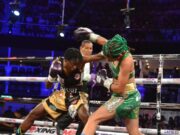
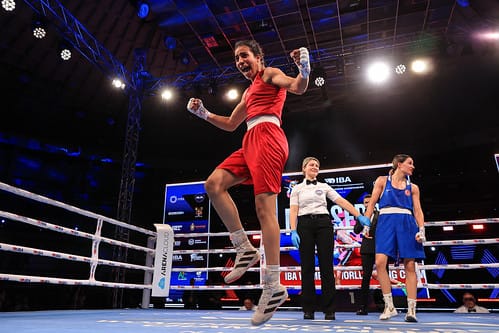
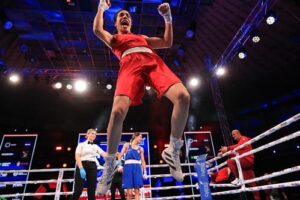
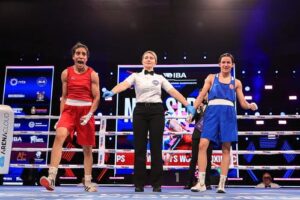
Morocco's bantamweight Widad Bertal jumps up in joy on becoming Africa's second female boxer to win gold at the 2025 Women's Worlds in Serbia
7/11/2025
The African (AFBC) and Asian (ASBC) Confederation Championships have been rescheduled to 2026, allowing IBA to ensure top-tier organizational standards and optimal event delivery.
African Prize Money Centralization
IBA has centralized the distribution of African prize money to ensure transparency and fairness. This reform addresses previous inefficiencies and sets a new benchmark for financial governance.
World Series of Boxing (WSB) Revival
The much-anticipated revival of the World Series of Boxing (WSB) remains a key strategic goal. While its relaunch has been deferred to 2026 to prioritize the upcoming World Championships, IBA envisions WSB as a bridge between amateur and professional boxing—designed to invigorate competition, inclusivity, and innovation across the sport.
World Championships and Congress Preparations – Dubai 2025
The IBA Men’s Elite World Championships (2–13 December) in Dubai will serve as both a global sporting showcase and a celebration of IBA’s 75-year legacy. The Championships will be accompanied by the IBA Business Forum (12 December) and the IBA Congress (13 December)—gathering a large contingent of National Federations in what promises to be a landmark week for the sport.
Final negotiations on logistics, accommodation, and security are nearly complete, ensuring a world-class experience for athletes and attendees. A global marketing campaign is also underway to highlight the Championships’ cultural and sporting significance.
▪️ It’s redemption time for Shaffi following an indifferent performance in his recent fights
7/11/2025
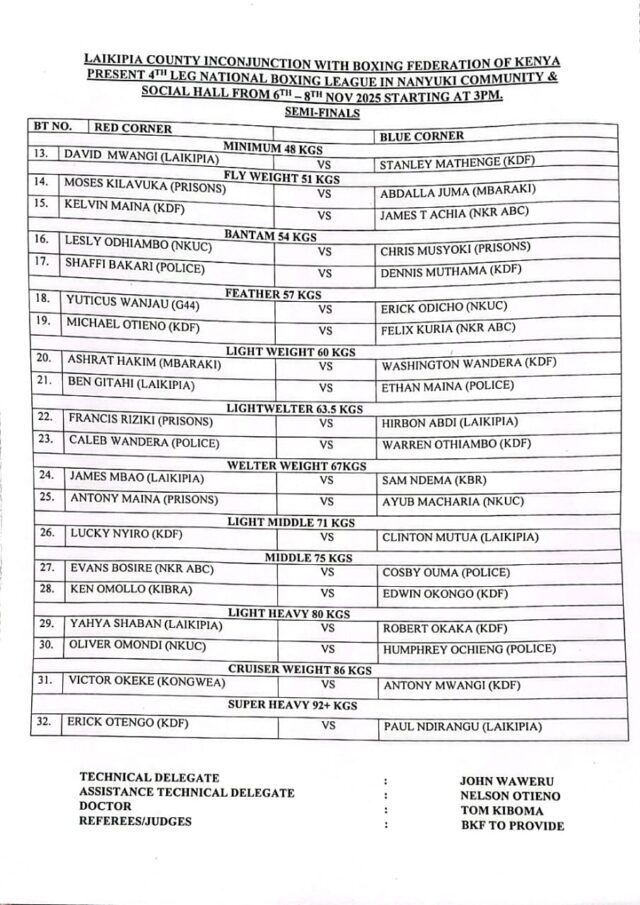
The bantamweight rematch between long-serving international Shaffi Bakari of Police and KDF’s Dennis Muthama is the highlight of today’s semi-finals of the Kenya National League 4th leg at Nanyuki Social Hall.
Muthama outpointed Shaffi in the second leg of the league in Kenya’s Coastal town of Mombasa.
Coupled with his quarter-finals loss in the Africa Zone 3 Championships in Nairobi, Shaffi must redeem himself today otherwise Muthama will take over the bantamweight division.
Muthama, a gold medallist in the Africa Military Games in Abuja, is ambitious to dethrone Shaffi who has been representing the national team from 2017 but now finds himself in a very tight corner to convince the selectors he’s still worth his salt.
A smooth operator in the ring, Shaffi, a silver medallist in the 2019 African Games, is capable of turning the tables with more aggression
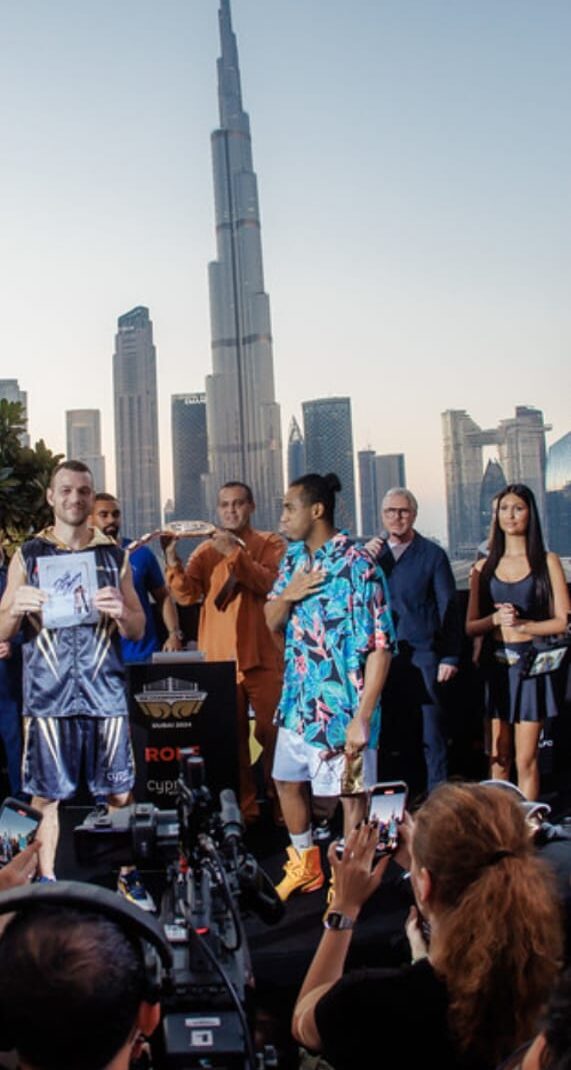
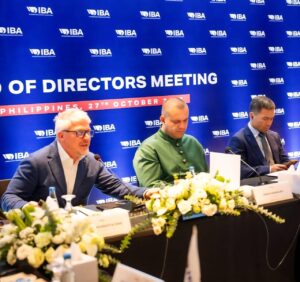
Against a background of Dubai's glittering skyscrapers, IBA President Umar Kremlev and Secretary-General/CEO Chris Roberts presided over a colourful press conference ahead of the 2024 Champions' Night.
▪️As IBA enters this pivotal phase, Chris Roberts OBE, IBA Secretary-General and CEO expressed gratitude to all National Federations for their ongoing support and collaboration.
“While challenges remain, our collective resilience and shared vision are shaping a bright future for boxing. Dubai will not only celebrate our athletes but also the progress we’ve made together as a global boxing family,” said Chris Roberts.
IBA looks forward to welcoming all members and partners in Dubai this December for what promises to be a defining celebration of unity, excellence, and the enduring spirit of boxing.
O6/11/2025
The International Boxing Association (IBA) has issued its latest update to National Federations, providing a comprehensive overview of strategic developments, governance progress, and event preparations as the organization heads into a defining year-end period highlighted by the IBA Men’s Elite World Championships and IBA Congress, both set to take place in Dubai this December.
Master planner IBA CEO/Secretary-General, Chris Roberts OBE, and the most successful ever President of the world’s governing amateur boxing body, Umar Kremlev, have exemplified the professional values of IBA through their collaboration that has won them admiration from their NFs worldwide
Strategic Progress and Organizational Recalibration
The months of September and early October marked a phase of strategic recalibration for IBA, aimed at aligning priorities and resources toward sustainable growth. The organization undertook a holistic review of operations to strengthen internal governance, refine regulatory frameworks, and enhance stakeholder engagement.
This renewed focus comes as IBA continues to build on its core mission—advancing the sport globally while fostering transparency, accountability, and athlete-centered development.
Advancing Global Projects and Initiatives
IBA’s engagement with bare-knuckle boxing organizations underscores its intent to expand into emerging combat sport domains. The collaboration aims to harmonize safety standards, protect athletes, and explore future joint ventures, ensuring that innovation in the sport remains grounded in regulation and athlete welfare.
World Series of Boxing (WSB) Revival
The much-anticipated revival of the World Series of Boxing (WSB) remains a key strategic goal. While its relaunch has been deferred to 2026 to prioritize the upcoming World Championships, IBA envisions WSB as a bridge between amateur and professional boxing—designed to invigorate competition, inclusivity, and innovation across the sport.
Expanding the Communications Team
Recognizing the growing importance of storytelling and digital engagement, IBA has expanded its communications department, bringing in new boxing specialists to enhance outreach and global visibility. The expanded team is tasked with crafting narratives that reflect IBA’s values, achievements, and leadership in world boxing.
IBA–ISDE Governance Course Launch
A major milestone in IBA’s educational initiatives, the IBA–ISDE Sports Governance Course was launched on 30 October in partnership with the Institute of Sports Law and Education (ISDE). The program equips current and future sports leaders with essential governance knowledge, reinforcing IBA’s commitment to integrity, transparency, and excellence in administration.
Continental Developments
OCBC Championships – French Polynesia
The Oceania Boxing Confederation (OCBC) Championships held in French Polynesia exemplified IBA’s dedication to regional growth. The event drew significant participation across the region, boosting visibility and identifying new talent for the global stage.
AFBC & ASBC Events Rescheduled
The African (AFBC) and Asian (ASBC) Confederation Championships have been rescheduled to 2026, allowing IBA to ensure top-tier organizational standards and optimal event delivery.
European Boxing Academy & EUBC Championships
October saw key European leaders convene in Assisi for the European Boxing Academy meeting, charting the Academy’s development ahead of its official 2026 launch. Meanwhile, Armenia hosts the EUBC Youth & U23 Championships (1–11 November), showcasing emerging European boxing talent and reinforcing Armenia’s growing role as a hub for elite competition.
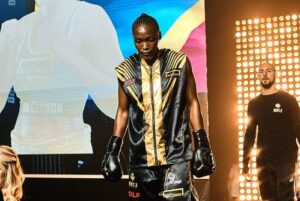
Morocco’s bantamweight Widad Bertal is over the moon, becoming Africa’s second female world champion in Serbia
Governance and Financial Oversight:
Prize Money Centralization
IBA has centralized the distribution of African prize money to ensure transparency and fairness. This reform addresses previous inefficiencies and sets a new benchmark for financial governance.
Financial Sustainability and External Audit
The organization has implemented cost-optimization measures to reinforce financial stability while maintaining investment in strategic priorities. An independent external audit—currently underway—will be presented at the Dubai Congress, reaffirming IBA’s commitment to fiscal accountability and good governance.
Constitution Review
A comprehensive legal review of the IBA Constitution is; progressing under the guiding principle: “Strong foundations build lasting legacies.” The revised framework will modernize governance structures and enhance member engagement, marking a pivotal step toward long-term stability.
World Championships and Congress Preparations – Dubai 2025
The IBA Men’s Elite World Championships (2–13 December) in Dubai will serve as both a global sporting showcase and a celebration of IBA’s 75-year legacy. The Championships will be accompanied by the IBA Business Forum (12 December) and the IBA Congress (13 December)—gathering a large contingent of National Federations in what promises to be a landmark week for the sport.
Final negotiations on logistics, accommodation, and security are nearly complete, ensuring a world-class experience for athletes and attendees. A global marketing campaign is also underway to highlight the Championships’ cultural and sporting significance.
Event Highlights:
• 2–13 December: IBA Men’s Elite World Championships
• 11 December: IBA Pro Face-Off & Arrivals Dinner
• 12 December: IBA Business Forum / IBA Pro Event
• 13 December: IBA Congress / World Championships Finals / Gala Dinner
Istanbul Business Forum – Strengthening Strategic Alliances
The IBA Business Forum in Istanbul earlier this year marked a turning point in IBA’s global engagement strategy. With the participation of influential figures including IBA President Umar Kremlev and Donald Trump Jr., discussions centered on uniting business and sport to drive sustainable growth and innovation in boxing.
The forum resulted in new commercial partnerships, stronger global alliances, and reaffirmed IBA’s vision of uniting continents and generations through the power of sport.
Looking Ahead
IBA continues to monitor global boxing trends, including the resurgence of bare-knuckle boxing, while maintaining its focus on athlete safety and the sport’s integrity. Strategic transition planning is ongoing to ensure IBA remains adaptive, forward-thinking, and a true leader in global boxing governance.
A Message from IBA Leadership
As IBA enters this pivotal phase, Chris Roberts OBE, IBA Secretary General and CEO expressed gratitude to all National Federations for their ongoing support and collaboration.
“While challenges remain, our collective resilience and shared vision are shaping a bright future for boxing. Dubai will not only celebrate our athletes but also the progress we’ve made together as a global boxing family.”
IBA looks forward to welcoming all members and partners in Dubai this December for what promises to be a defining celebration of unity, excellence, and the enduring spirit of boxing.
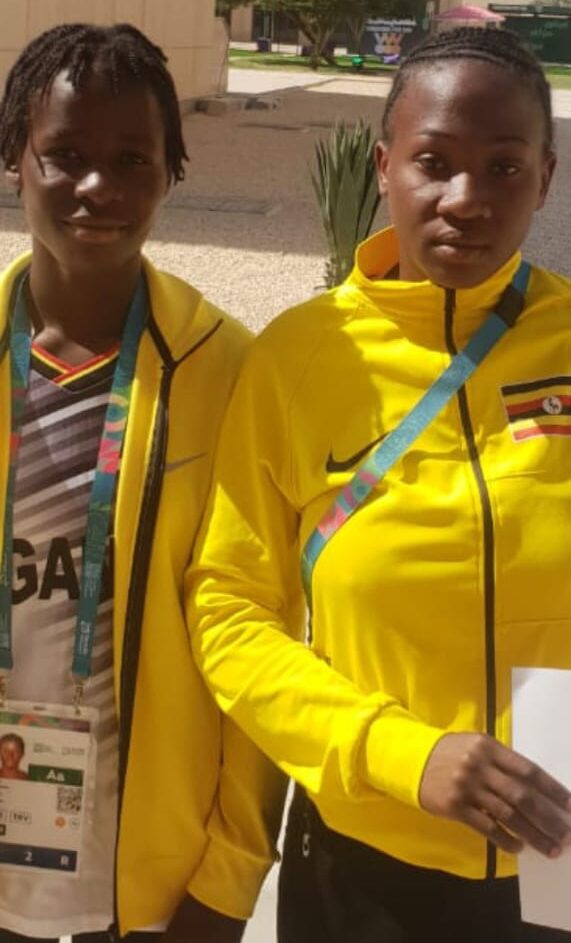
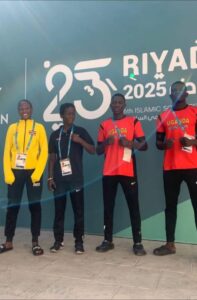
Uganda's Africa Zone 3 featherweight champion Fatuma Nabikolo (right) and Zone 3 bronze medallist Angel Katushabe (left) will not take part in the Islamic Games in Riyadh because they didn't undergo the Gender Eligibility Test
▪️Fatuma Nabikolo and Angel Katushabe are among the boxers who will not take part because their federations didn’t comply with the requirement of having their female boxers undergo the test to prove they’re biologically female
6/11/2025
Uganda’s Africa Zone 3 featherweight champion Fatuma “The Thunder” Nabikolo and flyweight Angel Katushabe have been declared ineligible to take part in the Islamic Solidarity Games boxing tournament in Riyadh, Saudi Arabia.
Reason? The Uganda Boxing Federation did not comply with the tournament rules requiring all female boxers to undergo the Gender Eligibility Test.
Coach Sam Kabugo said Uganda is one of the countries affected with among others Egypt, Sudan and Palestine.
The Riyadh boxing tournament is being held under the auspices of World Boxing which has now made it mandatory for all female boxers to undergo the Gender Eligibility Test to ascertain they are biologically female.
Contacted by boxersworld.co.ke, Uganda’s coach Sam Kabugo said they were unaware of this requirement.
“This is our first time to participate in a tournament organised by World Boxing, so it’s one of their strict rules for female boxers to undergo the gender test,” said Kabugo, adding: “Uganda being first timers and other countries like Egypt, Sudan, Palestine we were all affected by this requirement. All their female boxers were also disqualified because they had not done the gender eligibility tests for female boxers.”
For the two promising Ugandan female boxers, this is a big blow to their earlier excitement of taking part in the Islamic Games. They were among the 15 Ugandan medallists in the Africa Zone 3 Championships held recently in Nairobi.
Fatuma Nabikolo was in spanking form in her 5-0 points victory over DR Congo’s Phoba Kerene in the featherweight final. Angel Katushabe settled for a bronze medal following her defeat by DR Congo’s Africa flyweight champion Nyembo Gisele in the semi-finals.
Bubbling with confidence, Fatuma, a hot property in Uganda boxing, was looking forward to win another gold medal. “I’m going for my second gold medal in Riyadh, my morale is high,” Fatuma told boxersworld.co.ke in an interview.
After being told they were ineligible to take part in the Islamic Games, Fatuma’s ambition went up in smoke. “It’s so sad, I’m heartbroken but I take it like another punch in the ring, I’ll recover and move on to the next competition,” said Fatuma.
World Boxing has made it compulsory for female boxers to undergo Gender Eligibility Test in the wake of the controversy surrounding Algeria’s Imane Khelif and Taiwan’s Lin Yu-Ting at the 2024 Paris Olympics.
The International Olympic Committee (IOC) ignored a ban on the two boxers imposed by the International Boxing Association (IBA) at the 2023 World Championships in India.
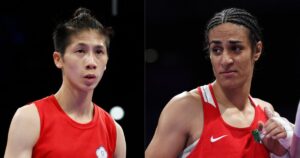
Algeria’s Imane Khelif (right) and Taiwan’s Lin Yu-Ting were the subject of a big debate at the Paris Olympics because of their gender having been banned by IBA for failing Gender Eligibility Test at the 2023 World Championships in New Delhi, India Courtesy Reuters
Imane Khelif and Lin Yu-Ting were disqualified from the 2023 World Boxing Championships in New Delhi because they failed IBA’s gender eligibility tests due to their testosterone levels, which the IBA stated was a result of them having male XY chromosomes. The IBA disqualified them from women’s events, but the IOC allowed them to compete in the Paris Olympics, as the IOC’s rules on gender eligibility, which are not governed by the IBA, are different.
With WB taking the cue from IBA it means IOC will now play ball.
▪️Another jaw-dropping showdown between Robert Okaka aka Man Man Ngori and Humphrey “Jakababa” Ochieng. Caleb Wandera joins Police hoping to secure a job to stabilize financially ▪️KDF recruit Kibra’s international flyweight Sheila Auma, national champion Diouf Muimi and Faith Nafuna all of whom represented Kenya in Africa Zone 3 Championships ▪️Nairobi, Kisumu and Siaya missing in action owing to lack of funds yet the three counties have enough money to support their boxing teams
06/11/2025
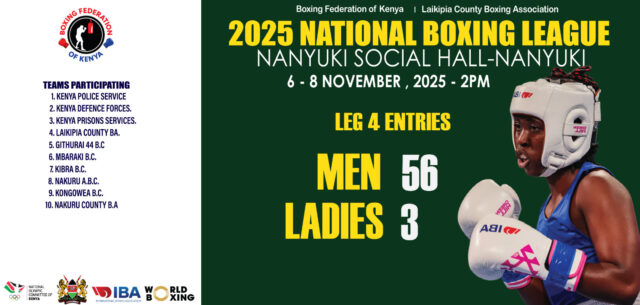
Boxing action moves to Nanyuki from today, November 6, 2025, in the 4th leg of the Kenya National Boxing League.
The three-day league, to be held at the Nanyuki Social Hall, promises to be a spectacular display of skill, passion and raw power.
Bring in the rivalry between defending champions KDF and Police you have an absolute cracker. It’s a boxing feast for Nanyuki fans who are expected to pack the social hall to watch some of the national team medallists in the Africa Zone 3 Championships.
Caleb Wandera quits Flamingo and joins Police
Caleb Wandera, Nakuru’s face of boxing, has quit Flamingo and joined Kenya Police with Kibra’s international heavyweight John Oyugi also moving to Police popularly known as Chafua Chafua.
Wandera and Oyugi will make their debut for the cops in the 4th leg of the Kenya National Boxing League in Nanyuki to feature 56 male and three female boxers from 10 clubs.
Police will miss the services of their regular flyweight Diouf “Bashday” Muimi who has landed a job at KDF together with Kibra’s Sheila Auma and Githurai Thailand’s Faith Nafuna all of whom represented the national team in the recent Africa Zone 3 Championships in Nairobi.
Diouf and Nafuna skipped Zone 3 finals because that’s when they were needed at KDF. Obviously employment outweighed their participation in the finals. They settled for silver medals while Wandera, making his debut for the national team, won a bronze medal following his loss to DR Congo’s Njibu Njibu in the semi-finals.
Africa Zone 3 bronze medallist Wiseman Kavondo is reportedly being recruited by Police but the deal has yet to be sealed.
With the absence of Muimi, Police will have to recruit his replacement.
Coach James Wasao told boxersworld.co.ke they have already identified flyweight Peter Wanjohi to represent them in Nanyuki.
Wasao, a former international, has fired a warning shot to rivals KDF to prepare themselves for a pitched battle.
“We’re here for them they should expect stiff competition from Chafua Chafua,” said Wasao, heavyweight gold medallist in 2005 Zone Five Championships in Nairobi.
Wasao’ s hitmen are led by Africa light-middleweight champion Boniface “The Hammer” Mogunde ably assisted by Africa Zone 3 minimumweight champion Silus Onyango, 2024 Africa Championships bronze medallist Shaffi Bakari, Mbotela diehard Ethan Maina, Zone 3 bronze medallist Caleb Wandera , evergreen “msee wa ndechu” Joseph Shigali, George Cosby, battle-hardened Zone 3 silver medallist Humphrey “Jakababa” Ochieng, heavyweight John Oyugi and Zone 3 super-heavyweight bronze medallist Clinton Macharia.
Defending champions KDF are also fully armed. In their armoury they have Africa Military Games flyweight and bantamweight gold medallists Kelvin “Young” Maina and Dennis Muthama, Zone 3 quarter-finalist Washington Wandera, Zone 3 silver medallist Alvin “Liwalo Liwe” Oduor, African Games middleweight champion Edwin Okong’o, twice Africa Championships bronze medallist Robert Okaka aka Man Man Ngori and Zone 3 silver medallist Peter “The Beast” Abuti.
Topping the bill is the potentially enthralling fifth fight between Okaka and Jakaba. The KDF soldier has defeated Jakababa four times in a row but the courageous Police boxer is unshaken by the four defeats.
“I’m fighting on I know nothing lasts forever,” said Jakababa while Okaka feels the cop has now become his regular customer.
“This time if he’s not careful I’ll stop him, I’m fit and fresh,” said the Jericho Boxing Club product.
In their fourth fight at Nakuru’s Madison Square Garden, Okaka was so dominant, subjecting Jakababa to two standing counts in the first and third rounds enroute to a unanimous points victory.
Other thrilling encounters is the bantamweight rematch between Shaffi Bakari and Dennis Muthama, the third light-middleweight encounter pitting Boniface Mogunde and omena addict Alvin Oduor and middleweight ninth fight featuring Edwin Okong’o and George Cosby of Police. Okong’o has so far beaten Cosby six times and lost twice to the cop who started boxing in 2015 in Kisumu under coach Lawrence Jaiko, a former international.
The 10 clubs in Nanyuki are KDF, Police, Prisons, Laikipia, G44, Mbaraki, Kibra, Nakuru ABC, Kongowea and Nakuru County.
Newly-crowned Zone 3 champions Veronica “Pioneer” Mbithe, Friza “The Smiling Assasin” Asiko both of KDF and Amina Martha are the only three women in Nanyuki but will now have to be spectators because they have no opponents.
Friza “The Smiling Assasin” Asiko (top) and Veronica “Pioneer” Mbithe (below) have no opponents in Nanyuki
Missing in action are Nairobi, Kisumu and Siaya plus several other clubs owing to financial constraints.
Kisumu County head coach Vincent Odongo said among some of the Nanyuki-bound boxers were sensational novices and intermediate champion Sonia Atieno who was to use the fourth leg as a build-up for the Africa Youth Games in Angola in December.
“The boxers are so disappointed, it’s really painful even to the coaches we train so hard but the Kisimu County cannot support us,” said an angry Odongo.
“We can even use the county bus and get money to fill the tank, Kisumu is coming up very well but with no support it’s so difficult to take part in the league.”
Odongo is grateful for the support they have received from Kisumu head Anthony “Jamal” Otieno who is also the President of the Boxing Federation of Kenya.
“Jamal has really helped us financially much as he has other national responsibilities. However one man alone cannot do everything. The government should help Jamal to get sponsors for the league.”
Equally disappointed is Siaya coach Joseph “D4” Ochieng. He also blames the county for not funding them yet Siaya is the home of boxing in Western Kenya, producing some of Kenya’s top boxers such as the late James “Demosh” Omondi.
“We spend a lot of our time in the gym only to be told there’s no money for boxing. They only spend on football for political gain.”
Prisons, once a boxing powerhouse in Kenya, seems to be doing better since chairman Kibunja Nderu became the chairman of the club.
“We have our team in Nanyuki ready to battle, I’m very grateful for the support we’re getting from the management” said Kibunja, son of a former international star boxer John Nderu.
Prisons will however be without their three internationals, Aloice Vincent, Jane Wangari and Mwinyi Kombo owing to unavoidable circumstances.
Among the Prisons boxers in Nanyuki are flyweight Moses Kilavuka, bantamweight Chris Musyoki, light-welterweight Riziki Francis and welterweight Anthony Maina. This year Prisons have recruited three boxers, Aloice Vincent, Jane Wangari and light-flyweight Eric Mwangi.
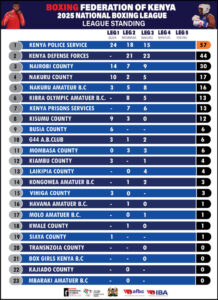
Prisons are in joint sixth position with Kibra having 13 points each on the league table.
Police are still on top with 57 points followed by KDF 44 and third-placed Nairobi 17.
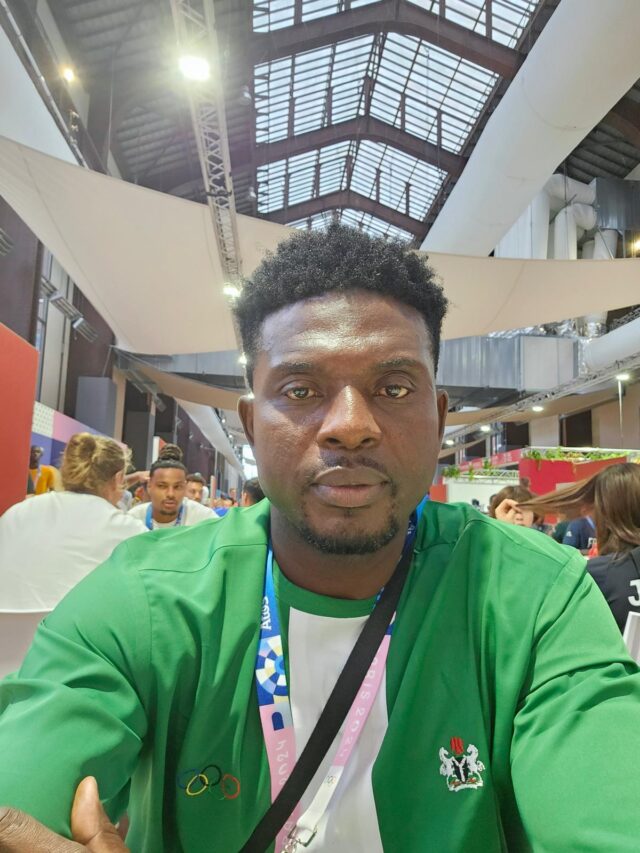
Newly-appointed Nigerian Boxing Federation Technical Director Adura Olalehin spells out some of his immediate plans
▪️The former Nigerian star boxer Adura Olalehin has outlined some of his immediate plans aimed at elevating the country’s boxing standards focusing on comprehensive training for coaches and R&Js to elevate them to international standards.
Nigerian Boxing Federation (NBF) newly-appointed Technical Director, Adura Olalehin, has spelt out some of his immediate plans in a thanksgiving message to the boxing fraternity in the populous West African country.
Olalehin, who is also a member of World Boxing Coaches Commission, has shared a capsule summary of some of his priorities aimed at improving the country’s boxing standards.
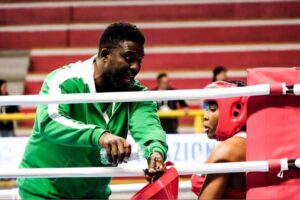
Adura at work doing what he loves best
While thanking Nigeria’s boxing fraternity and the new NBF board for supporting him, Olalehin said it’s time for Nigerians to forget past differences and unite to “elevate boxing to new heights.”
Olalehin’s statement however falls short on stating a holistic long-term strategy to establish a sustainable high-performance culture from the grassroots and whether he envisions creating a national boxing identity through a unified coaching system.
“Gone are the days of relying on star ratings among our coaches,” said Olalehin. “Instead we will grade and elevate our coaches based on their education and performance aligning with World Boxing standards.”
Here is a statement on Olalehin’s immediate plans as the Technical Director
Elevating our coaches
We will focus on the development of our coaches by integrating education and comprehensive training. Gone are the days of relying on star ratings. Instead, we will grade and elevate our coaches based on their education and performance, aligning with World Boxing standards. This approach ensures that the country itself decides which coaches represent us, giving everyone the opportunity to grow and excel.
Educating Referees and Judges
We are also committed to elevating our referees and judges to international standards. Through education and training, we will ensure that they are well-prepared and recognized globally.
Unified support
I call upon all coaches, boxers, and board members to join hands in this mission. With the support of our vice president, president, secretary, and board members, we will build a stronger Nigerian boxing community.
Looking ahead
Starting in January and February, we will implement these new initiatives and keep everyone informed through the Nigerian Boxing Federation platform. We will also share the categories for the Commonwealth Games in Glasgow to ensure clarity and alignment.
In conclusion, I am deeply grateful for this opportunity to serve as the Technical Director. Together, with your support and dedication, we will achieve greatness. Let us embrace this journey and develop our coaches and athletes to their fullest potential.
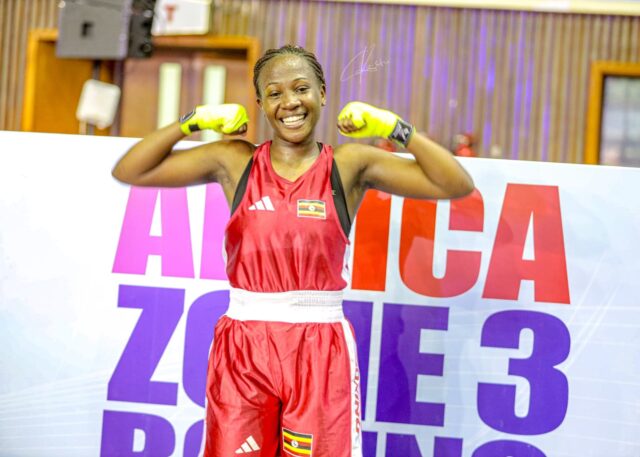
Africa Zone 3 featherweight champion Fatuma "The Thunder" Nabikolo going for her second gold medal in the Islamic Solidarity Games in Riyadh, Saudi Arabia
▪️ She’s among the four Ugandan boxers taking part in the Islamic Solidarity Games in Saudi Arabia
Fresh from winning. featherweight gold in the Africa Zone 3 Championships in Nairobi, Uganda’s fast-rising Fatuma “The Thunder” Nabikolo has landed in Riyadh, Saudi Arabia, with her three compatriots.
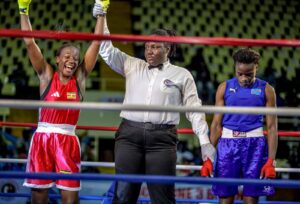
Fatuma Nabikolo is declared 5-0 points winner over DR Congo’s Phoba Kerene in the Africa Zone 3 featherweight final in Nairobi on October 24, 2025.. Photos courtesy
Fatuma is leading Uganda’s assault in the Islamic Solidarity Games due to have started today, November 4, 2025. Boxing begins on Wednesday, November 5.
“I’m aiming for another gold in Riyadh. My morale is high,” the usually confident Fatuma told boxersworld.co.ke in an interview. In the Africa Zone 3 Championships, Fatuma smartly outpointed DR Congo’s Phoba Kerene in the featherweight final.
“I feel great winning my first ever gold medal in boxing, this is an indication of better things to come,” said Fatuma at the Kasarani Gym after receiving her gold medal. She made her international debut in the 2024 Mandela African Boxing Cup Championships in Durban, South Africa where she bagged a bronze medal to make a strong statement on her intentions in the squared circle.
The four Ugandan boxers in Riyadh. From left Fatuma Nabikolo, Angel Katushabe, Adriko Jimmy and Ojok Alfred
Other Ugandan boxers in Riyadh are flyweight Angel Katushabe, lightweight Adriko Jimmy and middleweight Ojok Alfred. Angel and Adriko settled for bronze medals in the Zone 3 event while Ojok won a silver medal after losing to DR Congo’s Kinda Wetu in the finals.
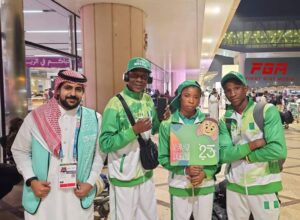
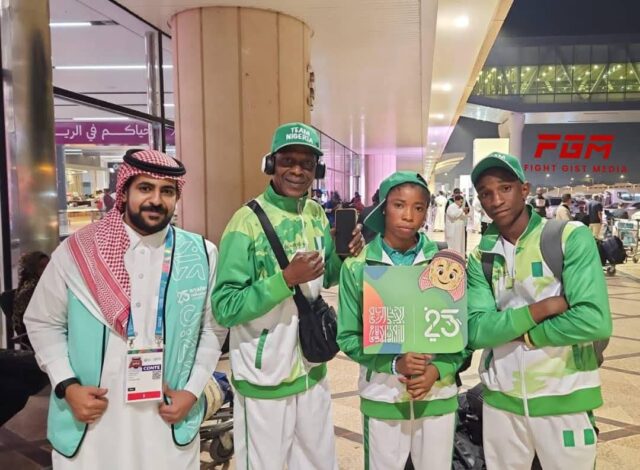
Nigeria is being represented by flyweight Adeshina Zainab (centre) and welterweight Raheem Ridwan (right). They’re accompanied by coach Oyeleye Abayomi (left).
The other African boxers in Riyadh are Nigeria’s African Games light-flyweight silver medallist Adeshina Zainab fighting at flyweight in Riyadh and welterweight Raheem Ridwan with their coach Oyeleye Abayomi while Uganda’s coach is Kabugo Sam.
Kenya's Sarah Achieng aka Angel of War (right) planning to attack Tanzania's Feriche Mashaury in their 10-round fight on November 2 in Nairobi. Achieng outpointed the Tanzanian to retain her WBF world super lightweight title.
▪️The Kenyan boxer describes Tanzania’s Feriche Mashaury as an awkward boxer with wild punches but through tact she contained her.
▪️Achieng has now called out Malawi’s Anisha Basheel and compatriot Judy Waguthii whom she says is so scared to fight her again since her controversial win in 2014
04/11/2025
There’s no doubt Sarah Achieng aka Angel of War is the face of Kenya women’s pro boxing.
With a dearth of promising female pro boxers, and former WBC world champion Fatuma Zarika in the twilight of her career, Achieng is still keeping the flame burning for the Kenyan female pro boxers.
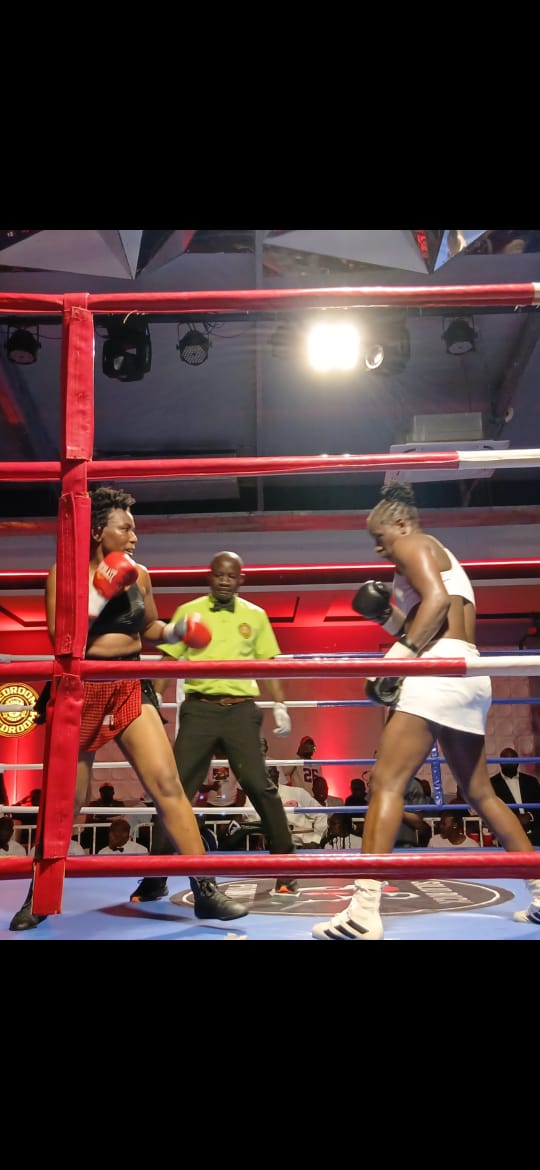
Achieng showed her mettle once again when she used her technical brilliance to outpoint Tanzania’s Feriche Mashaury in a 10-round bout on November 2 at Red Room Lounge in Kilimani, Nairobi.
Sarah Achieng pressing down Tanzania’s Feriche Mashaury as referee looks on
The unanimous points victory enabled Achieng retain her WBF world super lightweight title.This was Achieng’s first defence of the belt she won in 2023 with a points decision over a game Argentinian Edith Soledad in Nairobi.
Achieng has improved her record to 18-2-0, 9 KOs while Mashaury drops to 12-9-1 with 3 KOs.
It was Achieng’s 10th consecutive victory since her controversial loss to compatriot Judy Waguthii in 2014. She has severally challenged Waguthii for a rematch but the latter remains silent.
Achieng’s coach and manager Alfred Analo aka Priest described her two losses as “theft in the ring because she clearly won.”
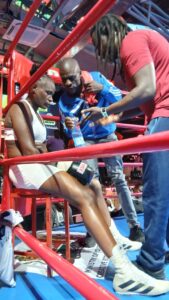
Achieng listening attentively to coach Alfred Analo in the ring and her hubby James Onyango who is a former pro boxer
The other defeat was in 2008 to Bena Kaloki in Achieng’s pro debut. “Bena funded the card so she had to win at all costs,” recalls Analo who was very impressed with Achieng’s victory.
“The Tanzanian boxer was hit hard severally by Sarah, that’s why she resorted to holding her to avoid the punches,” said Analo. “She is a good boxer, with a little bit of polishing she can make it.”
After her resounding victory over Mashaury, boxersworld.co.ke cornered Achieng for an interview.
Question: How was the fight from the first round?
Answer: From the first round, I knew it would be a tactical fight. I focused on controlling the pace, using my jab, and studying her movement. I had to balance between managing my breathing and staying composed under pressure, but I kept my focus on the plan.
Q: How was her general approach in the ring?
A: She’s a strong and an awkward fighter. She came forward aggressively, throwing wild punches and trying to disrupt my rhythm. I wouldn’t say she hurt me, but she kept me alert throughout the fight. I had to rely on timing and accuracy more than power.
Q: How do you compare her with your past opponents?
A:Each opponent brings something different. Feriche was unpredictable and physical, while others like Soledad pushed me mentally and emotionally.
Q: Who’s the toughest opponent you’ve met so far in your 20 fights?
A: So far, Soledad has been my toughest opponent. Her determination and endurance really pushed me to the limit.
Q: Which were your best rounds against the Tanzanian boxer?
A: I believe I dominated all the rounds; that’s why it was a unanimous decision. I felt fully in control from start to finish.
Q: How was she reacting to body punches?
A: She handled them better than I expected, though I could see the effect in her movement later in the fight. The body punches had taken their toll on her. She’s a tough boxer. Credit to her.
Q: Which strategy did you apply to maintain your domination?
A: After studying her style I decided to maintain compure. I stuck to straight punches and a few combos because I had an injury in my right hand, and my chest was burning so breathing became difficult. I tried my best to avoid unnecessary exchanges. The goal was to control the fight smartly, not emotionally.
Q: Away from your fight against Mashaury, I remember Malawi’s Anisha Basheel had said she wants a rematch after you beat her to clinch the* *Commonwealth super lightweight title in 2021 at Nairobi’s Charter Hall.
A: Anisha is a strong fighter and I respect her. If she wants a rematch, I’m open to it anytime but I believe respect and preparation go hand in hand. Let’s make it a fair, well planned fight that gives fans a real show of skill and discipline. She made a lot of noise before the fight but I silenced her.
Q: Anisha’ excuse for losing the fight was the short notice, therefore she was not fully prepared. Any justification in her complaint?
A: Every boxer has their own perspective, but as professionals, we prepare for opportunities anytime. I took that fight seriously, gave my best, and the result spoke for itself. There are no easy fights only prepared fighters. I’m happy she honoured the fight despite the short notice but nobody forced her to come to Nairobi. If she was not ready she should have declined. As boxers we should always accept defeat without coming up with lame excuses.
Q: Who is the toughest opponent you want to fight in Africa now?*
A:Africa has many talented women fighters. I’m open to face anyone who’s ready and willing. I believe in fairness no ducking, no excuses just pure boxing spirit.
Q:Back to your repeatedly made call to Judy Waguthii for a rematch. You said the* *judges robbed you a clean victory when you met in 2014. What’s your message to her this time?*
A: I still respect Judy, and I believe fans deserve that rematch. It’s not about rivalry it’s about giving the sport what it deserves: competition, respect, and truth in the ring.
Q: Why has it taken Waguthii so long to respond to your challenge. Is she scared of you?
A: Definitely she’s scared of fighting me again because she knows in the rematch the Angel of War will destroy her completely. She’s been quiet I don’t even know whether she’s still fighting or if she has hanged her gloves. Wherever she is my message is: Judy, fans have waited long enough for our rematch. I know you’re scared of fighting me but I urge you to gather courage to face me we give fans something to remember. I’m ready when you are. Let’s make it happen for the love of the sport.
After the end of the fight Sarah Achieng and Feriche Mashaury were the best of friends
Nigeria is being represented by flyweight Adeshina Zainab (centre) and welterweight Raheem Ridwan (right). They're accompanied by coach Oyeleye Abayomi (left).
▪️Two Nigerian boxers to take part in the Islamic Solidarity Games have arrived safely in Saudi Arabia.
The Games are scheduled for November 7 to November 22, 2025 at Riyadh, Saudi Arabia.