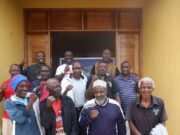
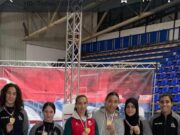
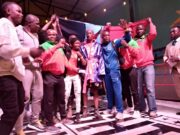
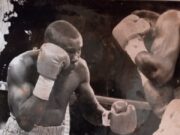
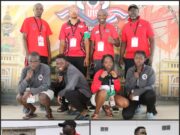
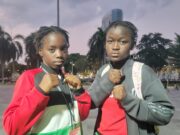
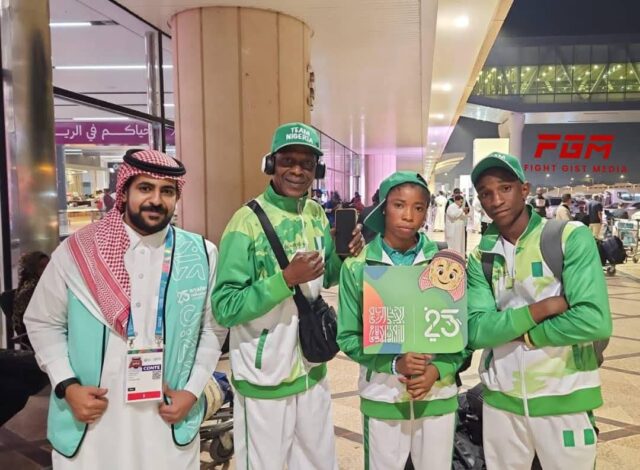
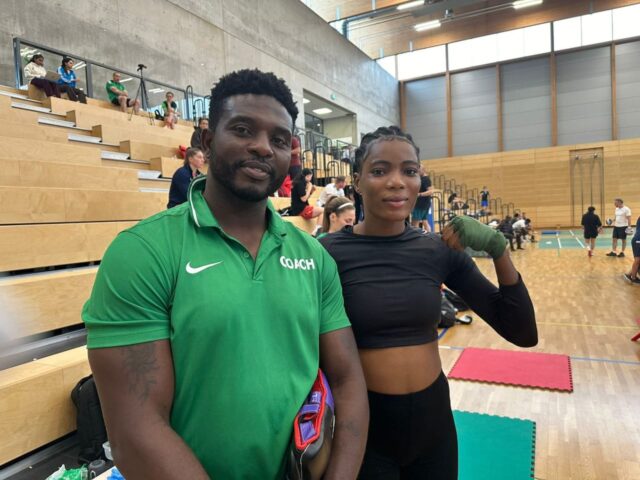
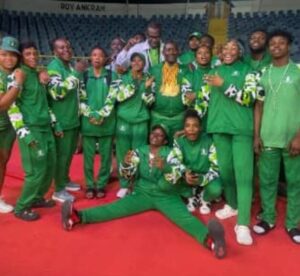
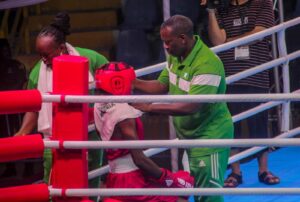
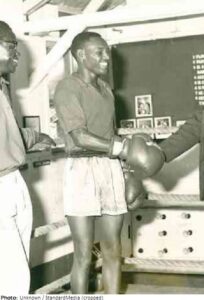
Nigeria is being represented by flyweight Adeshina Zainab (centre) and welterweight Raheem Ridwan (right). They're accompanied by coach Oyeleye Abayomi (left).
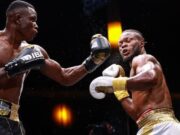
▪️Two Nigerian boxers to take part in the Islamic Solidarity Games have arrived safely in Saudi Arabia.
The Games are scheduled for November 7 to November 22, 2025 at Riyadh, Saudi Arabia.
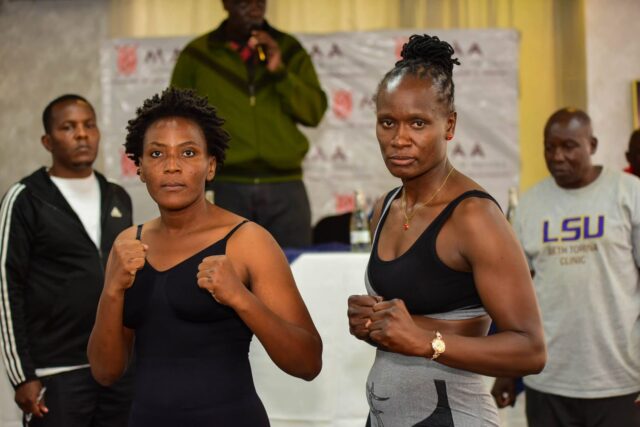
Kenya’s Sarah Achieng retained her WBF world super lightweight title with a unanimous points victory over Tanzania’s Feriche Mashaury in a 10-round fight at the Red Room Lounge, Nairobi on Sunday night, November 2, 2025.
Nicknamed Angel of War, this was Achieng’s first title defence. She outpointed Argentina’s Edith Soledad to become world WBF super lightweight champion in June, 2023 at the Charter Hall, Nairobi.
Achieng improves her record to 18-2-0, 9 KOs while Mashaury drops to 12-9-1 with 3 KOs.
It was Achieng’s 10th consecutive victory since her controversial loss to compatriot Just Waguthii in 2014. She has severally challenged Waguthii for a rematch but the latter remains silent.
Achieng’s coach and manager Alfred Analo aka Priest described her two losses as “theft in the ring because she clearly won.”
The other defeat was in 2008 to Bena Kaloki in Achieng’s pro debut.
“Bena funded the card so she had to win at all costs,” said Analo.
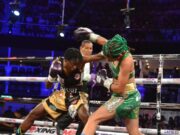
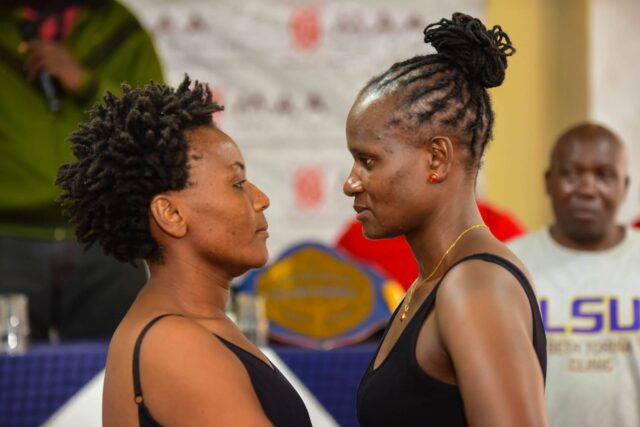
Kenya's Sarah Achieng aka Angel of War (right) tonight battles Tanzania's Feriche Mashaury (left) in the first defence of Achieng's World Boxing Foundation (WBF) world super lightweight title. The fight takes place at the Red Room Lounge in Kilimani, Nairobi.
▪️The Angel of War is back in action tonight to make the first defence of her WBF world super lightweight title against Tanzania’s Feriche Mashaury
As an upcoming boxer in 2008, Sarah Achieng aka Angel of War was doing her evening run in Buru Buru when out of the blue came a heavy slap that almost knocked her down.
At first she thought the man who slapped her was crazy. He was not. The guy was just an estate bully.
“I was young by then there was little I could do,” recalls Achieng.
“I was shocked why a grown up man would do this to an innocent girl like me.
“Did he take advantage just because I’m a small girl who can’t fight back?,” wondered Achieng as passersby comforted her.
“I was then learning boxing without any ambition but that painful slap was the turning point. I now told myself I want to become a champion to prove the bully wrong and also use boxing as self defence.
“I was ready to fight any man who bullied me again.”
By then Achieng was training at the SOS gym in Outering Estate under coach Alfred Analo aka Priest, the founder of the famous Boxgirls community-based organisation.
In the gym Analo, who introduced Achieng to boxing, was not aware what had happened to his boxer.
“Sarah never told me about the incident but I realised she was now training harder and more serious. Little did I know her aim was to revenge,” Analo told boxersworld.co.ke in an interview.
Analo convinced Achieng in 2008 to take up boxing but she was not very keen on the sport at the time.
“I learnt of the slap incident later when she had boxed in several fights, her aim was to beat up any man who does that to her again,” says Analo who discouraged his boxers from engaging in street fights.
“I was totally against street fights, one can easily be shot dead because there are no rules in street fights.
“My advice must have sunk in her. The slap was however useful because it encouraged Sarah to take boxing more seriously.”
Sarah Achieng and her coach/manager Alfred Analo aka Priest. Analo introduced Achieng to boxing in 2008.
Indeed that unexpected slap was the cloud in a silver lining, inspiring Achieng to double up her efforts aiming at the top under coach Analo.
The Buru Buru bully inspired Achieng to become one of Kenya’s top professional boxers winning multiple titles.
Today Achieng is not only the Commonwealth super lightweight queen but also the reigning world super lightweight champion under the auspices of the World Boxing Foundation. (WBF) whose Kenya representative is a former star international boxer George “Kidi” Adipo. He’s also WBF Africa Coordinator.
This is the title Achieng (17-2, 9 KOs) is defending tonight, November 2, 2025, against Tanzania’s Feriche Mashaury (12-8-1, 3 KOs) at the Red Room Lounge in Kilimani in a Solid Rock Promotions card sanctioned by the Kenya Professional Boxing Commission (KPBC).
Achieng is making the first defence of her WBF world title she captured in June, 2023, by outpointing Argentina’s Edith Soledad in a 10-round fight at the Charter Hall, Nairobi.
While Achieng is the red-hot favourite to win the fight, she’s not taking her opponent lightly.
“Every opponent deserves respect. I never underestimate any boxer,” says Achieng.
“I prepare for every bout like a championship fight because discipline and respect define who I am as an athlete. I respect the Tanzanian, agreeing to challenge me is a true spirit of a champion. Boxing is not only about records but also style, mindset and preparation.”
Achieng would have preferred defending her titles regularly to improve on her record and of course make more money but she understands the challenges facing promoters.
“I’m always ready to defend my titles but at times sponsorship challenges to promoters and suitable opponents complicates things, what matters most to me is taking part in fights that enhance my image and inspire other female boxers.”
Achieng never fought in amateur tournaments. She started competitive boxing as a pro boxer. Her coach and manager Analo tells us more on her first pro fight in 2008.
“I remember Bena Kaloki wanted an opponent in a card she was funding, so approached me seeking an opponent she can beat, I proposed she fights Sarah.
“She agreed but was not aware about Sarah’s abilities, I knew she’s in for a rough time, Sarah beat her proper but they robbed her victory.
“They did the same again against Judy Waguthi, she was badly beaten by Sarah but given the victory. That’s why they can’t fight my boxer again because they’re scared of her boxing prowess.”
Malawi’s Anisha Basheel (right) could not contain the furious fists of Sarah Achieng (left) in this Commonwealth super lightweight title fight won by the Kenyan in 2021 at Charter Hall, Nairobi.
Given lack of regular pro bouts in Africa, Achieng has so far taken part in only 19 fights since 2008 when she took part in her first pro fight.
Despite the meagre payment in Africa pro boxing, Achieng says she has reaped several benefits in the sport
“I’ve said it often financially the returns have not been huge in pro boxing but the experience has built a foundation for bigger opportunities ahead,” says Achieng who is a Brand Ambassador at Boxgirls.
“Life would definitely be tougher if I didn’t have a job at Boxgirls. Many boxers struggle hustling here and there because there’s little financial stability in our pro boxing.
“My role at Boxgirls keeps me connected to my purpose empowering upcoming female boxers and through this I get balance proving that boxers need to diversify and think beyond the ring.”
For Achieng, however, a fat purse is not everything in her pursuit for excellence in pro boxing.
“My inspiration goes beyond the purse. I fight to break barriers, to show young girls and boys that their dreams are valid no matter where they start.If they remain resilient and focused they’ll succeed.”
She is confident eventually the situation will change for the better in Africa’s pro boxing, and that’s why she’s still at it.
“I’ll continue fighting for the growth of African boxing to keep the fire alive until we build strong structures that reward talent fairly.
“With the right collaboration, media exposure and proper management things will improve. More people are beginning to appreciate the sport and investing in pro boxing. The more we push for change, the more we attract attention and investment. Every fight, every story told brings us closer to that breakthrough.”
Achieng, however, cautions all stakeholders that without unity of purpose nothing much will be achieved.
“I believe the future of African boxing depends on the solid unity of boxers, promoters, media, sponsors and federations working together to professionalize the system.”
That said, we wish the Angel of War the best of luck in the first defence of your WBF super lightweight title. Don’t rush to end the fight inside the distance. Entertain your fans and express yourself.
The newly-appointed Nigerian Boxing Federation Technical Director Adura Olalehin with African Games lightweight champion and Commonwealth Games bronze medallist Cynthia Ogunsemilore at the Germany Olympic Training Camp on their way to Paris in 2024.
▪️The Nigerian Boxing Federation settled on Adura Olalehin for the Technical Director’s position because of his wealth of experience and also as a former successful international boxer
The Nigerian Boxing Federation (NBF) has appointed former star boxer Adura Olalehin as the Technical Director.
Announcing the appointment of Olalehin, the federation’s Director of Communications, Mathew Okugbe said they took into account Olalehin’s wealth of experience and the fact that he was a prominent international boxer during his hey days in the ring. He won a silver in the light-heavyweight division at the 2006 Commonwealth Games in Melbourne, Australia, losing in the finals to Scotland’s Kenneth Anderson.
“As the Technical Director Adura Olalehin will work under the guidance of NBF Technical Committee chaired by the elected board members,” said Okugbe, adding:”NBF trusts that Olalehin’s experience, exposure and unwavering resolve to the advancement of Olympic style boxing in Nigeria will significantly contribute to the success of the Nigerian boxers and the federation as a whole.”
Nigerian triumphant boxers at the 2023 African Games in Accra
As a coach, Olalehin is associated with the historic achievement of Nigeria’s national team in the 2023 African Games in Accra where they emerged triumphant with eight gold and two silvers ahead of second-placed Algeria and Ghana in third place.
Nigeria’s feat of landing 1O boxers in the finals and subsequently winning eight gold and two silvers, slightly beat Kenya’s record of eight gold and two bronzes at the 1987 African Games in Nairobi.
Olalehin was assistant coach 1 to head coach Tony Konyegwachie while IBA cutman instructor Yinka Adeoti was assistant coach 2 female.
Head coach Tony Konyegwachie seconding one of the boxers in Accra
In Accra, the female boxers finished on top of their male compatriots with five gold medals by featherweight Ojo Nene Joy, lightweight Cynthia Ogunsemilore, light-middleweight Blessing Oraekwe, middleweight Patricia Mbata and light-heavyweight Jacinta Umunnakwe. The three male gold medallists were featherweight Omole Dolapo, heavyweight Adam Olaore and super-heavyweight Ifeanyi Onyekwere.
After Accra’s memorable success, Olalehin took charge of Nigeria’s two boxers at the Paris Olympics.
“The globally exposed boxing devotee has also served as the Southwest representative on the NBF board from 2021 to 2025,” said Okugbe.
Okugbe told boxersworld.co.ke that the Nigerian Boxing Federation President, Wale Edun, has landed running eager to lead the federation to greater heights of success.
Olalehin (left) and Konyegwachie studying moves of their boxer’s adversary to contain him in the remaining rounds
“Honourable Edun has pledged to reform boxing in the country through the strategic implementation of his vision and policies for the overall development of boxing,” said Okugbe.
The nation’s Finance Minister further called on boxing stakeholders to support the new NBF board in the actualization of its boxing plans and programs for the country.
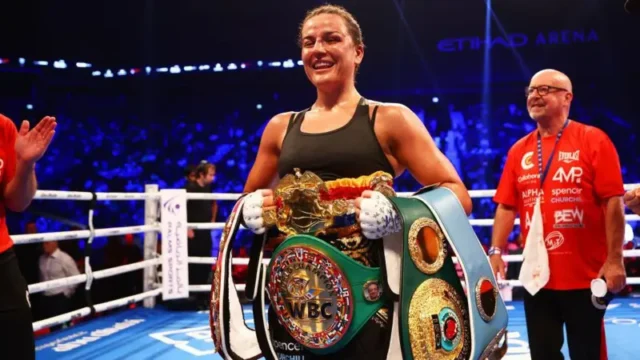
Britain’s Chantelle Cameron has vacated her WBC light-welterweight world title in protest at not being able to compete under the same rules as male fighters.
In women’s professional boxing title fights are usually over 10 rounds, each of two minutes, while men’s title bouts are 12 rounds of three minutes.
“Women’s boxing has come a long way, but there’s still progress to be made,” said 34-year-old Cameron.
“I’ve always believed in equality, and that includes the choice to fight equal rounds, equal opportunities, and equal respect.
“I’m proud of my accomplishment in becoming a WBC champion, but it’s time to take a stand for what’s right and for the future of the sport.”
Cameron was elevated from ‘interim’ champion to full WBC light-welterweight world champion last month after Ireland’s Katie Taylor informed the sanctioning body she planned to take time away from boxing.
Since turning professional in 2017, Cameron has won 21 of 22 fights, is a former undisputed light-welterweight world champion and has also held a world title at lightweight.
She handed Taylor her first career defeat in May 2023 to become undisputed champion, before losing the rematch six months later.
A trilogy bout had been mandated, but Taylor chose not to pursue it as she takes a break from the sport.
‘Chantelle has never backed down from a challenge, inside or outside the ring’
Cameron is not the first female boxer to call for greater equality in the sport.
In October 2023, then-undisputed featherweight world champion Amanda Serrano, along with more than 20 current and former women boxers, said in a statement they wanted title fights to be over 12×3 minutes, instead of 10×2 minutes.
“Chantelle has never backed down from a challenge, inside or outside the ring,” said Nakisa Bidarian, co-founder of Most Valuable Promotions, who manage the Northampton fighter.
“This decision underscores her integrity and her leadership as one of the sport’s elite fighters. MVP stands firmly behind Chantelle and her commitment to help drive women’s boxing toward true parity.”
A statement from MVP said Cameron “remains focused on returning to the ring in early 2026” and “will continue to pursue championship opportunities and marquee bouts maintaining the choice to fight three-minute rounds”.
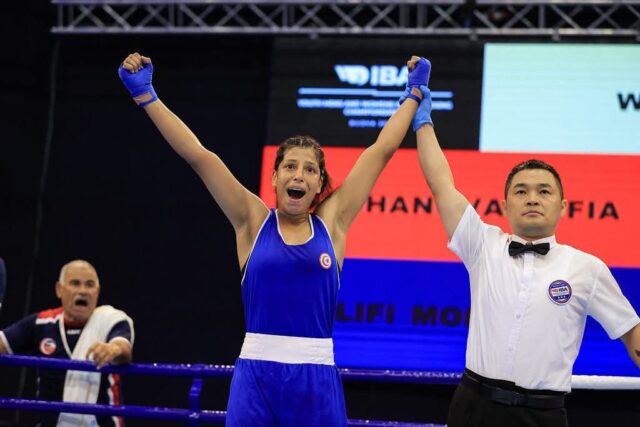
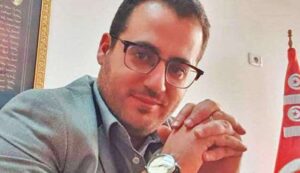
Junior and Youth World Championships lightweight bronze medallist Molka Khalifa is one of the talented boxers unearthed under the leadership of former President Ziad Barbouch. Her future in boxing hangs in the balance following the latest stalemate in Tunisia boxing.
▪️President Ziad Barbouch resigned in August citing the government’s interference in the federation’s internal affairs while national coach Montassar Ghannouni quit following a tiff with the Technical Director
▪️Uncertainty surrounds Tunisia’s participation in the Dubai Men’s World Elite Championships and the Africa Olympic Youth Games in Angola in December
The government has dissolved Tunisia Boxing Federation’s executive committee and taken over the management of the sport for 90 days pending fresh elections.
Authoritative sources told boxersworld.co.ke that the government dissolved the federation’s executive following the resignation of President Ziad Barbouch.
Tunisia Boxing Federation President Ziad Barbouch resigned, citing government interference in the internal affairs of the federation
A Provisional.Committee has been appointed to take charge of running boxing for 90 days until the next election.
The Provisional Committee is led by President Mohammed Ksontini. Others are:
Tréasurer: Anis Akrimi
Member: Fateh Kammoun
Member: Chedia Hadhili
Member: Hana Hossin.
Contacted for comment, the former President Barbouch declined to discuss the issue publicly but in his letter to members of the executive he made it clear he resigned because of the government’s unnecessary interference on the internal issues of the Tunisian boxing federation.
“I have chosen to voluntarily step down from my position while maintaining cordial relations with all components of the federation,” Barbouch said in his resignation letter.
After Barbouch’s resignation, the Vice President Wael Haddad took over the leadership of the federation but this was shortlived as the government decided to dissolve the federation’s executive and appointed a Provisional Committee to take charge for 90 days pending fresh elections.
The government’s decision has not gone down well with the executive which has raised concerns regarding compliance with the statutes and the respect for institutional autonomy.
Critics of the dissolution feel the move is in bad faith and that to a large extent it’s intended to prevent members of the executive committee from participating in the next election, paving way for former members to return to leadership given the fact that majority of the clubs were aligned to President Barbouch.
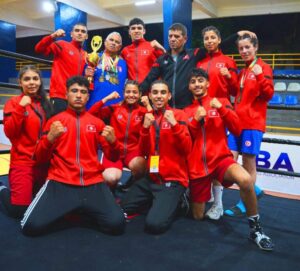
Tunisia boxers won the 2025 Africa Youth Championships in Guinea
Former national coach Montassar Ghannouni, who also resigned before the dissolution following a disagreement with the Technical Director, has pulled no punches in condemning the government’s decision to kick out the federation’s executive.
“The dissolution is unfair because the current office was doing very well,” said Ghannouni, adding:”The biggest problem they faced was external interference from people who have caused too much harm to Tunisian boxing, and this decision will prevent the members of the dissolved office from participating in the next elections.”
Ghannouni feels the government’s decision will once again stagnate the growth of Tunisia boxing and water down the gains made under Barbouch’s leadership.
“Tunisian boxing has suffered too much in the past years, and the minister’s decision will cause a major problem,” noted Ghannouni.
He went on:”As a result of this stalemate we haven’t registered who will represent Tunisia at the IBA Congress in Dubai, and the national teams’ preparations have been interrupted, with only a few weeks left before the next international competitions.The African Youth Games will be held in Angola from December 10th to 20th, 2025. This means we are only five weeks away from this very important event for our young talents, and we have not yet received confirmation of our participation. An application for membership in World Boxing has been submitted, and we are awaiting official acceptance. The African Youth Games serve as qualifiers for Dakar 2026 Youth Olympics.”
Ring analysts note that after decades of stagnation attributed to political interference and repeated formation of provisional committees, Tunisia boxing had began to show a remarkable recovery with fairly good results in major international tournaments including junior and youth championships.
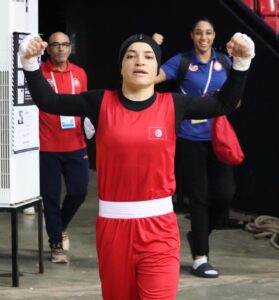
Twice Olympian Kholoud Hlimi the face of Tunisian boxing
Leading the resurgence is their top female boxer Kholoud Hlimi, a lightweight gold medallist at the 2019 African Games in Rabat, Morocco. She twice represented Tunisia in the Tokyo 2020 and 2024 Paris Olympics and won silver at the 2023 African Elite Men’s and Women’s Championships in Yaounde, Cameroon. Tunisia placed 11th overall with one silver and two bronze medals from minimumweight Wafa Hafsi and lightweight Saiefeddine Ayari.
At the 2024 African Games in Accra, Ghana, Tunisia finished 10th overall with two silvers and five bronze medals, the silvers coming from Wafa Hafsi and middleweight Molka Mabrouk.
Under the close supervision of national coach Montassar Ghannouni, junior and youth boxing has blossomed, producing talented female lightweight Molka Khalid.
She made headlines during the 2023 Junior World Championships in Yerevan, Armenia where won lightweight bronze, the only medal for Africa.
Molka maintained her ascendancy with another bronze in the 2024 IBA Youth Men’s and Women’s World Championships in Budva, Montenegro to account for Africa’s three bronze medals. The other two were bagged by her compatriot light-middleweight Islem Nadari and Morocco’s minimumweight Othman Chadghour.
The Tunisian youngsters maintained their sparkling performance by winning the 2025 Africa Youth Championships in Guinea with five gold, three silver and one bronze medal.
Congolose Boxing Federation President General Ilunga Luyoyo (left), the brains behind the introduction of AFBC Pro Boxing and sponsor.
In January, 2025, Tunisia recorded another milestone staging the first ever Africa Boxing Confederation Pro Boxing Card sponsored by the President of the Congolese Boxing Federation General Ilunga Luyoyo jointly with the Tunisian federation President Barbouch.
Among other prominent boxers who have been unearthed during President Barbouch’s tenue include flyweight Eddine Zidi, Africa bronze medallist Youssef Rafrafi, light-middleweight Ben Mansour and bantamweight Islem Ferchichi.
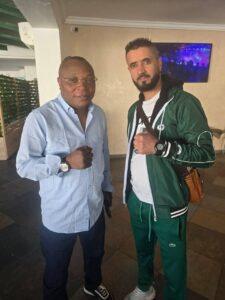
President Barbouch in a green jacket during the inaugural AFBC Pro Boxing Gala Night
It has not been possible to contact the leaders of the government-appointed Provisional Committee the get their side of the story but critics of the dissolution argue the government jumped the gun instead of holding a roundtable meeting to resolve their differences with the federation officials.
It’s understood former President Barbouch now intends to establish a Tunisian Professional Boxing Commission under the auspices of IBA to promote African boxers whose National Federations are affiliated to AFBC.
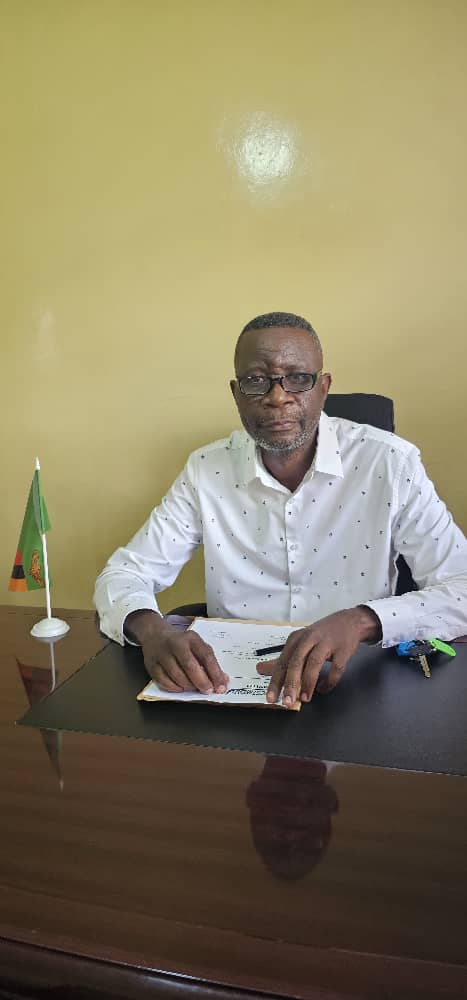
Zambia Boxing Federation President Boniface Sokoni says they will enter a strong team for Men's World Championships in Dubai from December 2-13, 2025
▪️President Boniface Sokoni confirms Zambia will participate in the Men’s World Championships scheduled for Dubai from December 2-13. He was recently interviewed by boxersworld.co.ke on a wide of issues regarding Zambia boxing.
Question:As the new Zambia Boxing Federation President, tell us what are your immediate plans to improve boxing in your country?
Answer: My immediate plans are to assess the current state of our boxing infrastructure, identify areas of improvement, review our constitution and develop a comprehensive strategic plan. We’ll focus on grassroots development, talent identification, and providing our boxers with top-notch training and resources.
Q: How will you go about implementing the changes you have in mind?
A: We’ll start by engaging with our stakeholders, including boxers, coaches, and officials to understand their concerns and ideas. Then, we’ll establish a clear roadmap, setting achievable milestones and collaborate with local and international partners to secure funding and expertise.
Q: How do you intend to secure funding for your federation because without a healthy bank account there’s nothing much you can achieve.
A: We’ll diversify our revenue streams by exploring sponsorship deals with local businesses, leveraging government support, and applying for international grants. We’ll also enhance our communication strategy to showcase the benefits of partnering with the Zambia Boxing Federation.
Q: Once you have enough funds, what will be your priority in improving Zambia boxing?
A: In view of aiming at expanding boxing to rural areas, we have initiated some boxing clubs in Nakonde, Serenje and Mukushi Districts, we need to procure a boxing ring to cater for these areas in order to enhance competition and also embark on IBA certification training for the referee and judges and the coaches. Also providing our boxers with the necessary training equipment and training conditions including exposure.
Q:Which new tournaments do you plan to introduce?
A: We’re planning to introduce a national junior championships and a women’s boxing tournament to promote the sport among younger generations and females. We’ll also explore hosting international tournaments in Zambia to attract top teams and expose our boxers to high-level competition.
Q: Currently, what are the challenges facing Zambia boxing?
A: Our biggest challenges are lack of funding, inadequate infrastructure, and limited access to top-class training and competitions. We’re also working to improve governance, transparency, and accountability within the federation.
Q: Is the government (that’s the Sports Ministry) supportive of boxing?
A: We’ve had positive interactions with the Ministry of Sport through the National Sports Council of Zambia and they’re committed to support boxing in Zambia. We’re working closely with them to secure funding and resources for the development of the sport.
Q: What’s your take on Zambia twice missing the Africa Elite Championships in Yaounde 2023 and Kinshasa 2024 due to lack of funds?
A: It’s disappointing that we missed these championships but we’re taking steps to ensure we don’t miss again. We’ve learned from the experience and are working tirelessly to secure funding and resources for our boxers to participate in major international tournaments.
Q: Is Zambia taking part in Men’s World Championships in Dubai in December this year?
A: We’re working on securing funding and finalising our team selection. We’ll do everything possible to ensure our boxers participate in the World Championships.
Q: How many boxers will you take to the World Championships?
A: Once funding is confirmed, we’ll select a team of talented boxers to represent Zambia. We’re aiming for a strong contingent but the exact number will depend on various factors, including qualification criteria and available resources.
Q: You were recently criticized for replacing experienced national team head coach Wisdom Mudenda and brought on board Charles Kangwa. Was the criticism justified?
A: We understand that the appointment of the new national team coach team and the Technical Committee Chairman may have raised some eyebrows. I would want to assure everyone that this decision was not taken lightly. We value the contribution of all our coaches, and we are confident that this new structure will take Zambian Boxing to the next level.
Q: Why did you remove Mudenda at a time when he was doing well with the national team. Was the change necessary?
A: You see, the Technical Committee’s primary function is to provide guidance on technical aspects of boxing, such as training methods, tactics, and competition strategy. Therefore Mudenda Star-2 coach’s experience and achievements are assets that can be leveraged to develop other coaches and improve the overall quality of boxing in Zambia, hence his appointment as the Technical Committee Chairman but unfortunately he has turned down the appointment. The new national coach had deputised coach Mudenda for quite a while before, and is an IBA Star-1 certified coach. He has competitive experience both locally and internationally, adequate technical skills, and ability to work with top-level boxers. He is also earmarked for a training course to upgrade to Star-2.
Q: What is your observation on how African boxing is managed compared to Europe and Asia?
A: African boxing has tremendous potential, but we face challenges in terms of infrastructure, funding, and exposure. Europe and Asia have well-established structures, better funding, and more resources, which gives them a competitive edge. However, we’re working to bridge the gap and develop our boxing ecosystem in Africa.
Q: Tell us about yourself. How long have you been involved in boxing management and previous positions held?
A: I have been in boxing management for about 11 years. I was the chairman of the Nkana Boxing Club for four years and the provincial chairman for Copperbelt Boxing Association for seven years. Take note Copperbelt is currently the biggest Provincial Association with the highest number of affiliated clubs in Zambia.
Q: Were you a boxer yourself?
A: Yes I was. I started my boxing when I was in primary school up until Form 2, but because my parents never approved of it I had to stop but the passion for boxing never left.
Q: Your Secretary General resigned in a huff in protest at the removal of Mudenda. Was the reason justified or is there something else we don’t know?
A: The Secretary General’s resignation was a surprise to us, and we’ve accepted his decision. I would like to point out here that prior to his resignation, he was slapped with disciplinary charges but rather than answering to the charges, he opted to resign. As a federation, we’ve made decisions that we believe are in the best interest of Zambian Boxing. The details of our internal discussions are private, but I can assure you that we’re committed to moving forward and developing our boxing program. We appreciate the Secretary General’s contributions and wish him well in his future endeavors.
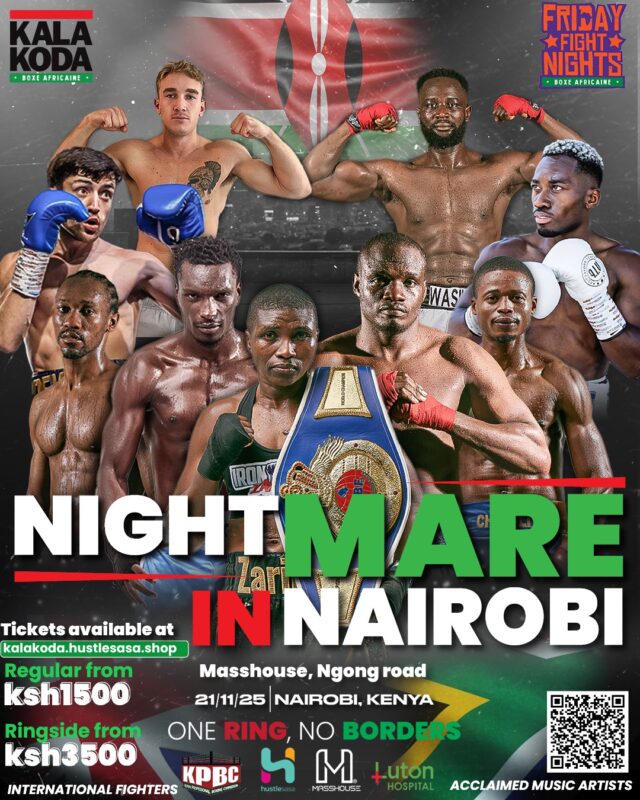
▪️Their first card is scheduled for November 21 in Nairobi with the main fight featuring Kenya’s former WBC super-bantamweight world champion Fatuma Zarika taking on Tanzania’s Halima Vunjabei in an eight-round encounter
Kalakoda Promotions is the latest entrant in East Africa’s pro boxing scene.
The CEO of Kalakoda Promotions in the East Africa Region, Greg Cox, said they have already registered with the Kenya Professional Boxing Commission (KPBC).
“Our first Friday Fight Nights event is coming up fast, happening in Nairobi at Masshouse on the 21st November,” Greg told boxersworld.co.ke
“We’re kicking off a regular series of fights featuring some of the best East African boxers as well as international fighters from UK, South Africa and France.”
Some of the top East African boxers in the November 21 card include Kenya’s former WBC super-bantamweight world champion Fatuma Zarika, former ABU middleweight champion Rayton Okwiri, Joshua Wasike and Tanzania’s Halima Vunjabei who will battle it out with Zarika in the main fight, an eight-round super-featherweight non- title duel.
Two boxers from the UK and one from SA, Jay Devine, Lucase Dube, and Felix Loggenberg will also be in action in the November 21 boxing bonanza.
Greg shares with us more info on Kalakoda.
“Kalakoda Media founded in 2012, with a proven history of more than 100 events across Southern & Western Africa, UK & Europe and North America we provide a unified boxing platform that brings together talent, consumers, businesses & media.
“From November 2025, we are sequentially launching our formats into East Africa providing sustainable platforms that empower boxers and inspire the next generation.
“Our first show will be November 21st,/ 2025 at Masshouse, Ngong road – kickstarting a series of fights running every two months on the last Friday of the month across 2026
“First fight is a cookie cutter of what to expect, the best talent in the region, international fighter, even the odd celebrity match ups to grow the Kenyan boxing audience.”
Here’s the link to buy your tickets for the November 21 card:
50 Years On, the Thrill Returns: Award winning journalist Jun Engracia Reflects on the Legacy and Promise of Thrilla in Manila 2.0
October 28th, 2025
Fifty years ago, the world stood still.
On the morning of October 1, 1975, in Manila’s Araneta Coliseum, two titans — Muhammad Ali and Joe Frazier — battled through 14 brutal rounds in what would go down as one of the greatest fights in boxing history: The Thrilla in Manila. For those who witnessed it firsthand, the fight was not just a sporting event — it was a moment etched forever in memory, sweat, and typewriter ink.
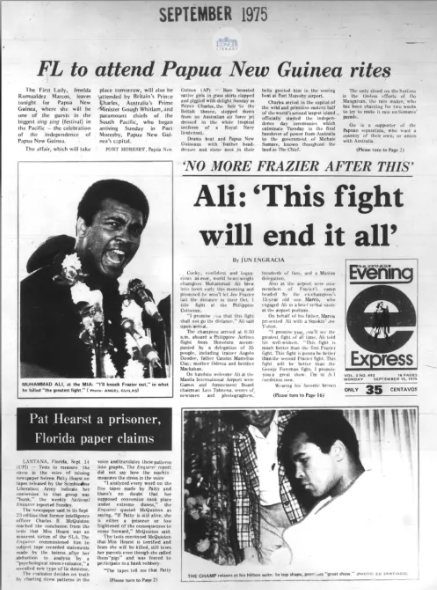
Among the few Filipino journalists who had ringside access was Jun Engracia, then a 22-year-old sportswriter for the Philippines Daily Express. IBA’s Taruka Srivastav spoke with now a veteran journalist and former News Editor at the Philippine Daily Inquirer, who was honored with the Lifetime Award in Sports Journalism by the Philippine Sportswriters Association. A distinguished figure in Philippine media and an alumnus of the University of the Philippines, Engracia reflects on his unforgettable experience covering the historic 1975 Thrilla in Manila between Muhammad Ali and Joe Frazier, and shares his thoughts on its enduring legacy as the boxing world marks its 50th anniversary. Today, five decades later, he reflects on what it was like to cover the “fight of the century” — and what it means to see a new Thrilla in Manila take shape in 2025.
Jun, take us back to 1975. You were only 22 when you covered the Thrilla in Manila. How did it all begin?
It started, as many great stories do, with pure impulse. On the morning of September 15, 1975, Muhammad Ali landed in Manila. My colleague, photographer Eddie Alfonso, and I decided — on a hunch — to follow his motorcade from the airport to the Manila Hilton. We were just two young reporters hoping for a quote or a picture.
When we got there, the elevator opened on the ninth floor — and standing right in front of us was Rahman Ali, the champion’s brother. Moments later, we were knocking on the door of the presidential suite. It opened, and there he was — Muhammad Ali, barefoot, in a yellow bathrobe, brushing his hair, larger than life.
Eddie started clicking pictures. Ali looked into the mirror and kept saying, “I’m more handsome than that gorilla,” meaning Joe Frazier. That’s the only line I can still hear in his booming voice. It was my first scoop. I was a nervous kid interviewing the world’s biggest star — and he was utterly magnetic.
So, you met Ali before the world even knew the term “Thrilla in Manila.” How did that phrase come about?
It actually came from one of Ali’s spontaneous rhymes. A few days earlier, he was bantering with the press and came up with:
“It will be a killa, chilla, thrilla when I get that gorilla in Manila.”
He was playful, theatrical, and knew how to own the stage. That line stuck — and “The Thrilla in Manila” was born. Nobody could sell a fight like Ali.
What was the mood like in Manila leading up to the fight?
It was electric — and chaotic. For two weeks, the city turned into a travelling circus. The Folk Arts Theater became Ali’s gym; the air smelled of sweat, liniment oil, and adrenaline. Ali taunted Frazier relentlessly — once pointing a toy gun at his hotel balcony, another time sneaking into Frazier’s training camp.
He even accepted an honorary doctorate from a questionable university and told the media, “Who would have thought an uneducated black man would become a doctor?” He was always performing, always provoking.
Meanwhile, the Frazier camp kept things quiet and serious. Frazier was all business — no jokes, no theatrics. It was the perfect storm: charisma versus stoicism, poetry versus punishment.
What do you remember most from fight day?
The heat. The tension. And the feeling that we were watching history.
By 10:30 a.m., the Araneta Coliseum was bursting with over 25,000 people. President Marcos and First Lady Imelda were there. The air conditioning couldn’t keep up. Reporters from The New York Times, Sports Illustrated, Associated Press, BBC — the gods of sportswriting — were all on press row.
Ali started strong, but by the middle rounds, Frazier’s relentless hooks turned it into a war. The sound of punches — thudding, echoing through the dome — still rings in my ears. In the 13th, Ali landed a cross that sent Frazier’s mouthpiece flying across ringside. By the 14th, Frazier could hardly see. His trainer, Eddie Futch, stopped the fight, whispering, “Son, no one will ever forget what you did here today.”
Ali collapsed in exhaustion, whispering later: “Fighting Joe Frazier is the closest thing to dying.” That line still gives me chills.
You were part of the Philippines Daily Express team that broke the story first. What was that newsroom experience like?
Frenetic, thrilling, and sleepless. Remember, this was before computers. We were using typewriters, telephones, and motorcycles.
Our photographers developed film in darkrooms while couriers raced 13 kilometers through near-empty streets to get pictures to the newsroom. I was dictating color copy down a hotline while my editor typed it in real time. Within 15 minutes of the final bell, our Evening Express headline screamed “ALI WINS!” across Manila.
By the time I stepped out of the arena, newsboys were already selling the paper. That was our victory — the journalists’ fight.
You’ve lived through the golden age of boxing and journalism. How does it feel to see “Thrilla in Manila” remembered 50 years later?
It feels surreal. That fight defined a generation — not just for boxing, but for storytelling. It was courage, endurance, and humanity in its rawest form.
And to see the name return — fifty years later — reminds me that legends never fade. They echo. Manila became immortal that day.
For us Filipinos, it wasn’t just Ali vs Frazier. It was Manila’s moment on the world stage — under martial law, under heat, under the eyes of the world. And for a young sportswriter like me, it was the day I learned what greatness — and grit — really looked like.
What are you most excited about for Thrilla in Manila 2.0?
I’m genuinely excited to see how history will echo itself in this new chapter. The first Thrilla in Manila was more than just a boxing match — it was a cultural moment that defined an era. Now, 50 years later, to have Muhammad Ali’s grandson, Nico Ali Walsh, step into the same arena where his grandfather made history feels incredibly symbolic. It’s as if the spirit of the original fight is being rekindled for a new generation.
I’m also curious to see how the event merges heritage with modern spectacle — the storytelling, technology, and global broadcast possibilities today can bring that same Filipino passion for boxing to a worldwide audience once again. It’s not just about nostalgia; it’s about honoring legacy while showcasing the Philippines as a world-class stage for boxing in 2025.
Fifty years on, The Thrilla in Manila still stands as a monument to willpower, pain, and poetry in motion. For Jun Engracia and the few who witnessed it from ringside, it wasn’t just a fight — it was the day the written word caught lightning in a bottle.
And as the boxing world prepares for a new “Thrilla in Manila,” perhaps the spirit of Ali and Frazier — and the ink-stained hands of reporters like Jun — will once again rise to remind us what true greatness looks like. Jun will be attending the Thrilla in Manila 2.0 and we look forward to having him.
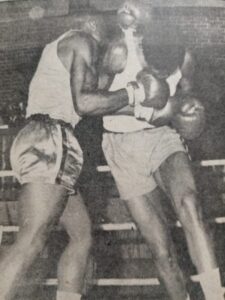
Kenya's Olympic silver and bronze medallist Philip Waruinge (left) battling Uganda's Mohamed Muruli at Nairobi's City Hall in 1967
🏆 The Golden Era
UGANDA REGAIN TROPHY IN 1967 BY THE SKIN OF THEIR TEETH AS OUNDO IS ROBBED OF VICTORY
▪️Uganda narrowly defeated a resilient Kenya 33-31 on aggregate points to win back the Millington Drake Trophy after a three-year domination by the Kenyans
▪️The constant production of quality boxers by Kenya and Uganda ensured their intense rivalry remained alive every year
For three years running, Kenya dominated arch-rivals Uganda in the popular two-leg Millington Drake Trophy contest but on the night of December 9, 1967, Uganda regained the trophy narrowly on 33-31 aggregate points win in a gruelling duel fought before a packed house at the City Hall in Nairobi.
Like in the first leg in Kampala, Uganda edged Kenya by 6-5 bouts (16-15 points) to reclaim the trophy.
The see-saw battle between Kenya and Uganda was the highlight in the calendar of events for the two East African boxing giants then boasting some of the world’s best boxers as they demonstrated at the 1968 Mexico Olympics with Uganda winning a silver medal through bantamweight Eridadi Mukwanga and a bronze by flyweight Leo Rwabogo while Kenya’s technician Philip Waruinge won a bronze medal at featherweight.
Their keenly contested bouts were spiced with immaculate boxing from their well-drilled boxers displaying skill, passion and a thirst for superiority over one another. This intense rivalry contributed a great deal in raising the standards of the game, and in the process shaping up the boxers for the challenging overseas assignments. The constant production of quality boxers from the two countries ensured the rivalry remained alive every year.
Yet there was nothing much at stake other than national glory, individual prestige and superiority in the ring.
So, when the Kenyans arrived in Kampala for the first leg of the Millington Drake Trophy contest in June, 1967, Ugandans, as usual, expected a blistering showdown. And the Ugandan fans loved the Kenyan boxers for their warrior-like approach in the ring. In Kenya, the revered Ugandan boxers were held in high esteem. Whenever they landed in Nairobi, pre-fight tension and anxiety heightened among the boxers ahead of the eagerly awaited bouts.
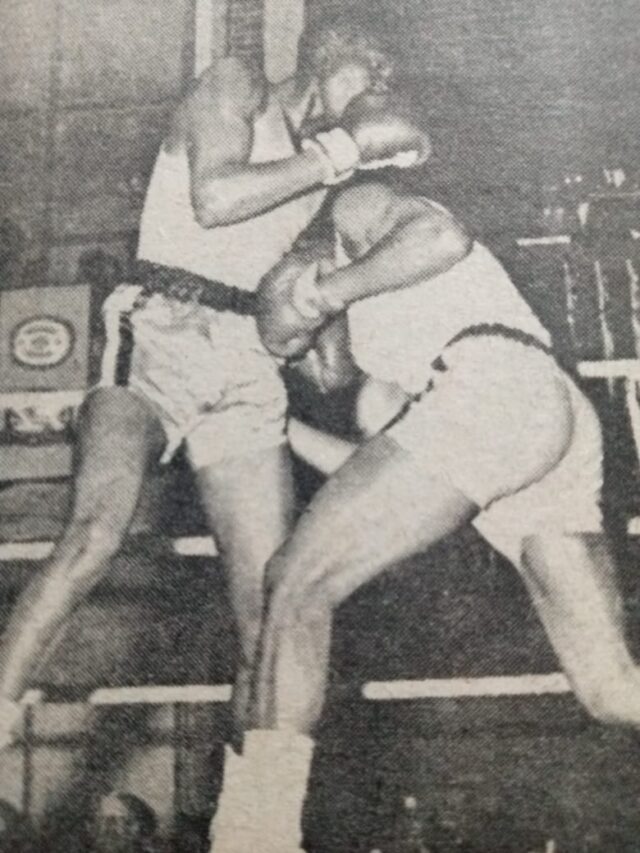
Uganda’s Powell Mabwa (right ) chews leather as Alex Oundo intensifies attack
The usual venues for the epic Kenya vs Uganda fights were Nakivubo and Lugogo Stadiums in Kampala and City Hall in Nairobi.
This time around, Lugogo was where the boxers would trade leather for the first leg of the 1967 Millington Drake Trophy contest.
Kenya suffered a severe blow when two key boxers, Philip Waruinge and John Olulu, pulled out from the team with Waruinge still nursing a wrist injury and Olulu was unavailable having just been recruited by the Kenya Army. Kenya also missed the services of regular heavyweight Chris Durrant.
“The ABA of Kenya hopes to see all the three boxers in action against the visiting Ghana and Uganda in the second leg in December,” said the ABA Secretary General Majory Frank Ryan who was wary of the stiff challenge from the Ugandan boxers.
Said Ryan:”The Ugandans have already gone into residential training, I expect them to give us a tough fight. They’re very serious this year aiming to take away the trophy.”
Uganda’s seriousness to topple the Kenyans was evident, elevating former prominent international in the 1950s Grace Seruwagi to be the head coach assisted by 1962 Commonwealth Games silver medallist Kesi Odong. Seruwagi was then cruising on a whirlwind of success as coach at Kilembe Mines, his team winning the novices, intermediate and national championships.
The 1967 Millington Drake Trophy also saw the inauguration of the light-flyweight category. Uganda picked on talented Leo Rwabogo for the new berth and Kenya had Prisons Lawrence Kariuki.
Sammy Mbogwa, one of the top boxers from Nakuru ABC, replaced his elder brother Waruinge at featherweight, George Kanui came in for John Olulu in the light-welterweight class with pint-sized Stephen “Kimbo” Matiani moving up to heavyweight but coach Hassan Amiri was a worried man on whether Matiani would make weight.
Sadly, Matiani was almost four pounds underweight, giving the Ugandans a walkover at heavyweight and 6-5 bouts victory over Kenya.
Matiani fought in the light-heavyweight berth and lost to Henry Mugwanya. Disappointed fans were looking ahead to Matiani’s fight with the towering 1966 Commonwealth Games bronze medallist Ben Ochan whom Matiani had floored in Nairobi in one of the Kenya vs Uganda matches before Ochan avenged the defeat in the quarter-finals of the 1966 Commonwealth Games in Kingston, Jamaica.
The highlight of the card was the furious exchange of fists in the welterweight bout between Eldoret-based Alex Oundo and Uganda’s 1962 Africa Championships silver medallist Powell Mabwa.
An estimated crowd of 2000-plus fans stood up roaring in this fiercely contested bout won on points by Mabwa who also bagged a bronze medal in the 1964 Africa Championships in Accra, Ghana. Chants of “mukube omusajja!” (beat the man) rent the air as overzealous Ugandan fans urged Mabwa to hit Oundo, a bronze medallist in the 1965 African Games.
Powell Mabwa, one of the top Ugandan boxers in the early 60s, scored a controversial points win over Alex Oundo at welterweight
The 1966 Commonwealth Games bantamweight bronze medallist John Nderu was the most impressive Kenyan winner, displaying his superior ring craftsmanship against a timid F.Ntwiremabo whom he stopped in 44 seconds of the third round after the Ugandan boxer made one trip to the canvas following Nderu’s strong body punches.
In the opening newly-introduced light-flyweight by the world’s governing boxing body – then known by its acronym AIBA – Uganda’s Leo Rwabogo outpointed Lawrence Kariuki with flyweight Peter Manene beating Eridadi Mukwanga and at featherweight Kenyan Sammy Mbogwa lost to Mohamed Muruli.
Lightweight David Jackson was beaten by Kenya’s 1966 Commonwealth Games bronze medallist Steven Baraza who had one of the best jabs in the game. Uganda’s light-welterweight M.Badi lost to George Kanui with Kenya’s formidable upcoming light-middleweight Steve Thega beating L.Kayiira.
Uganda’s 1965 African Games middleweight silver medallist and bronze medal winner in the 1966 Commonwealth Games Mathias Ouma outpointed Kenya’s Patrick Wattengah whose long range missiles troubled Ouma but the Ugandan’s skillful boxing was a class above Wattengah. In the ensuing light-heavyweight bout, Henry Mugwanya defeated Stephen “Kimbo” Matiani.
The ABA of Kenyan President Marcel Brunner was not worried by Uganda’s victory.
“I expected this result but I’m confident we will win the return leg in Nairobi, we sacrificed two valuable points in the heavyweight division,” said Brunner.
With Uganda leading by one point, the Kenyans were all set for a bruising encounter in the second leg of the Millington Drake Trophy in December, 1967.
Kenya’s star boxers Philip Waruinge and John Olulu were back in the team to boost their hopes of turning the tables at home.
Kenya’s team: light-flyweight Lawrence Kariuki, flyweight Peter Manene, bantamweight Sammy Mbogwa, featherweight Philip Waruinge, lightweight Kamau Mbugua, light-welterweight John Olulu, welterweight Alex Oundo, light-middleweight Stephen Thega, Jonathan Sijenyi, light-heavyweight Stephen “Kimbo” Matiani and heavyweight Chris he Durrant. Baraza, still nursing a swollen finger, was replaced by Nakuru ABC product Kamau Mbugua.
Uganda’s team comprised light-flyweight Leo Rwabogo, flyweight John Rwangirana, bantamweight Youngston Odong, featherweight Mohamed Muruli, lightweight Gabriel Lashuba, light-welterweight Alex Odhiambo, welterweight Powell Mabwa, light-middleweight Andrew Kajjo, middleweight Mathias Ouma, light-heavyweight Henry Mugwanya and heavyweight Ben Ochan. The manager was Jack Edwards with Grace Seruwagi and Kesi Odong as the coaches.
A packed City Hall roared and screamed in this hotly contested match that was part of the Jamhuri Day celebrations. The two teams were tied at 5-5 bouts following Stephen Matiani’s victory over Henry Mugwanya at light -heavyweight, a sweet revenge for Matiani having lost to Mugwanya in the first leg in Kampala.
The writing was on the wall: Uganda was poised to dethrone Kenya since in the deciding heavyweight bout, Uganda’s Ben Ochan was a clear-cut favourite against underdog Chris Durrant. As expected, the Kenyan proved no match against the stronger and taller Ochan who stopped Durrant in the first round to the loud applause of the visitors. They regained the Millington Drake Trophy with a narrow 6-5 bouts win for an aggregate points victory of 33-31.
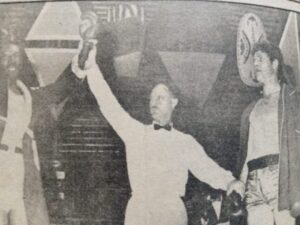
Referee Trevor Hill declares Uganda’s Ben Ochan the winner after stopping the heavyweight bout in the first round to save Kenya’s Chris Durrant from receiving further unnecessary punishment
Biased officiating – so common in the Kenya vs Uganda matches – reared its ugly head again in the welterweight bout between Kenya’s Alex Oundo and Powell Mabwa, the controversial winner. Mabwa had an edge over Oundo in the first round but in the next two rounds, Oundo was on fire, driving back Mabwa with a barrage of two-fisted flurries that had the excited Kenyan fans in spontaneous cheers of approval.
Kenya’s coach and manager Hassan Amiri was a bitter man.
“Some decisions are difficult to appreciate, had it not been for the biased officiating I’m sure we would have won,” said Amiri.
Ugandan manager Jack Edwards disagreed with Amiri.
“The officiating by the judges and referees was excellent, we expected to win by a larger margin, I’m happy we’re taking the trophy from Kenya,” said Edwards.
Boxing brothers Philip Waruinge and Sammy Mbogwa were among the five Kenyan winners. Bantamweight Mbogwa comfortably beat Youngston Odongo while Waruinge, known for his ring artistry, made heavy weather in defeating Mohamed Murungi who resorted to holding the Kenyan boxer in a bid to annoy him and mess up his usual classic boxing.
“Muruli was holding me, employing dirty tricks to spoil my rhythm. He thought I would be annoyed but I maintained my calm,” Waruinge told me in one of the several interviews I had with after he had retired.
Kenya’s most successful boxer in the ring Philip Waruinge and coach Hassan Amiri (left)
Commonwealth Games bronze medallist Alex Odhiambo had the better of John Olulu with light-middleweight Steve Thega, a product of Pumwani Boxing Club, maintaining his ascendancy by stopping Andrew Kajjo in the second round.
Full resultsKenya boxers named first)
Light-flyweight
Lawrence Kariuki again lost to Leo Rwabogo
Flyweight
Peter Manene outpointed John Rwangirana
Bantamweight
Sammy Mbogwa beat Youngston Odongo
Featherweight
Philip Waruinge defeated Mohamed Muruli
Lightweight
Kamau Mbugua lost to to Gabriel Lashuba
Light-welterweight
John Olulu lost to Alex Odhiambo
Welterweight
Alex Oundo lost to Powell Mabwa
Light-middleweight
Steve Thega stopped Andrew Kajjo in the second round
Middleweight
Jonathan Sijenyi lost to Mathias Ouma
Light-heavyweight
Stephen “Kimbo” Matiani beat Henry Mugwanya
Heavyweight
Chris Durrant was stopped by Ben Ochan in the first round