











Home Blog Page 15

63 YEARS AGO TODAY: CASSIUS CLAY SURVIVES HENRY COOPER’S HAMMER AT WEMBLEY STADIUM

0
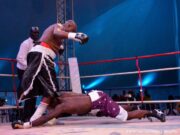
Henry Cooper's stinging left hook sends down Muhammad Ali in the fourth on June 18, 1963, at Wembley Stadim

▪️June 18, 1963 – Wembley Stadium, London, England. What transpired that evening would become one of the most talked-about moments in boxing history

June 18, 2026

Sixty-three years ago today, one of the most dramatic and controversial heavyweight contests in boxing history unfolded before a packed crowd at the magnificent Wembley Stadium in London, England.

The event, promoted by legendary British boxing impresario Jack Solomon, featured an unbeaten and flamboyant young contender named Cassius Clay, who entered the ring with a perfect professional record of 18-0. Standing across from him was Britain’s beloved heavyweight champion, Henry Cooper, carrying a record of 27-8-1 and the hopes of an entire nation on his shoulders.

What transpired that evening would become one of the most talked-about moments in boxing history.

The People’s Champion vs The Rising Superstar

Henry Cooper was much more than a boxer in Britain—he was a national sporting hero. Tough, courageous, and immensely popular, Cooper possessed one of the most feared weapons in heavyweight boxing: a devastating left hook affectionately known as “‘Enry’s ’Ammer.”

The punch had genuine one-punch knockout power and had flattened many opponents throughout his career.

Yet Cooper also carried a vulnerability that followed him throughout his boxing journey. He was prone to severe cuts, particularly around the eyes. In several of his defeats, excessive bleeding had compromised his vision and ultimately cost him victory.

At the official weigh-in, Clay tipped the scales at 207 pounds, while the smaller Cooper weighed 185 pounds. Despite the physical disparity, the British champion would soon prove that size alone does not win fights.

The Punch That Shook Wembley

For three rounds, Clay displayed the speed, movement, and confidence that had already made him one of boxing’s most fascinating young attractions.

Then came the fourth round.

With seconds remaining, Cooper unleashed his trademark left hook—a punch that landed flush on Clay’s jaw and sent the undefeated American crashing to the canvas.

The Wembley crowd erupted.

For the first time in his professional career, Cassius Clay had been knocked down.

Years later, Clay would jokingly recall the moment by saying:

“That punch was so hard, my ancestors in Africa felt it.”

It remains one of the most famous quotes associated with the fight.

The Split Glove Controversy

As Clay returned to his corner, his trainer, the legendary Angelo Dundee, immediately noticed that one of Clay’s gloves had split.

Dundee called referee Tommy Little’s attention to the damage, forcing officials to inspect the glove before the start of the fifth round.

What happened next became one of boxing’s enduring controversies.

Many observers believed Dundee deliberately enlarged or tore the glove to gain additional recovery time for his dazed fighter. Others maintained that the glove had already split during the fourth round and that Dundee merely pointed out a legitimate equipment issue.

Film footage from the bout suggests the glove may indeed have been damaged before Clay returned to his corner.

Referee Tommy Little summoned ringside officials to address the problem. Contrary to one of boxing’s most repeated myths, there was no lengthy delay caused by someone running to the dressing room searching for replacement gloves.

The situation was resolved relatively quickly.

Years later, ringside timekeeper Stan Courtney clarified exactly what happened:

“At no time was I instructed to stop my watch to allow for the refitting of the gloves; therefore I waited until I got the signal from referee Little to ring the bell. When I did so, my watch showed that the interval between rounds had in fact been 1 minute and 40 seconds.”

Even today, debate continues over whether those additional seconds played a crucial role in saving Clay from defeat.

Clay Keeps His Prediction

Before the fight, the outspoken Clay had boldly predicted that he would stop Cooper in the fifth round.

Remarkably, he was proven correct.

When action resumed, Clay attacked aggressively and opened a deep cut above Cooper’s left eye. The wound worsened rapidly, and blood began affecting Cooper’s vision.

Recognizing the danger, referee Tommy Little halted the contest in the fifth round to protect Cooper from potentially serious injury.

Cassius Clay was awarded a fifth-round technical knockout victory—exactly as he had predicted.

What Historians and Experts Say

Veteran boxing historians often describe the Cooper fight as the closest Cassius Clay came to defeat before capturing the world heavyweight championship from Sonny Liston eight months later.

Renowned boxing writer Bert Sugar once noted that Cooper’s left hook remains one of the most famous punches ever landed on Muhammad Ali.

Many historians also regard the split-glove incident as one of the sport’s greatest “what if” moments.

Had Cooper been able to continue his assault immediately after the knockdown, could boxing history have taken a different path?

No one can say for certain.

What is certain is that Clay demonstrated remarkable resilience by surviving the crisis and returning to dominate the fifth round.


Legacy of a Historic Night

The first Clay-Cooper encounter remains one of the defining moments of 1960s heavyweight boxing.

It showcased everything that makes the sport unforgettable:

• Drama

• Controversy

• Courage

• Skill

• Determination

• Unanswered questions

For Henry Cooper, it reinforced his reputation as one of Britain’s bravest and most beloved fighters.

For Cassius Clay, it provided an early lesson in adversity—one that helped shape the future heavyweight champion who would soon become known to the world as Muhammad Ali.

More than six decades later, boxing fans still debate the knockdown, the glove, and what might have been.

That alone is proof of the fight’s enduring place in boxing folklore.

Closing Remarks

Some fights are remembered for championships. Others are remembered for controversy. A select few are remembered because they leave generations asking questions long after the final bell has sounded.

Clay vs Cooper belongs in that rare category.

On June 18, 1963, Wembley Stadium witnessed a young future legend survive his greatest scare, while a proud British warrior produced the punch that nearly changed heavyweight history forever.

Memorable Quotes

“That punch was so hard, my ancestors in Africa felt it.” — Cassius Clay


“Henry Cooper’s left hook was one of the most dangerous weapons in heavyweight history.” — Boxing historians


“The split glove remains one of boxing’s greatest controversies.” — Boxing writers and historians


Debate Questions

Do you believe Angelo Dundee intentionally played a role in the split-glove incident?

Would Henry Cooper have finished Cassius Clay had the extra seconds not been available?

Was Cooper’s left hook the hardest punch Clay absorbed before becoming world champion?

Where does Clay vs Cooper rank among the greatest heavyweight fights ever staged in Britain?

Is the split-glove controversy boxing’s greatest unanswered “what if” moment?

*Brain Boxing Sports CEO shares his views on the Wembley showdown*

This is one of boxing history’s most fascinating stories because it combines drama, controversy, and a genuine “what if” moment. Had Henry Cooper landed another clean left hook immediately after the knockdown, the entire trajectory of Cassius Clay’s career—and perhaps heavyweight boxing history itself—might have been different

What makes the bout so memorable is that both men enhanced their legacies that night.

Cassius Clay showed resilience, composure under pressure, and fulfilled his bold prediction of a fifth-round victory.

Henry Cooper earned lasting respect by becoming the first professional boxer to floor the future Muhammad Ali and by giving the young American his toughest test to date.

As renowned boxing historian Bert Sugar once observed, some fights become legendary not because of who won, but because fans never stop debating what might have happened under slightly different circumstances.

There is no conclusive evidence that Angelo Dundee deliberately tore the glove. However, Dundee was a famously resourceful cornerman, and many British fans have long believed he took advantage of the situation to buy Clay precious recovery time. The available footage tends to support the view that the glove had already split during the fourth round, but the controversy remains one of boxing’s most enduring mysteries.

“Boxing history is not merely about champions—it is about the moments that changed the course of the sport forever.”

*”Cooper wasn’t the first boxer to knock down Cassius Clay”*

Boxing purist, Ray Parker, says Henry Cooper wasn’t the first boxer to knock down Cassius Clay. On February 10, 1962, Cassius Clay (10-0-0, 7 KOs) and Sonny Banks (10-2-0, 9 KOs) boxed at Madison Square Garden in New York, New York (New York City), USA. Clay was 6 feet 2 1/2 inches tall, weighed 194 1/2 pounds, and was 20 years old. Banks was 6 feet 2 inches tall, weighed 191 1/2 pounds, and was 21 years old. Banks knocked Clay down in the 1st round. Clay knocked Banks down in the 2nd round. Clay won at 26 seconds of round 4 by a TKO.

@BrainBoxingSport


FOUNDATION STONE LAID FOR THE FIRST-EVER IBA ARENA IN DUSHANBE

0

June 15th, 2026

Foundation stone laid for the first-ever IBA ar ena in Dushanbe
A landmark moment for international boxing took place in Dushanbe, Tajikistan as the Chairman of Majlisi milli Majlisi Oli, Chairman of Dushanbe city, Honourable Rustam Emomali, together with International Boxing Association (IBA) President Umar Kremlev, officially launched the construction of the first-ever IBA Arena by laying the foundation stone for a major sports and hospitality complex in the Sino district of the Tajik capital.

The project marks a historic milestone for the IBA, which will receive its first dedicated arena anywhere in the world. Designed as a multifunctional venue, the complex is set to become one of Central Asia’s leading destinations for boxing, international sporting events, cultural activities and business gatherings.

During the ceremony, officials were presented with details of the development, which will cover more than 2.15 hectares and feature a three-storey arena with a capacity of up to 7,000 spectators. The venue will include a congress hall, training facilities, athlete areas, VIP hospitality spaces and spectator lounges, creating a modern home for boxing in the region.


The arena has been designed not only to host elite boxing competitions but also to serve as a year-round centre for sporting, educational and community activities. In addition to the main competition hall, the project includes dedicated training gyms, coaching facilities and supporting infrastructure for athletes and officials.

Adjacent to the arena, a modern five-star hotel with 340 apartments will be constructed to support the successful staging of national and international events. According to the project concept, the hotel will include luxury and standard accommodation, conference facilities, a fitness centre, spa complex, children’s centre, restaurants and rooftop hospitality areas, creating a fully integrated sports and tourism destination.

The arena itself will feature more than 26,000 square metres of total floor space, while an underground parking facility for over 200 vehicles will ensure convenient access for visitors and participants.

IBA CEO & SECRETARY GENERAL CHRIS ROBERTS OBE: “ATHLETES CREATE VALUE. THEY DESERVE A SHARE IN IT”

0
International Boxing Association (IBA) Secretary-General & CEO Chris Roberts OBE argues athletes deserve to be paid because without them there's no sport. They're the ones who create the value. That's why IBA pays boxers prize money because without boxers there's no boxing.

June 13, 2026

International Olympic Committee (IOC) President Kirsty Coventry sparked global discussion when she stated in an interview with Sport Nation that she did not believe Olympic athletes should be paid prize money for their achievements at the Olympic Games.

The comments immediately reignited a debate that extends far beyond the Olympic Movement itself. At its core lies a fundamental question that every sports governing body should be prepared to answer:

 Who creates the value in sport?

The answer is simple.

Athletes do.

Athletes dedicate years, often decades, of their lives to pursuing excellence. They sacrifice time with family, financial stability, educational opportunities, and personal comfort in pursuit of sporting success. They are the reason millions of fans tune in to broadcasts, attend events, follow competitions online, and support sponsors. Yet despite generating the very foundation upon which the global sports industry is built, many athletes continue to struggle financially throughout and after their careers.

The Olympic Games are among the most commercially successful sporting events in the world. They generate billions of dollars through broadcasting agreements, sponsorship partnerships, licensing programmes, and marketing activities.

While national governments and national Olympic committees in some countries provide rewards for medal winners, the IOC itself does not award prize money to Olympic champions.


Without athletes, there are no championships.

Without athletes, there are no television rights.

Without athletes, there is no commercial value.

This reality raises a legitimate and increasingly important question: should the athletes who create the value receive a more direct share of the benefits generated from their performances? At the International Boxing Association, we believe they should.

This is not because athletes compete solely for financial rewards. They do not. Athletes compete for national pride, personal achievement, sporting excellence, and the opportunity to inspire future generations. Those values remain at the heart of sport and must always be protected. However, recognising those values should never be used as a reason to overlook fairness.

The modern sports ecosystem has evolved dramatically over the past several decades. Revenues have increased. Commercial opportunities have expanded. Global audiences have reached unprecedented levels. Yet too often, athletes remain the last beneficiaries of the value they create.This is neither sustainable nor equitable.

At the IBA, we have consistently advocated for athlete-centred policies and athlete financial support. We believe that when athletes step into the ring, they should know that their commitment, sacrifice, and achievements are recognised not only through medals and applause, but through tangible support that contributes to their long-term wellbeing and future security.

Athletes are not expenses to be managed.

They are investments in the future of sport.

Supporting athletes financially is not a threat to sporting values. On the contrary, it reinforces them. It allows talented young people from every background to pursue their dreams regardless of economic circumstances. It reduces barriers to participation. It strengthens competitive integrity. And it demonstrates that sport values the individuals who make it possible.

The discussion should therefore move beyond the simplistic question of whether athletes should be paid.

The real question is whether modern sport can continue to generate extraordinary revenues while expecting athletes to remain satisfied with symbolic recognition alone. The answer, increasingly, appears to be no.

Every governing body must determine its own approach. Healthy debate is an important part of sport’s development. But one principle should unite us all: athletes must remain at the centre of every decision we make. As leaders in sport, our responsibility is clear. We must ensure that those who create the value are treated as partners in that success.

Because athletes are not merely participants in sport. They are the reason sport exists.

ASANTE SANA, RAIS!” BFK HAILS PRESIDENT WILLIAM RUTO’S GOVT FOR BACKING KENYAN BOXERS’ GLOBAL EXPOSURE IN MAJOR COMPETITIONS

0
China-bound: BFK's President Anthony Otieno aka Jamal (far left) leads Kenya's delegation of 24 people leaving today for World Boxing Cup Championships. Others in the picture clockwise are trainer John Waweru, head coach Musa Benjamin, deputy head coach David Munuhe and Communication Director Duncan Kuria.

▪️”Constant exposure is a crucial component in raising boxing standards in Kenya and enabling our boxers excel in big international competitions. It’s for this reason that BFK highly appreciates Presidents Ruto’s support through the Ministry in charge of sports for their continued collaboration with us to expose our boxers,” says BFK Secretary-General David Munuhe in a statement

▪️BFK appeals to the private sector including betting companies to complement the government’s contribution by supporting them in the preparation of their teams, technical training, equipment and the important Ndondi Mashinani Initiative

June 13, 2026

The Boxing Federation of Kenya (BFK) has expressed deep gratitude to President William Ruto’s administration, citing his government’s crucial backing for enabling the country’s boxers to gain exposure in major international tournaments.

This sustained national support has significantly revitalized the performance of Kenyan boxers at the big stage as witnessed in the 2025 IBA Men’s World Boxing Championships in Dubai where three Kenyan boxers punched their way to the last 16 and one of them, Robert Okaka aka Man Man Ngori, became the first Kenyan boxer in 43 years to qualify for the quarter-finals of this prestigious event.

As 17 Kenyan boxers jet out today, June 13, 2026, for Guiyang, China, to participate in the World Boxing Cup Championships, BFK – in a statement by the Secretary General David Munuhe – has expressed profound gratitude to President William Ruto’s government for its consistent backing in exposing the Kenyan boxers.

In the statement headlined “Appreciation and Congratulations for Supporting the Boxing Federation of Kenya in International Competitions”, Munuhe said they were deeply indebted to President Ruto’s government for once again supporting them in the China trip for the World Boxing (WB) tournament ahead of the Commonwealth Games and Africa Elite Championships.

Munuhe’s statement reads: “BFK wish to extend its heartfelt congratulations and sincere appreciation to the Ministry of Sports and His Excellency President William Ruto for their unwavering support of the Boxing Federation of Kenya in international tournaments and championships.

“Your commitment to promote sports development has enabled Kenyan boxers to compete on the global stage with confidence and pride. The financial, logistical, and moral support provided by the Government has played a significant role in enhancing athletes’ preparation, participation, and performance in international competitions.

“This support not only elevates the profile of boxing in Kenya but also inspires young people across the country to pursue their sporting dreams. Through your leadership and dedication, Kenyan athletes continue to showcase the nation’s talent, resilience, and determination before the world.

“We commend the Ministry of Sports and President Ruto for recognizing the importance of sports as a tool for national unity, youth empowerment, and international recognition. Your efforts have strengthened the growth of boxing and contributed to the overall development of sports in Kenya.

“Constant exposure is a crucial component in raising boxing standards in Kenya and enabling our boxers excel in big international competitions. It’s for this reason that BFK highly appreciates Presidents Ruto’s support through the Ministry in charge of sports for their continued support to expose our boxers.

“Please accept our sincere gratitude for these remarkable achievements. We look forward to continued collaboration and support that will enable Kenyan boxers to attain even greater success in future international tournaments.”

That’s BFK’s Secretary-General David Munuhe in the statement expressing their appreciation to President Ruto’s government in exposing Kenyan boxers to major international championships.

BFK’s leadership frequently emphasizes, this exposure is the lifeblood of the sport. It sharpens rough diamonds into polished champions. When a Kenyan boxer steps into a ring in Europe, Asia or the Americas, they carry the backing of a government that recognizes the immense economic and social power of sports. The federation acknowledges that every jab, hook, and victory on foreign soil is a testament to the fruits of this fruitful partnership with the government.

What remains now is for the private sector including betting companies to complement the government’s efforts by supporting BFK in the preparation of the junior, youth and elite national teams for international assignments. Thorough preparations are the cornerstone of success in any competition. With so many other responsibilities, the ministry alone cannot fulfill all the requirememts of BFK. Hence the need for other partners to chip in not only in the preparations but by providing equipment, technical training and supporting the important Ndondi Mashinani Initiative.

Meanwhile, BFK’s President Anthony Otieno aka Jamal leads Kenya’s delegation to China comprising 24 people for the second World Boxing Cup scheduled for Guiyang City in China from June 15-21.

The delegation, made up of 17 boxers and seven officials, leaves Nairobi today, arriving in China tomorrow, Sunday, June 14.

Here’s Kenya’s delegation of 17 boxers and seven officials heading to China:

Women

Light-flyweight: Jane Wangare

Flyweight: Veronica “Pioneer” Mbithe and Lencer Akinyi

Bantamweight: Amina Martha Faki

Featherweight: Pauline Chege

Light-middleweight: Friza Asiko

Light-heavyweight: Liz Andiego (captain)

Men

Minimumweight: Silus Onyango

Bantamweight: Dennis Muthama

Lightweight: Ben Juma

Welterweight: Aloice Vincent

Light-middleweight: Boniface “The Hammer” Mogunde (deputy captain)

Middleweight: Edwin Okong’o

Light-heavyweight: Robert “Man Ngori” Okaka

Cruiserweight: Humphrey “Jakababa” Ochieng

Heavyweight: Peter “The Beast” Abuti

Super-heavyweight: Clinton Macharia

Coaches: Head coach Musa Benjamin, deputy head coach David Munuhe and trainer John Waweru

Communication Director: Duncan Kuria aka Sugar Ray

Head of delegation: Anthony Otieno aka Jamal

Physiotherapist: Sospeter Kinuthia

Doctor: Julius Ogeto

MUKELO, VELISWA OUT OF ESWATINI’S ZONE 4 BOXING CHAMPIONSHIPS TEAM LEAVING FOR NAMIBIA ON JUNE 15

0
Mukelo Dlamini (left) at the 2025 IBA Men's World Boxing Championships in Dubai. He has pulled out of Eswatini's team for Zone 4 Championships due to exams.

▪️Mukelo will be doing his exams while Veliswa has sustained a knee injury

June 11, 2026

An eight-member Eswatini boxing squad is set to depart for Katima Mulilo, Namibia, on June 15 for the Zone 4 Championships.

The team faces a steep challenge, travelling without two key medal hopefuls: Mandela Cup female flyweight silver medallist Veliswa Magaya and featherweight standout Mukelo Dlamini, the first Eswatini boxer to win a fight in the IBA World Championships..

While the absence of both fighters leaves a notable void in the country’s lineup, the remaining eight boxers are confident of positive results in the Zone 4 Championships.

For Mukelo, the decision was made to prioritize his academic future as he will be sitting for his scheduled examinations at the Institute of Development Management (IDM) where he is studying for a Bachelor of Science degree in Information Technology. Meanwhile, Veliswa is sidelined due to a knee injury, forcing the flyweight to miss the highly anticipated regional tournament.

Mukelo is not amused missing the Zone 4 Championships because he was aiming to win his first ever gold medal.

“My apologies to our federation and my teammates for the inconvenience,

I requested a special exam from the school but they put it on the week of the Commonwealth Games,” Mukelo told boxersworld.co.ke

“So, the association decided that I should write now so that I can be able to attend the Commonwealth Games since I’ve been selected.”

Despite these high-profile setbacks, the remaining eight-member Eswatini delegation will proceed with the trip for this important event they will use as a build-up for the Commonwealth Games in Glasgow this year. The team will be captained by their longest-serving international Thabiso Dlamini, a silver medallist in the 2025 Zone 4 Championships in Mozambique.

The Secretary-General of Eswatini Boxing Association, Nkosinathi Dlamini, said the eight boxers and two coaches will jet out for Namibia on June 15 at 10:40 am aboard Airlink flight number 4Z124, arriving at the Hosea Kutako International Airport in Windhoek, Namibia, at 12:50pm.

Efforts to contact the Secretary-General of the Namibian federation Petrus Kashango, on their arrangements have been unsuccessful as he’s not even responding to Whatsapp messages. Getting info on the Zone 4 Championships has therefore become as difficult as trying to squeeze water from a stone.

Here’s Eswatini’s 10-member team for the Zone 4 Championships.

1. Lindelwa Fakudze (female )– Under 70 kg

2. Lihle Sithole – Under 51 kg

3. Siboniso Vilakati – Under 54 kg

4. Qhawe Gamedze – Under 60 kg

5. Phelindaba Gamedze – Under 63.5 kg

6. Thabiso Dlamini – Under 67 kg

7. Sibonelo Ndzimandze – Under 71 kg

8. Tsepo Dlakudze 75 kg


Coaches

1. Mbingo Mpendulo Coach

2. Zikalala Douglas assistant coach


SG Office

Eswatini Boxing Association

RISING BOXING STARS BEN JUMA AND DENNIS MUTHAMA FINALLY CAPPED AND ARE NOW HEADING TO CHINA

0

▪️The two promising boxers are among Kenya’s 17-member squad to take part in the second World Boxing Cup in Guiyang, China

June 12, 2026

Sensational nationsl lightweight silver medallist Ben Juma and Kenya Open bantamweight champion Dennis Muthama have officially been capped and are among the 17-member Kenya national boxing team nicknamed Hit Squad departing for China on Saturday, June 13, for the World Boxing Cup Guiyang City, China.

The tournament, scheduled for June 15-21, serves as a major boost for the squad’s Olympic qualification ambitions. t
Their participation marks a crucial step in the boxers’ preparations for other major international tournaments notably the Commonwealth Games and Africa Elite Men’s and Women’s Championships.

KDF’s Muthama and Ben Juma – elder brother of Kenyan Open featherweight champion Chris Juma – have both been in spanking form locally displaying immense skills and determination.

Muthama won the Kenya Open in April this year by stopping Chris Musyoki in the third round at Kaloleni Social Hall, and during the first leg of the Kenya National Boxing League in Nakuru he outpointed rival and long-serving international Shaffi Bakari. In his current form, Muthama is at the peak of his career.

Ben Juma has generated waves of excitement across local boxing circles, punching his way to the finals of the Kenya Open but owing to an injury did not feature in the finals against the eventual champion, southpaw Emmanuel Omollo of Police. He also dominated the lightweight division in the national league in Nakuru scoring an upset victory over KDF’s 2022 Africa Championships silver medallist Samuel Njau. He’s an aggressive boxer with good body shots.

Juma, Omollo and Njau will set alight the second leg of the league in Mombasa from July 9-11.

Leading the 17 boxers – ten men and seven women – is captain Liz “Mkono Chuma” Andiego who has represented the national women’s team from 2010 and is so far unbeaten locally for 15 years. She’s a proud owner of eight medals, two gold, four silver and two bronze medals.

Andiego is now campaigning as a pro under Kalakoda Promotions with two victories so far.

She is deputized by Africa light-middleweight champion Boniface “The Hammer” Mogunde who is unbeaten locally for eight years.

Also in the team is African Games middleweight champion Edwin Okong’o and two-time Africa bronze medallist Robert “Man Ngori” Okaka.

Andiego is also campaigning as a pro under Kalakoda Promotions with two victories so far.

She is deputized by Africa light-middleweight champion Boniface “The Hammer” Mogunde who is unbeaten locally for eight years.

Andiego is in top shape and confident of positive results.

“I’m in shape 24-7 ready to do duty for my country once again, those who’ve been silently suggesting it’s high time I retired should mind their business. When the time comes I’ll do it at my own time,” the 38-year Andiego told boxersworld.co.ke in an interview at Mathare Police Report Gym where the Kenyans have been training under head coach Musa Benjamin who explains why they’re travelling to China.

“There’s nothing happening in Africa, so we decided to expose our boxers ahead of the Commonwealth Games and the Africa Championships,” said Musa, adding:”We need constant competition in Africa from junior, youth and elite level. We’re now in June and no single international tournament has been staged in Africa apart from boardroom politics which is not helpful to the boxers.”

The Kenyan boxers heading to China:

Women

Light-flyweight: Jane Wangare

Flyweight: Veronica “Pioneer” Mbithe, Lencer Akinyi

Bantamweight: Amina Martha Faki

Featherweight: Pauline Chege

Light-middleweight: Friza Asiko

Light-heavyweight: Liz Andiego (captain)

Men

Minimumweight: Silus Onyango

Bantamweight: Dennis Muthama

Lightweight: Ben Juma

Welterweight: Aloice Vincent

Middleweight: Edwin Okong’o

Light-heavyweight: Robert “Man Ngori” Okaka

Heavyweight: Peter “The Beast” Abuti

Super-heavyweight: Clinton Macharia

Coaches: Head coach Musa Benjamin, deputy head coach David Munuhe and trainer John Waweru

Communication Director: Duncan Kuria aka Sugar Ray

Head of delegation: Anthony Otieno aka Jamal

Physiotherapist: Sospeter Kinuthia

Doctor: Julius Ogeto

RING MASTERS ASSEMBLE: TRYAGAIN NDEVELO AND GEBHARD IPINGE TO HEADLINE KATIMA SHOWDOWN

0
Top left Namibia's head coach Israel Hamutumbangela, clockwise Gebhard Ipinge and below in action on the right in blue vest and captain Tryagain Ndevelo (right in a previous event).

▪️Namibia names lethal boxing team for Zone 4 battle along the banks of Zambezi River

June 10, 2026

Namibia’s scenic northeastern town of Katima Mulilo, nestled along the banks of the Zambezi River, will be the epicenter for regional boxing excellence.

After all the ifs and buts, the stage is now set for an epic battle of skills, ringcraftsmanship, power and stamina in the IBA Africa Zone 4 Boxing Championships scheduled for June 15-21 in Katima Mulilo.

Namibia is not taking chances hosting this event for the first time as they have assembled a lethal team of 21 boxers – 13 men and eight women – with experience and emerging talent eager to win Zone 4 Championships for the first time. Get ready for action-packed bouts spiced with fun and excitement.

Head coach Israel Hamutumbangela is confident his team will deliver egged on by home supporters.

“I have faith in my boxers they’re all determined to shine and make Namibia proud,” Hatumbangela told boxersworld.co.ke.

He has eight internationals while the rest excelled in the national championships proving that they can rise to the occasion if given a chance.

In addition to Tryagain Ndevelo and Gebhard Ipinge, other regulars in the team are featherweight Limene Elfas, cruiserweight Peter Kotze, heavyweight Israel Hamunyela while on the women’s side there is Region Five light-flyweight silver medallist Misha Areas, minimumweight Meriam Nghilongwa and lightweight Erika Bawases.

Hamutumbangela is not in boxing accidentally having played the game in school between 1989 to 1997. He is also a former footballer, kickboxer and karateka.

“I’ve handled the national team as head coach from 2018, I was at the Gold Coast Commonwealth Games and coached Jonas Junias Jonas to a gold medal in the light-welterweight,” said Hamutumbangela who owns Intelligence Boxing Academy in Namibia’s Ohangwena Region.

For Namibia’s 21-member squad, these championships represent months of rigorous training, determination, and the pride of fighting on home soil.

At the forefront of the national team’s charge are two of the country’s most celebrated amateur talents,

captain Tryagain Ndevelo and Gebhard Ipinge to headline the fierce exchange along the banks of Zambezi River.

The southpaw Ndevelo finally found his groove at the 2024 Africa Elite Men’s and Women’s Championships in Kinshasa, DR Congo, beating Zambia’s Mwengo Mwale in the final to capture featherweight gold.

Known for his tactical brilliance and patience in the ring, Ndevelo’s leadership both inside and outside the ropes is expected to set a high standard for the entire Namibian camp.

“It will be very important that most boxers get a chance to compete at an international level ahead of the Commonwealth Games,” Ndevelo told boxers world.co.ke in an interview.

Ndevelo went on: “That hunger is a clear indication already that Namibia will conquer those nations and dominate the tournament, we used to see how others hosting countries do it so we will make a big statement in Katima for sure.”

Ndevelo has moved up to lightweight as the featherweight berth will not be contested for in the Commonwralth and Olympic Games.

I ask whether he will be comfortable fighting again in his former weight class.

“I’m comfortable, yes, and also for Commonwealth and Olympics,” he says, adding: “I used to be there already, like my first Commonwealth in 2018 I fought as a lightweight. I moved down when the Olympics weight were changed. Now I’m going back to lightweight again.”

On who will be his rivals in Katima, Ndevelo said: “So far in Africa, the lightweight I can say maybe to be able to trouble me is Zambian and South African boxers. But no worries, there are levels they can’t handle from me.

Maybe Zambians, Mozambique, can bring competition to us too.”

Based in Swakopmund where he trains at Albertus Tsamaseb Boxing Academy, Ndevelo is relishing a fight with the Zambians.

What if he encounters Zambia’s 2022 Africa lightweight champion Andrew Chilata?

“Chilata I’ve seen his his fights severally he doesn’t worry me, I will take him to school in a highly technical game, I have a plan for him, it’s either left side or right side possibly both side and he won’t see it coming.”

He recalls the only Zambian to have defeated him is Everisto Mulenga at the 2019 African Games in Rabat, Morocco. Ndevelo has twice defeated Mwengo Mwale, the 2025 World Championships quarter-finalist.

“I like beating the Zambians, I once lost to a Zambian boxer Everisto at African Games in Morocco 2019, but he doesn’t box anymore, since that day they have a prize to pay to me whenever I match with them.

“Everisto is not boxing anymore, now he is making others pay his debt. Actually, Zambia and Namibia in Southern Africa are the countries at one level I would say so far.”

Fresh off his stellar performances and securing silver in the light-heavyweight division at the 2024 African Elite Championships in Kinshasa and gold in the 2025 Angola Independence celebrations tournament, the highly touted Ipinge brings international pedigree and heavy-hitting prowess to the team.

Together, the duo will share elite experience and winning mentality to the rest of the squad.

The regional event is not just a showcase of raw power and endurance; it serves as a critical stepping stone for these boxers’ Olympic and global aspirations. With local fans expected to pack the venue, the atmosphere in Katima Mulilo will be electrifying.

The mission for the 21 Namibian boxers is clear: defend home turf, display the immense growth of the sport in the country, and secure continental dominance.

Here’s Namibia’s 21 boxers for Zone 4 Championships:

WOMEN

Light-flyweight: Misha Araes

Flyweight: Hertha Namutiwa

Bantamweight: Hatani Bronn

Lightweight: Erika Nawases

Minimumweight: Meriam Nghilongwa

Welterweight: Emily Haungeya

Middleweight: Magdalena Buuyoma

Heavyweight: Salmi Shipesta

MEN

Minimumweight: Immanuel Ashikoto

Flyweight: Jermia Shoonyeka

Bantamweight: Phillip Hauseb

Featherweight: Elifas Imene

Lightweight: Try Again Ndevelo

Light-welterweight: Indongo Shilongo

Welterweight: Dinosaur Sakaria

Light-middleweight: Johannes Findika

Middleweight: Thomas Mdiwetepo

Light-heavyweight: Gebhard Ipinge

Cruiserweight: Peter Kotze

Heavyweight: Israel Hamutenya

Super-heavyweight: Joseph Isak Karasa

BOXING ICONS: EDDIE FUTCH — THE GREATEST TRAINER OF ALL TIME

0

▪️The mastermind behind boxing’s greatest victories

June 10, 2026

In the rich history of boxing, many great champions have entered the ring and achieved immortality. Yet behind some of the sport’s most unforgettable triumphs stood a quiet genius whose influence shaped the outcomes of legendary battles. That man was Eddie Futch, widely regarded by many historians, trainers, and boxing experts as the greatest trainer the sport has ever known.

Born on August 9, 1911, in Hillsboro, Mississippi, Eddie Futch dedicated his life to mastering every aspect of the sweet science. His understanding of boxing was extraordinary. He could study a fighter and identify strengths, weaknesses, habits, and tendencies with remarkable precision. His strategic mind enabled him to develop game plans that consistently gave his fighters the best chance of victory, even against seemingly unbeatable opponents.

Guiding Joe Frazier to History

One of Futch’s greatest achievements came through his work with “Smokin’” Joe Frazier. Under his guidance, Frazier developed into one of the most relentless and effective heavyweight champions in boxing history.

On March 8, 1971, at Madison Square Garden in New York City, Frazier entered the ring against the undefeated Muhammad Ali in what became known as “The Fight of the Century.” It was one of the most anticipated sporting events ever staged.

Futch crafted a brilliant strategy that emphasized relentless pressure, body punching, and the devastating left hook. Frazier executed the plan to perfection, scoring a famous knockdown in the fifteenth round and earning a unanimous decision victory.

The result made Joe Frazier the first man to defeat Muhammad Ali as a professional boxer, securing his place forever in boxing history.

The Architect of Ken Norton’s Upset Victory

Eddie Futch’s brilliance was again displayed two years later when he worked with Ken Norton.

On March 31, 1973, in San Diego, California, Norton faced Muhammad Ali in a fight few expected him to win. Once again, Futch’s strategic genius proved decisive.

Norton utilized an awkward style that troubled Ali throughout the contest. His relentless pressure and unconventional technique disrupted Ali’s rhythm, ultimately leading to a stunning split-decision victory. During the bout, Norton famously fractured Ali’s jaw, handing “The Greatest” only the second loss of his professional career.

The upset remains one of the most remarkable victories in heavyweight boxing history and further cemented Futch’s reputation as a master tactician.

The Compassionate Decision in Manila

Perhaps the most defining moment of Eddie Futch’s career came not from a victory, but from an act of courage and compassion.

On October 1, 1975, Muhammad Ali and Joe Frazier met for the third and final time in the legendary “Thrilla in Manila” in the Philippines. The fight was one of the most brutal and exhausting battles ever witnessed inside a boxing ring.

After fourteen punishing rounds, Frazier’s eyes were nearly swollen shut. Despite Frazier’s determination to continue, Futch made the difficult decision to stop the contest before the fifteenth round.

When Frazier pleaded:

“I want him, boss!”

Futch responded:

“It’s all over. No one will ever forget what you did here today.”

With those words, he instructed referee Carlos Padilla Jr. to end the fight.

The decision demonstrated a quality that made Eddie Futch truly exceptional. While he was committed to winning, he always placed the health and well-being of his fighters above victory.

Norton’s Final Battle with Ali

The rivalry between Muhammad Ali and Ken Norton continued on September 28, 1976, at Yankee Stadium in New York.

Their third meeting produced another highly controversial result. Many observers believed Norton had done enough to win the fight.

After the bout, Norton famously stated:

“I won at least nine or ten rounds. I was robbed.”

Even Ali acknowledged the challenge Norton presented throughout their rivalry, saying:

“Ken Norton’s style was too difficult for me. I sure don’t want to fight him again.”

The competitive nature of the trilogy further highlighted the influence of Eddie Futch and his ability to prepare fighters for the sport’s biggest challenges.

Legacy and Impact

Eddie Futch trained numerous world champions across several generations and left an indelible mark on boxing history. His fighters were known not only for their toughness and determination but also for their tactical discipline and ring intelligence.

He was more than a trainer. He was a teacher, strategist, mentor, motivator, and protector.

Many trainers have achieved success, but few have combined technical brilliance, championship results, and genuine concern for their fighters in the way Eddie Futch did.

His fingerprints remain on some of the greatest fights ever contested, and his influence continues to inspire trainers and fighters around the world.

Tribute to a Boxing Genius

Eddie Futch proved that greatness in boxing is not limited to those who throw punches. Sometimes the greatest champions stand quietly in the corner, guiding others toward glory through wisdom, preparation, and experience.

His contributions to the sport remain priceless, and his legacy as one of boxing’s greatest minds will endure for generations to come.

Memorable Quotes

“Eddie Futch was the best trainer boxing ever produced.” — Many boxing historians and champions.

“It’s all over. No one will ever forget what you did here today.” — Eddie Futch to Joe Frazier, Thrilla in Manila, 1975.

Closing Remarks

Few individuals have influenced the course of boxing history as profoundly as Eddie Futch. Whether guiding Joe Frazier to victory over Muhammad Ali, helping Ken Norton shock the world, or protecting his fighters from unnecessary punishment, Futch exemplified everything a great trainer should be. His legacy remains a shining example of intelligence, integrity, and dedication to the sweet science.

Debate Question

Do you consider Eddie Futch the greatest trainer in boxing history, or would you rank another legendary trainer above him?

@BrainBoxingSport

DIGNITY IN THE RING, DISGRACE AT THE GRAVESIDE: THE BOXERS WHO MADE KENYANS PROUD DITCHED BY THE GOVERNMENT AT THEIR HOUR OF NEED

0
Kenya's former boxers carrying the casket of their late comrade John "Duran" Wanjau in his final journey at his residence in Kamulu on Monday, June 8, 2026. It was a lonely burial devoid of pomp and dignity for such a successful golden generation era pugilist who twice represented Kenya at the Olympic Games. Top ministry officials, as usual, shamelessly skipped the burial. Analysts were left wondering why do they celebrate the boxing icons when they're alive and ignore them at their critical moment of need. This is hypocrisy at its best.

▪️Kenyan sports officials and the government ditch ring legends they once praised and proudly met them at the airport when they won medals at major international competitions

▪️The same situation is replicated in other African countries with top boxers dying in abject poverty and burials shunned by top government and federation officials

June 9, 2026

The story of Kenya’s legendary boxers is a tragic paradox: celebrated as continental and global conquerors in their prime, they are consistently neglected by the government in their sunset years and abandoned at their deaths, turning their burials into lonely affairs snubbed by top government officials.

The recent passing of boxing great John “Duran” Wanjau—a revered Hit Squad member, Africa and Kings Cup champion—brought this bitter reality into sharp focus.

Like his contemporaries, Wanjau died after struggling in obscurity, and his burial was met with loud silence from top state and Ministry of Sports officials.

This state-sanctioned amnesia has been the grim reality for many of the country’s most celebrated fighters.

During the 2022 burial of Philip Waruinge—Kenya’s most decorated amateur boxer and the first African to win the prestigious Val Barker Trophy at the 1968 Olympics—former fellow boxers were left heartbroken. Despite his massive contribution to putting Kenya on the global map, no official from the Ministry of Sports, the Nakuru County Government, or the local administration attended his send-off in Njoro. This treatment echoes the grim reality meted out to other boxing icons.

Ironically, a few weeks later top government officials including the CS at the time Ababu Namwamba flooded to Kericho to attend the burial of Kenya’s first athlete to win an Olympic medal in 1964 Wilson Kiprugut Chumo. Ring analysts concluded their presence there was just to impress the status quo in the Rift Valley.

Kenyan boxing legends have historically faced tragic neglect from the government at their hour of need, enduring squalid sunset years followed by conspicuous state absence at their burials. The systemic abandonment of these trailblazing pugilists raises questions about whether the country’s former ring heroes are an endangered species.

Wanjau’s lonely burial on Monday, June 8, 2026, at his Kamulu residence has brought these grievances back to the forefront. Mourned by the boxing fraternity as a legendary member of the feared “Hit Squad” era, Wanjau’s burial saw a notable absence of top government officials or representatives from the Ministry of Sports. Wanjau was buried by fellow boxers at his Kamulu homestead where he decided to settle on stepping out of the ring.

It was a lonely burial devoid of pomp and dignity for such a revered boxer who put his life on the line fighting for the national team. Unfortunately, this is an ongoing pattern of indifference. Wanjau’s big daughter, Monica Njoki aka Koki, hit hard at the government hypocrites in sports.

“I’m so disappointed with our government. After the great service they did to the country its extremely sad that the government uses and dumps its sportsmen but pamper corrupt politicians,” said a bitter Njoki, adding:”The govt should style up and have a retirement package for them. Hospitals should be free for our sporting legends and state burial for them. I just don’t know why boxers are treated so badly by our government.”

When 1972 Munich Olympic bronze medallist Dick “Tiger” Murunga passed away after years confined to a wheelchair following a spinal injury, his family had to publicly appeal to the President and the National Olympic Committee for assistance to give him a decent send-off. The appeal fell on deaf ears. It was like humming guitar to a goat. Murunga was buried by fellow boxers, family members and friends at the Langata Cemetery.

Similarly, the burials of celebrated Hit Squad stalwarts like John Nderu, Kamau Mbugua, Peter Manene, John Kamau, Stephen “Kimbo” Matiani, Steve Thega, Fred “Sachi” Sabat, Douglas Maina, Peter Dula, James Njoroge, Felix Maina, Robert Wangila, Charles “Dixie Kidi” Oduori, Steve “Black Bomber” Moi and Isaiah Ikhoni were marked by quiet, somber ceremonies devoid of the state honors their international resumes merited.

This severe lack of support and state recognition of boxers starkly contrasts with the receptions given to other athletes—such as long-distance runners—and flies in the face of what Kenyan boxers built. The Hit Squad dominated continental and Commonwealth rings, setting the foundation for global triumphs like Robert Wangila’s historic Olympic gold.

Yet, in their retirement, many of these pioneers battle extreme poverty, dementia, and physical injuries without a proper social safety net, leaving a legacy of a fading sport that the state has seemingly forgotten.

It’s so shameful and a discouragement to the current boxers when they see one of their own neglected by the government at their hour of need.

The top brass mostly concentrate on football not because they love the game but it’s all in the name of seeking political mileage because of the mass following football commands, and of course “eating” at the expense of the deserving sportsmen. Regular visits for inspection at the Talanta Stadium ahead of AFCON 2027 attest to this self aggrandizement by Ministry officials. It’s not for the love of football but their gluttony for cash.

The same situation is replicated in some other African countries with boxers treated as endangered species. Boxers such as Uganda’s Olympic medallists Leo Rwabogo and Eridadi Mukwanga and Cameroon’s 1968 Olympic silver medallist Joseph Bessala died in abject poverty. Like in Kenya, their burials were attended by family members, relatives, friends and fellow boxers.

African boxers you’re on your own.

IBA AFRICA PRESIDENT GENERAL LUYOYO AND SOLOMON KARGBO BURRY THE HATCHET IN LANDMARK KINSHASA MEETING

0
Truce in Africa boxing: Left IBA Africa President General Luyoyo and right WB- aligned Africa Boxing President Solomon Kargbo. The two good friends have agreed to work together in the interest of the African boxers.

▪️They agreed to collaborate on developing African boxing, with the truce detailed in a statement shared by Grace Lutete, Luyoyo’s Personal Assistant

June 9, 2026

IBA Africa Interim President General Ferdinand Luyoyo and African Boxing President Solomon Kargbo held a landmark meeting in Kinshasa, Democratic Republic of Congo (DRC), on June 8, 2026, to officially end their administrative differences.

They agreed to collaborate on developing African boxing, with the truce detailed in a statement shared by Grace Lutete, Luyoyo’s Personal Assistant.

Luyoyo is aligned to the international Boxing Association (IBA) and Kargbo’s body is under World Boxing (WB).

The meeting is a major development in African boxing which has hitherto been engulfed in power struggle leading to stagnation of the sport in Africa.

Tensions previously escalated when AB instructed its affiliates to boycott IBA Africa tournaments.

This directive was vehemently opposed by top African boxers, most notably, Namibia’s featherweight champion Tryagain Ndevelo who spoke out against the move. Ndevelo, the reigning African champion, criticized AB for preventing African boxers from competing, citing the critically low number of regional boxing events available to African boxer.

The truce aims to bridge the gap between the two rival boxing bodies on the continent and ensure that African boxers are no longer penalized by geopolitical disputes.

Here is the statement by General Luyoyo’s Personal Assistant Grace Lutete:

“On 8 June 2026, IBA-Africa Interim President Général Ferdinand Ilunga Luyoyo met with Africa Boxing President, Hon. Solomon Desmond Kargbo, in Kinshasa, DRC, to discuss cooperation.

“The meeting focused on exploring a potential framework for cooperation between African Boxing and IBA Africa. Both parties agreed to continue discussions through their respective leadership structures to identify areas of mutual interest and possible future collaboration.

The exchanges were constructive and conducted in a positive spirit, reflecting a shared interest in the growth and development of boxing in Africa.

Mrs. Grace Lutete Assistant of IBA-Africa President.”

With this truce, it’s now all systems go for the IBA Africa Zone 4 Championships scheduled for June 15-21 in Katima Mulilo, Namibia.

The President of Namibia Boxing Federation Jeremiah Ndjembo has requested participants to indicate their mode of travel to Namibia for planning and coordination purposes.

“Those travelling by road should specify the border post they intend to use when entering Namibia,” Ndjembo said in a statement.

He went on: “Those travelling by air are requested to provide the name of the airport at which they will be arriving. The information will assist the Organising Committee in facilitating logistics, arrivals and transportation arrangements.”

Countries expected to participate include Namibia, Eswatini, South Africa, Malawi, Botswana, Seychelles and defending champions Mozambique.

Zambia will not send a team to Namibia owing to unavailability of funds.