







▪️Visiting USSR prove too strong for KDF and the national boxing team returning home unbeaten in their third visit to Kenya
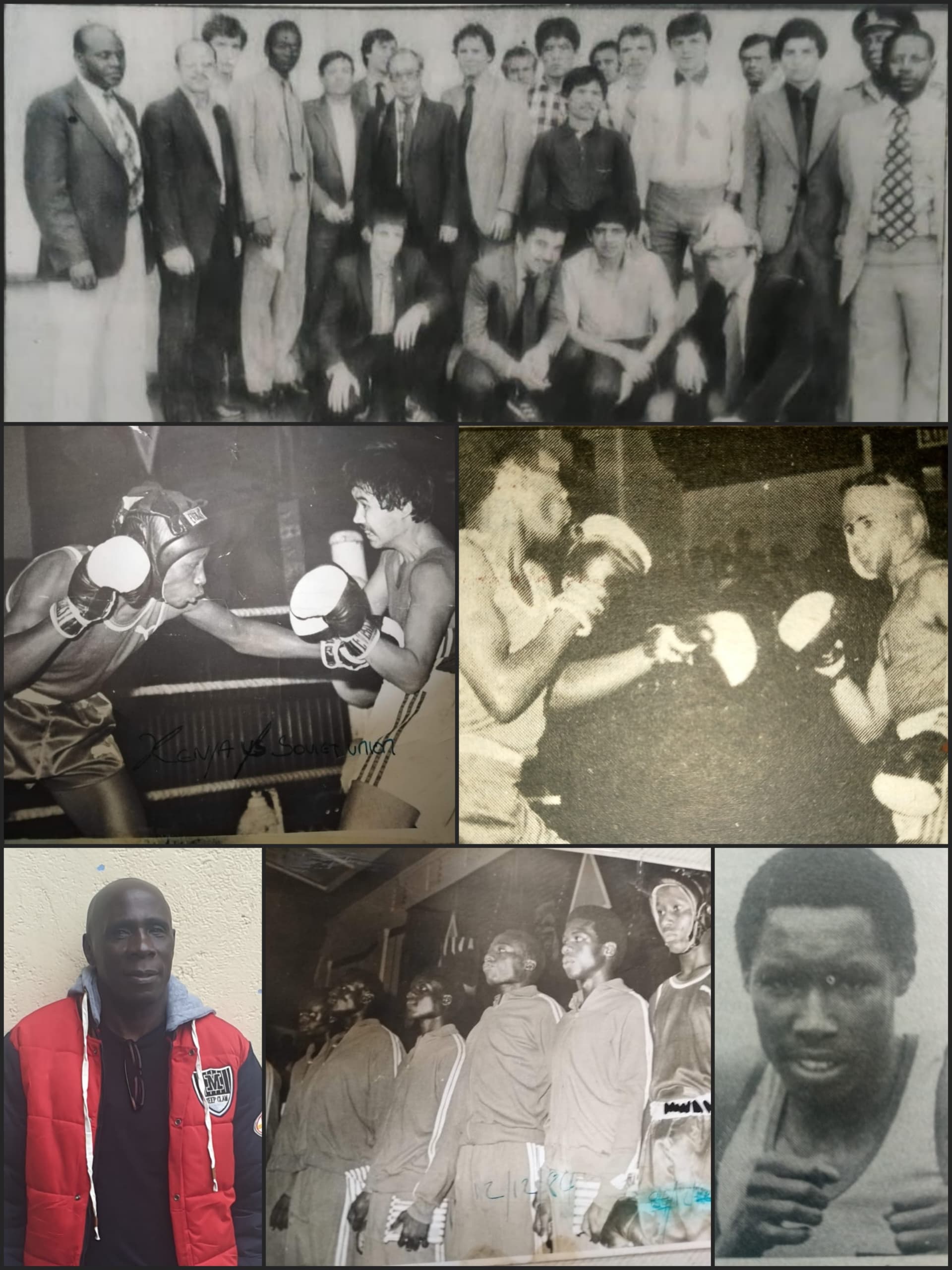
On December 9, 1984, nine KDF soldiers woke up ready for combat against a polished Soviet Union’s jagernaut in Kenya’s lakeside town of Kisumu.
They secured their weapons in the armoury to ensure operational readiness.
As usual, they conducted regular cleaning, lubrication and functional checks of their weapons ahead of what was expected to be a fiercely contested battle.
But before they dug deep in their trenches, the Soviet Union marksmen ambushed the Kenyan soldiers igniting a fierce exchange of gunfire.
Pungent smell of gunpowder lingered in the air with Kisumu residents taking cover. The courageous Kenyans fought back the well drilled Soviets who eventually defeated all the nine soldiers.
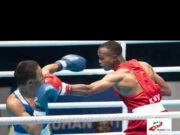
Away from this imaginary military narrative, what actually happened was a boxing contest between Kenya Defence Forces and the visiting Soviet Union’s national team at the Aga Khan Hall in Kisumu.
The Soviets were on a two-match tour to mark the Jamhuri Day celebrations, first taking on KDF in Kisumu and the national team in Nairobi.
Kenyan boxers were well aware of the visitors’ boxing prowess.
This was the Soviet’s third visit to Kenya having previously toured in 1970 and 1973, on both occasions beating the Kenyans.
In their first ever East African visit, they fought Kenya and Uganda’s national teams. They beat Uganda 6-4 bouts and then crossed over to Nairobi for Jamhuri Day celebrations match against Kenya at the City Hall, defeating the hosts 7-4 bouts.
Kenya’s four winners were flyweight Isaac Maina, light-welterweight Joseph Onyango, light-middleweight David Attan and middleweight Stephen “Kimbo” Matiani who was the captain while Sammy Ouma was the coach.
The Soviet Union’s second visit in 1973 was a nightmare for some of Kenya’s top boxers at the City Stadium.
As keen young boxers then in 1973, we were there with legendary Kamau “Pipino” Wanyoike, Napunyi Oduori and other junior boxing buddies. We were at the City Stadium early enough sitted on the Russia terraces waiting for the big show.
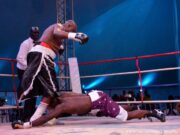
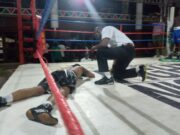
As if armed with stones in their fists, the Russians humiliated Kenya’s top boxers, captain David Attan, George Oduori, Muhammad Abdallah Kent then known as Simon Kent, Peter Dula and Fred Sabat all of whom visited the canvas in their fights.
We never expected it. It was like a movie watching the Kenyan star boxers making several trips to the canvas.
Lightweight George Oduori, then the reigning African Games featherweight champion, was the first one to sit on his trunks but he lasted the full course to lose on points. Then came the dreaded Attan who was twice floored in the first round for the referee to stop the fight. Kent and Sabat too were stopped in their fights after kissing the canvas but African Games champion Dula gritted his teeth to win on points despite being knocked down. In addition to Dula, flyweight George “Mosquito” Findo was the other Kenyan winner.
Boutwise, the Soviet Union beat Kenya 6-2 but the hosts were declared winners on points,16-14, following walkovers in the light-flyweight, featherweight and welterweight divisions.
Interestingly, the Russians arrived in the afternoon and fought on the same day in the evening showing no signs of jet lag.
Kenya’s team comprised Dallas Muthurwa light-flyweight rising star Steve “Destimo” Muchoki who made a successful international debut in November that same year against Uganda, flyweight George Findo, bantamweight Felix Maina, featherweight Sammy Mbogwa, lightweight George Oduori, light-welterweight Peter Odhiambo who represented Uganda in the 1970 Soviet Union tour, welterweight Mombasa-based John Opiyo, light-middleweight David Attan, middleweight Simon Kent later to be known as Muhammad Abdullah Kent, light-heavyweight Peter “Tallman” Dula and heavyweight Fred “Sachi” Sabat.
From Nairobi, the next stop was Mombasa for the second Jamhuri Day match against Kenya. The visitors won 5-2 bouts to lift the Jamhuri Cup. Kenya’s two winners were featherweight Sammy Mbogwa on a walkover and light-middleweight David Makumba whose victory impressed the ABA of Kenya so much that they selected him for the 1974 Commonwealth Games instead of David Attan. The latter did not take it lightly but that’s a story for another day.
Eleven years later, the Soviets were back to Kenya for their third visit, this time first taking on KDF in Kisumu and the national team in Nairobi.
The ABA of Kenya decided to expose a new generation of boxers comprising mostly the Kenyan Open winners in Kisumu who were fresh from a successful trip of the Scandinavian countries. They included light-flyweight George Mwangi, David “Professor” Ouma, Steve “Dempsey” Mwema, Chris “Bingwa” Sande and Mbugua “Ironfist” Wanyoike who captained the national team against the Soviet Union at the City Hall.
It was another Jamhuri Day international show. The ABA of Kenya, under the astute leadership of Major Marsden Madoka, had made it a tradition to invite foreign teams every December.
The Soviet Union delegation was made up of nine boxers and six officials . They were met at the airport by ABA’s vice-chairman Mukuru Mukundi, secretary-general Harrison Kilonzo and Public Relations Officer David Njenga.
Until its dissolution in December 1991, the Union of Soviet Socialist Republics (USSR) was composed of 15 countries which subsequently became independent nations. These republics were Russia, Ukraine, Belarus, Uzbekistan, Kazakhstan, Georgia, Azerbaijan, Lithuania, Moldova, Latvia, Kyrgyzstan, Tajikistan, Armenia, Turkmenistan, and Estonia.
Immediately on arrival, the Soviet’s coach Kotov Alexander declared war.
“The Kenyans should expect fire in the ring, we know Kenya is a great boxing nation but we will show them who we are in boxing,” he said confidently.
Indeed it was fire from the Soviets who headed to Kisumu for their first match against KDF’s nine boxers.
KDF’s lineup was made up of light-flyweight Anthony Ikegu, flyweight David “Wonderboy” Wacheru, bantamweight Sammy “Kigos” Mwangi, featherweight Peter Mutua, lightweight David Wanjohi, light-welterweight David Kimani, welterweight James Olie, light-middleweight John Ogutu and heavyweight Lemmy “Cobra” Katibi.
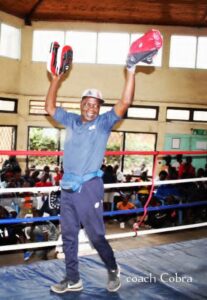
Ikegu, Wacheru, Kigos, Mutua, Wanjohi and Olie were all products of the famous Madison Square Garden Gym’s Nakuru Amateur Boxing Club, Ogutu was at St Teresa’s Undugu known as Senti, Kimani started his boxing at Bahati Boxing Club and Cobra learnt his trade from 1972 at Tononoka Social Hall under coach Owiso Oure Katibi, his uncle and one of the indigenous pioneers of Kenya’s national team in the 1950’s.
Africa heavyweight champion James “Demosh” Omondi was also expected to be part of the team but he was not in good books with a senior official following an altercation during the 1984 Los Angeles Olympics.
KDF was then riding high as the newly-crowned national league champions and runners-up to Breweries in the Kenya Open in Kisumu.
Much was therefore expected from the soldiers at Kisumu’s Aga Khan Hall but in what turned out to be one of the most miserable nights for KDF, all the nine boxers were beaten by the fitter and technically superior Soviet Union boxers. It was total humiliation with Ogutu and Katibi being stopped in the third round by Alifirenko Luri and Umirbekor Serik respectively.
Featherweight Mutua was KDF’s most impressive performer, sending down the Soviet to his knees in the third round. The result could have gone either way.
Even Olie who was at his peak was outboxed and outfoxed by the stronger Vladiminov Sergei.
“Up to this day I’m still very bitter when I remember that beating from the Soviets,” says Olie now back to his base in Nakuru.
Olie, still sharp mentally, vividly recalls what transpired in his welterweight fight.
“I had gained weight so I moved up to welterweight from light welter. The Soviet boxer was taller than me. He tried to keep me far but I maintained close contact with him, he was a very tough boxer. I knew our high altitude will affect my opponent so in the first and second rounds I kept him busy with hard shots especially to the body to tire him.
“In my calculation, I knew my opponent will be tired and exhausted in the third round but to my surprise he was even stronger. It’s like he was starting the fight. He really pushed me, and hit me with strong punches.”
Olie says he noticed something strange in between the rounds which might have given his opponent more stamina.
“The coach sprayed something in the boxer’s nose, the boxer came with a lot of energy in the third round, I think that was more than a spray. He did it to all boxers.
“From that day I realised we Kenyans we’re always playing it clean but other countries have several tricks they use some of them are dirty but we have to accept they were better than us in the ring, their boxing techniques were superior. I could not believe it seeing Cobra being heavily punished until he was stopped. Our team manager was Rtd Major Muhammed, coach the late Albert Matito and Charles Longisa as the trainer.”
Olie is a student of the late popular coach Peter Morris. He joined Nakuru ABC in 1977. The following year Armed Forces coach Albert Matito noticed his potential and recruited him to join their forces team.
“I reported at 1stKR in Nanyuki and welcomed by among others James “Demosh” Omondi, Joash Kitui and Chris “Kawasaki” Kariuki,” recalls Olie who made steady progress, winning the 1978 intermediate featherweight title and eventually debuting for the national team in 1980 during a visit to Kenya by Germany’s national team.
Back to the whipping by the Soviet Union in Kisumu. Katibi says one advantage the visitors had was being physically fitter than the Kenyans.
“We train a lot in Kenya but physically we don’t do what’s needed, that’s where we lose it, those guys had a lot of stamina and techniques. I was also not fighting in my usual light-heavyweight,” Katibi told boxersworld.co.ke
After Kisumu, it was the turn of the national team to face the Soviet jagernaut at the City Hall.
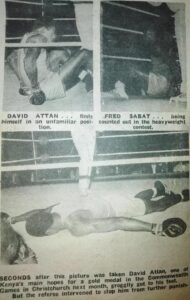
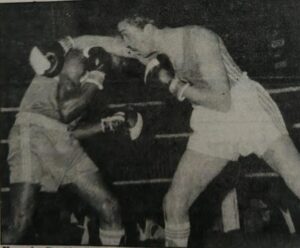
- Nation photographer caught David Attan and Fred Sabat on the canvas when the Kenyans met the Soviets in 1973 at the City Stadium, Nairobi.
The Kenyans somewhat redeemed themselves despite losing 5-3 bouts. Kenya’s three winners were light-flyweight George Mwangi, a product of St Teresa’s Undugu Boxing Club, featherweight Dallas boxing artist David “Professor” Ouma and captain Mbugua Wanyoike, younger brother to ring marshall Kamau “Pipino” Wanyoike.
Bantamweight Gerald Otieno, Africa lightweight champion Titus Omondi, light-welterweight John Bosco Oduori, welterweight Chris “Bingwa” Sande and heavyweight George Okoth were the five Kenyan losers. Okoth was floored twice in the second round before coach Charles Anjimbi showed the towel, a signal to the referee his boxer has received enough punishment the referee should therefore stop the fight which he did.
The fourth and the last tour by the USSR was in 1986 for the usual Jamhuri Day celebrations match at the City Hall. They beat Kenya 4-2 bouts with light-flyweight Maurice “Kawata” Maina and welterweight Robert Wangila – making his debut – the only two winners. The four losers were light-middleweight Mohammed Orungi, debutants Dan Omwaka, Hosea Maina and Joseph Akhasamba.