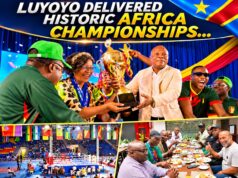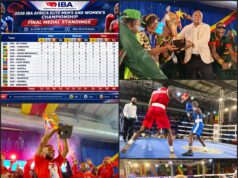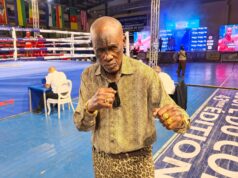








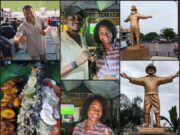



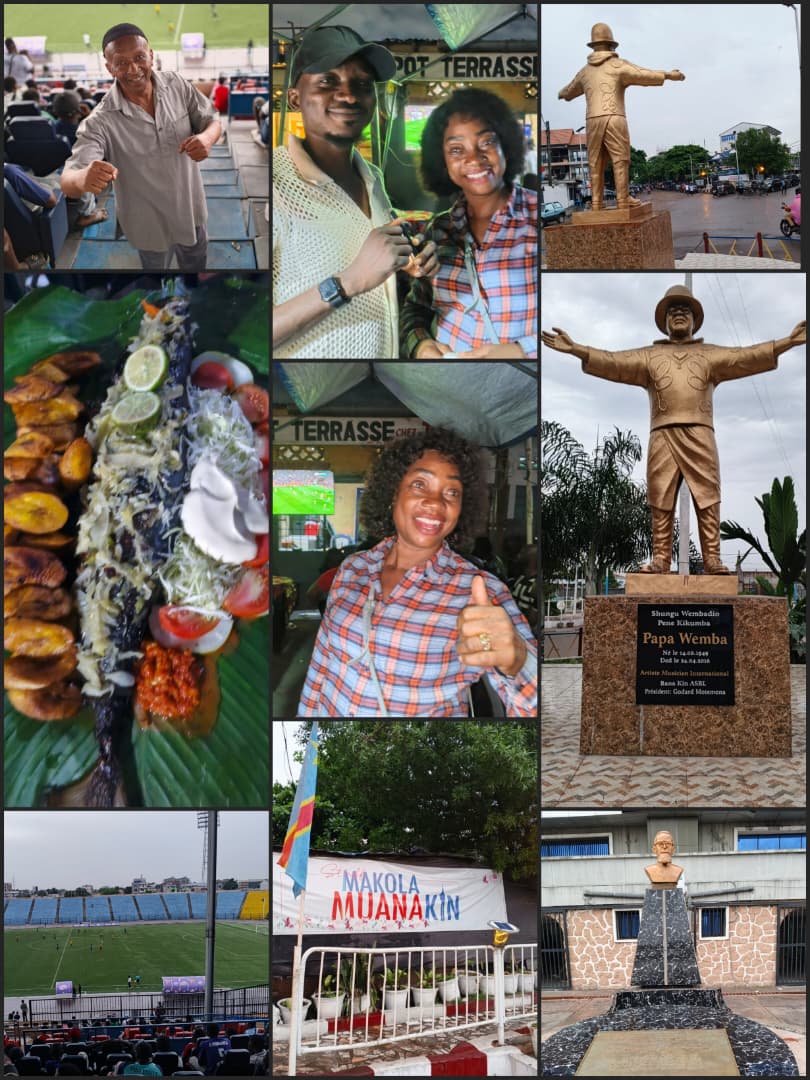
▪️The most distinctive features at Matonge is the famous stadium which hosted the Muhammad Ali vs George Foreman Rumble in the Jungle blockbuster in 1974 and a statue of renowned Congolese musician Papa Wemba
November 3, 2026
If Kinshasa is the beating heart of the Democratic Republic of the Congo, then Matonge is its soul. Situated in the Kalamu municipality, this legendary neighborhood is often described as the true capital within the capital. It is a place where the streets never sleep, and the boundary between life and music completely dissolves.
Step into Matonge on any given weekend, and your senses are immediately flooded. It is a beautiful, unapologetic sensory overload. The neighborhood is famous for hosting the busiest, liveliest, and loudest public pubs in the city. Here, the clinking of cold drinks mixes with the roar of laughter and the aroma of street food. But above all, there is the music.
A visit to Kinshasa without sampling night life at Matonge is incomplete.
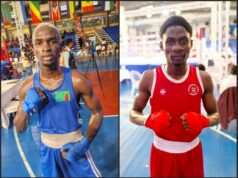
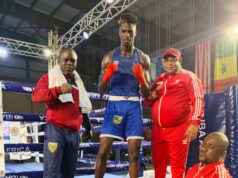
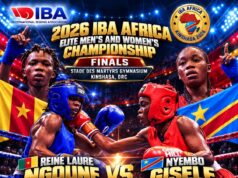
So, on Sunday after a hectic schedule in the Africa Elite Boxing Championships, I decided to sample Matonge’s light life accompanied by my buddy Katshi Tshitebwa, also known as Akim by friends and relatives.
Akim is also playing the role of my guide because he’s fluent in English and the local language lingala.
We order food, and he explains further: “This is braai fish called “Thomson”, plus fried banana known “makemba” and salads as compliments.
“Among the favourite food for the Congolese is pap accompanied by beans, cassava leaves,” he tells me as we seep popular beer in DR Congo Primus and Tembo waiting for our braai fish and makemba.
We have settled at Depot Terrasse pub owned by smart business lady, Janet Kankolongo, whose eatery is next to her pub where we ordered our food.
She’s such a warm lady, makes us comfortable as I converse with her in the limited lingala I know then I’m lost. We stop there amid a hearty laughter.
I ask Janet about business in Matonge.
“I’ve been having this pub in Matonge, precisely in 57th avenue du Stade for
10 years now,” she says.
“It used to be a very profitable business back in time but things are not okay especially after the Covid pandemic. Then the government decided to demolish the roofs of our open pubs, and now it’s more difficult to have many people in when it rains, or when it’s hot.
“We would like the government to let us work freely, build back our tents to beautify our business premises.”
All of a sudden I see Janet engaged in a heated exchange of words with one her customers. Since the verbal jabs are in lingala I later ask her what was the problem.
“This man is a regular attendant here, I’m mad with him because he has not repaid a soft loan I gave him,” Janet tells me.
“Now he wants beer on credit yet he has not paid back my money!,” an angry Janet responds as I cool her down.
Meanwhile, our chit chat on Matonge with Akim is getting more interesting.
“Matonge has many popular joints for tourists to enjoy themselves,” Akim says.
“There’s Terrasse Chez Jeannet, Staff Bana Kin, Chez Matou, the placemats is unique for its vibe by night is unmatched,” says Akim, introducing his cute wife Magalie Bangu and baby girl Candice Tshitebwa who have just joined us, wondering how come he’s so fluent in English than most of his countrymen.
“I did all my studies in Kinshasa, and my degree in HRM in Cape Town, in the Cape Peninsula University of Technology (CPUT),” Akim tells me. His exposure in South Africa was a valuable experience.
The vibrancy at Matonge is breathtaking. I’m hooked already because they play my favourite lingala music. I feel at home and sing along with some of them the popular remix Kitamata by icon Fally Ipupa originally done by the late celebrated singer of TP OK Jazz Josky Kiambukuta. Music is the lifeline of most Congolese. Little wonder I spot one of enjoying lingala songs from his portable system he has carried to the pub.
In the opposit joint near ours, young girls cannot control their urge to gyrate their hips to Koffie Olomide’s Papa Mobimba. As I enjoy their eye-catching dancing styles they smile and I do the same to encourage them. The Congolese are damn good dancers. To them dancing is a way of life. Encouragingly, they listen to no other music other than their own songs by their celebrated
musicians.
I find myself on my feet shaking a leg too. It seems Kitamata and Primus are taking their toll on me. Then Akim tells me about the controversy ignited by Ipupa’s remix of the song.
“Fally did the song without the blessing of Josky’s family, generating the controversy between him and Josky’s family,” Akim explains
“People love Fally’s remix more than the original song by Josky. A few months after it was released, Fally had to delete it from all his music platforms due to a misunderstanding with the late Josky’s family but I’m told the issue has now been sorted out amicably, a testament to the love the Congolese have for each other.”
Matonge is globally recognized as the soul of music in Kinshasa. As the weekend rolls in, the neighborhood transforms into a massive open-air amphitheater. Live bands set up on almost every corner, tuning their guitars and testing their microphones. Within hours, the infectious rhythms of Congolese Rumba and Soukous echo through the night, drawing residents and visitors alike into an unstoppable dance.
“At times we’re spoilt for choice which band we go dance their songs because our musicians are so good, we’re proud of them,” says Akim.
*Papa Wemba statue and Rumble in the Jungle boxing venue significant features*
You cannot truly understand Matonge without understanding its royalty. Standing proudly as a guardian of this musical empire is the statue of Papa Wemba. The legendary musician, fashion icon, and pioneer of Viva La Musica is immortalized here, reminding everyone of his eternal reign. Papa Wemba was affectionately known as the King of Molokai Village—a title that is deeply woven into the very geography of Matonge.
In fact, MOLOKAI is a clever acronym representing the core avenues that define the neighborhood:
M for Avenue Masimanimba, O for Avenue Oshwe, L for Avenue Lokolama, K for Avenue Kanda-Kanda and I for Avenue Inzia
These streets form the cultural matrix where modern Congolese subcultures, fashion movements like La Sape, and musical revolutions were born and bred.
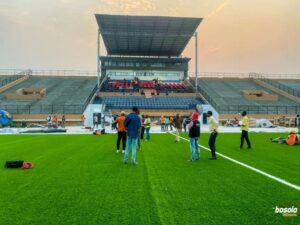
Matonge’s legendary status is further cemented by its proximity to a monument of global sports history: the iconic Stade Tata Raphaël. Just a stone’s throw away, this stadium hosted the greatest boxing match of the 20th century—the legendary 1974 Rumble in the Jungle between Muhammad Ali and George Foreman. The echoes of that historic fight still seem to linger in the air, adding to the neighborhood’s undeniable aura of greatness.
I revisit the stadium – formerly known as May 20 Stadium – having been there the last time I was in Kinshasa in 2024. As you enter inside the stadium, outside stands the statue of Tata Raphael (1890-1956) who was a Belgian missionary priest and a pioneer of education, scouting, and modern sports in Kinshasa (then Léopoldville).
Matonge is more than just a geographic location on a map of Kinshasa. It is an experience, a lifestyle, and a living museum of African culture. From the historic dust of Stade Tata Raphaël to the dazzling lights of its modern nightlife, it remains a place where history is revered, and the music never stops playing.