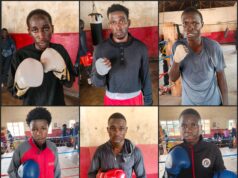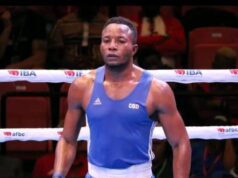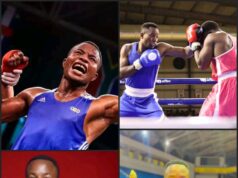



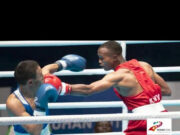



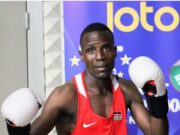







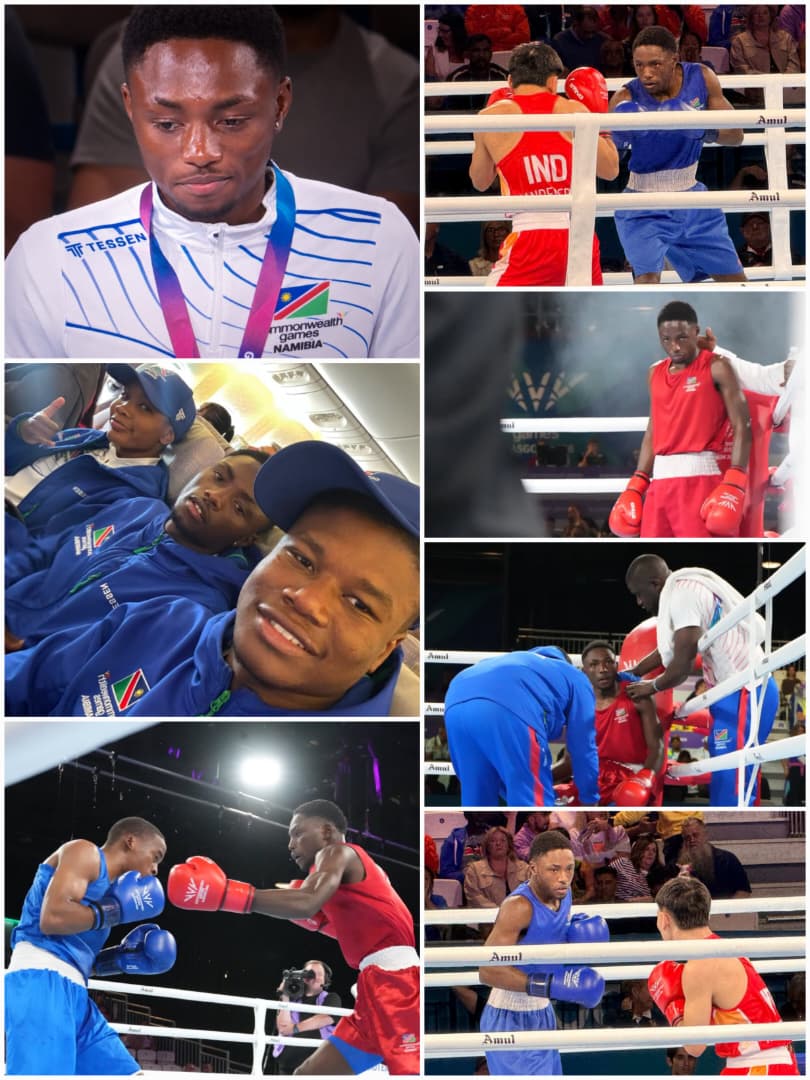
▪️Haoseb’s journey into the squared circle began because he simply couldn’t stop fighting. As a boy, he was constantly embroiled in street brawls. Desperate to redirect this chaotic energy, his cousin Angel and family friend Martin the Alligator dragged him to a local boxing gym. Now he’s a bronze medallist at the Glasgow Commonwealth Games
August 17, 2026
From a street fighter in Windhoek, Namibia, to Commonwealth Games glory in Glasgow, Scotland. That’s the story of Philip Haoseb, a man who moves way faster than anyone expected.
Just three years ago, nobody on the global stage knew his name. Today, the explosive bantamweight boxer is holding a Commonwealth Games bronze medal and sending shockwaves through the African boxing scene.
For the sceptics who thought he was too green to survive, Haoseb has a simple message: underestimate him at your own peril.
Haoseb’s journey into the squared circle began because he simply couldn’t stop fighting. As a boy, he was constantly embroiled in street brawls. Desperate to redirect this chaotic energy, his cousin Angel and family friend Martin the Alligator dragged him to a local boxing gym known as After School Centre. The goal was simple: introduce him to some real “toughies” and teach him a lesson.
Instead, the gym unleashed a monster. Haoseb blended his raw, fearless street instincts with the technical discipline of the sweet science. Fighting out of the southpaw stance, he developed into a dangerous boxer-puncher—a fighter who can outmanoeuvre you with footwork or put you to sleep with a single heavy blow.
Remarkably, Haoseb only made his international debut in 2023 during a tournament in Angola, where he grabbed his first victory for the Namibian national team. He then had two fights in South Africa and won them all. Flash forward to the Commonwealth Games in Glasgow from July 23-Augus 2, 2026, and the rookie was suddenly sharing the world stage with seasoned boxers.
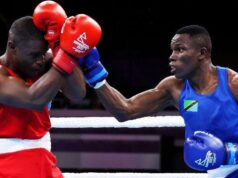
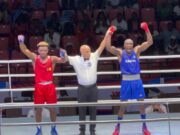
Haoseb arrived in Scotland as an underdog, but he fought like a man possessed. He got off to a flying start in the Round of 32, systematically beating Eswatini’s Siboniso Vilakati. In the Round of 16, he showed his tactical maturity, outpointing Togo’s Charif Yaya to secure a place in the quarter-finals. There, he met New Zealand’s fighting machine, the Zambian-born Alex Mukuka. It was a clash that tested Haoseb to his irreversibleabsolute limits.
“Mukuka was the toughest opponent I met because he is an awkward boxer,” Haoseb told boxersworld.co.ke in an interview. “He decided to fight me thinking he’d intimidate me. I showed him the street fighter that I was by taking him head-on.”
Haoseb dug deep into his reservoir of grit and skill, earning a brilliant 4-0 victory. While his golden march was eventually halted in the semi-finals by India’s southpaw tactician, Jadumani Singh Mandengbam, Haoseb’s bronze medal finish confounded the critics. He attributes much of this historic success to the expert guidance of his corner handlers, head coach Albertus Takaseb and his deputy Ipundaka Lungameni.
“The bronze medal means a lot to me, it shows that I belong in the big league plus to be my first ever international game especially Commonwealth and bringing back something not many people do that. It shows that I can be better and I know I can do better to get a gold,” said Haoseb.
Was he expecting any medal when boarding the plane to Glasgow?
“Yes that was my plan but it was gold I was looking forward to it, and didn’t care who ever was in my way.”
What about the officiating, was it clean?
“It was not clean but it’s what I got so i have to make peace with it, it’s boxing so I’m good. I still don’t understand how they were scoring the fights but it’s okay we’ll come back strong.”
Sharing his views on his Indian semi-final opponent, Haoseb does not rate him highly.
“There was nothing challenging about him, he has good speed but was really not a problem because I knew he would slow down. From the second round he was out of fuel.”
Like Haoseb, Jadumani was also a southpaw but that was not much of a problem to the Namibian.
“To fight a southpaw its really easy for me because I can see through a lot of the punches coming, I handled him well, I’m sure wherever he is, he knows it was not an easy victory for him,” said Haoseb.
Haoseb singles out Zambian-born New Zealander, Alex Mukuka, as the toughest opponent of them all. They met in the quarter-finals.
“He was a weird boxer he can box but he decided to fight me,” said Haoseb, “so I had to fight a different style that was not in our game plan, he made it a bit hard for me.”
Haoseb takes us back to his roots, and how he took up boxing.
“I started boxing in 2018 at After School Center Boxing Club where I am currently. My first coach was Michael but he left after three years with him and then I got coach Lungameni (Ipundaka), the current coach I’m having right now. He’s like father figure as well and a friend.”
Haoseb named the coach who taught him all the basics in boxing.
“It’s Angel Gariseb, he’s the one I must say thank you to on the boxing fundamentals.
“My first ever competitive fight in the ring was against an experienced boxer. His name was Prince, he had already fought in 20 bouts, and that was my first ever fight, I lost on points.
“I joined the national team in 2023, I’m a three-time national champion in the 52-54kg.”
Who inspired Haoseb to take up boxing?
“I was not inspired to join boxing, I was put into the sport because I was fighting a lot in the streets and at school. So my cousin Angel and our family friend Martin the Alligator put me into boxing and told me that these are better place to fight.
“At first I looked at boxing just like I did as a street fighter but gradually, I started growing into it to know that it’s a sport, and I became more disciplined and in a way it brought me closer to God.”
Haoseb’s most effective punches are hooks but he hardly uses them unless he wants to punish his opponent.
“I’m busy collecting points because when in the ring you’re there to earn points, it’s not a fight, the only time I throw hooks is to hurt or to knock out my opponents.”
His burning ambition is to win an Olympic and Commonwealth Games gold medals and then turn pro.
The 21-year-old Namibian boxer is currently unemployed, and relies on boxing only to put food on the table for his struggling family. He dropped out of school to pave way for his younger siblings.
“I only managed to go to Grade 10 and failed. I wanted to go back and repeat but me and my mom we’re not financially stable to pay school fees and all that, and I have three sisters. So I decided I will leave school and pursue my boxing dream even further to make it easier for my mom to comfortably pay school fees for my sisters because the money was not enough.”
When it comes to eating, Haoseb does not joke with food.
“I eat a lot, mostly I prefer home cooked food. For take away, it’s only pizza, ribs, a lot of burgers and snacks.”
With a major statement of intent now stamped on his resume, Haoseb has already shifted his focus to the next battlefield: the Africa Elite Men’s and Women’s Boxing Championships in Kinshasa, DR Congo, from October 18-31.
Haoseb’s path to glory will likely force him to cross gloves with giants such as Ghana’s reigning African Games bantamweight champion, Amadu Mohammed, DR Congo’s fierce 2025 Africa Zone 3 champion playing on home soil Bakora Kalongo and Zambia’s Mwengo Mwale, World Championships quarter-finalist and African Games silver medallist.
Mwale, in particular, has reportedly dismissed the Namibian rising star as a mere beginner. It is a slight that Haoseb has eagerly weaponized.
“I’ve heard Mwengo is saying I’m still new in the game,” Haoseb warned. “Let him prepare for humiliation in Kinshasa if we meet. The sceptics in Glasgow learned their lesson the hard way.”
As Haoseb packs his bags for DR Congo, the rest of Africa has been officially warned to expect absolute fire in the bantamweight division.