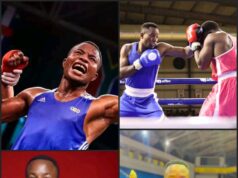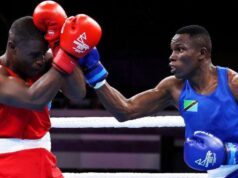



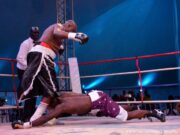
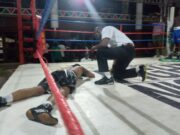




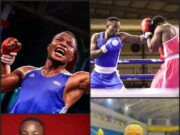
▪️Never before had I witnessed such outrageous decisions in the ring Ugandan R&Js openly favouring their boxers in the annual regional tournament at the Kakindu Indoor Stadium in Jinja
▪️Aided by their R&Js, Uganda forcefully won the regional event followed by Kenya, Ethiopia and Tanzania.
▪️Surprisingly no medals were awarded to the winners. The hosts claimed the medals were still being processed in London.
April 13, 2026
The 1986 East, South and Central Africa Boxing Championships road trip to Jinja, Uganda, with Kenya’s national team was a vibrant fun-filled journey but it was later marred by shameful biased decisions by Ugandan referees and judges in favour of their team.
Never before had I witnessed such outrageous blatant decisions which dampened the mood of the Kenyan boxers and soiled the integrity of Fescaaba Championships.
The journey to Jinja with Kenya’s national team nicknamed Hit Squad started at the Telcoms Headquarters in Nairobi’s Central Business District at 1:15pm. Working for the Kenya Times then as Chief Sports Reporter, I accompanied the team with celebrated KBC Sports Broadcaster Daudi Kanja who took full advantage of legendary escapades offered in the beautiful city of Jinja, located in southeastern Uganda on the shores of Lake Victoria. It’s renowned as the source of the River Nile and East Africa’s adventure capital. Sampling Jinja by night was therefore in order.
Our trip was facilitated by the Amateur Boxing Association of Kenya (ABA) Publicity Secretary David Njenga. With the support of the executive, Njenga aka Binaisa made it possible for us to be embedded with Kenya’s national team.
It was a journey spiced with rhythmic adventure as the vibrant boxers cracked jokes in the bus, analysing potential opponents and how to handle them. As the bus wound through the lush highlands of Limuru to the breathtaking scenery in the Rift Valley, the boxers exuded confidence they would retain the regional title having won the Fescaaba championships in 1985 in Nairobi with seven
gold, two silver and three bronze medals followed by Zambia 3-2-3, Uganda 0-4-5. Defending champions Tanzania, Ethiopia and Zimbabwe finished in that order.
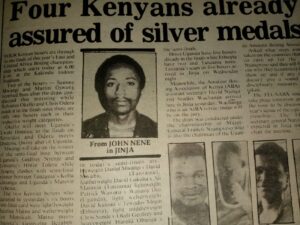
Kenya’s seven gold medallists in 1985 included skipper Patrick “Mont” Waweru, David “Harish” Ouma, Chris “Bingwa” Sande and Chadwick Agenga. Bantamweight Nassir Issa and light-welterweight Kennedy Munikah made successful debuts with Issa winning bronze and Munikah silver.
Accompanying the 12 boxers to Jinja was coach Charles Anjimbi assisted by Patrick “Mad” Okoth, team manager David Wakaba, Doctor Mark Joshi and R&J James Okumu. My buddy and neighbour at Umoja Estate, Daily Nation’s Stephen Ongaro and R&J John Wachira joined us later in Jinja.
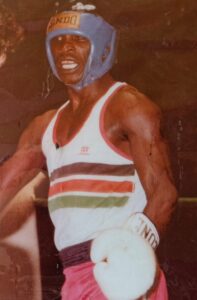
Longest-serving international Patrick “Mont” Waweru skippered the team retaining his lightweight berth and was celebrating a decade in the national team since making his international debut in the 1976 FESCAABA Championships in Nairobi, winning a bronze medal. Among his other accolades was silver at the 1978 Commonwealth Games, silver in the 1980 Golden Cup in Nairobi and gold medal in the 1984 King’s Cup. Mont got involved with boxing in 1970 at Starehe Boys Centre under coach Jimmy Zablon, one of the pioneer internationals in the 1950s.
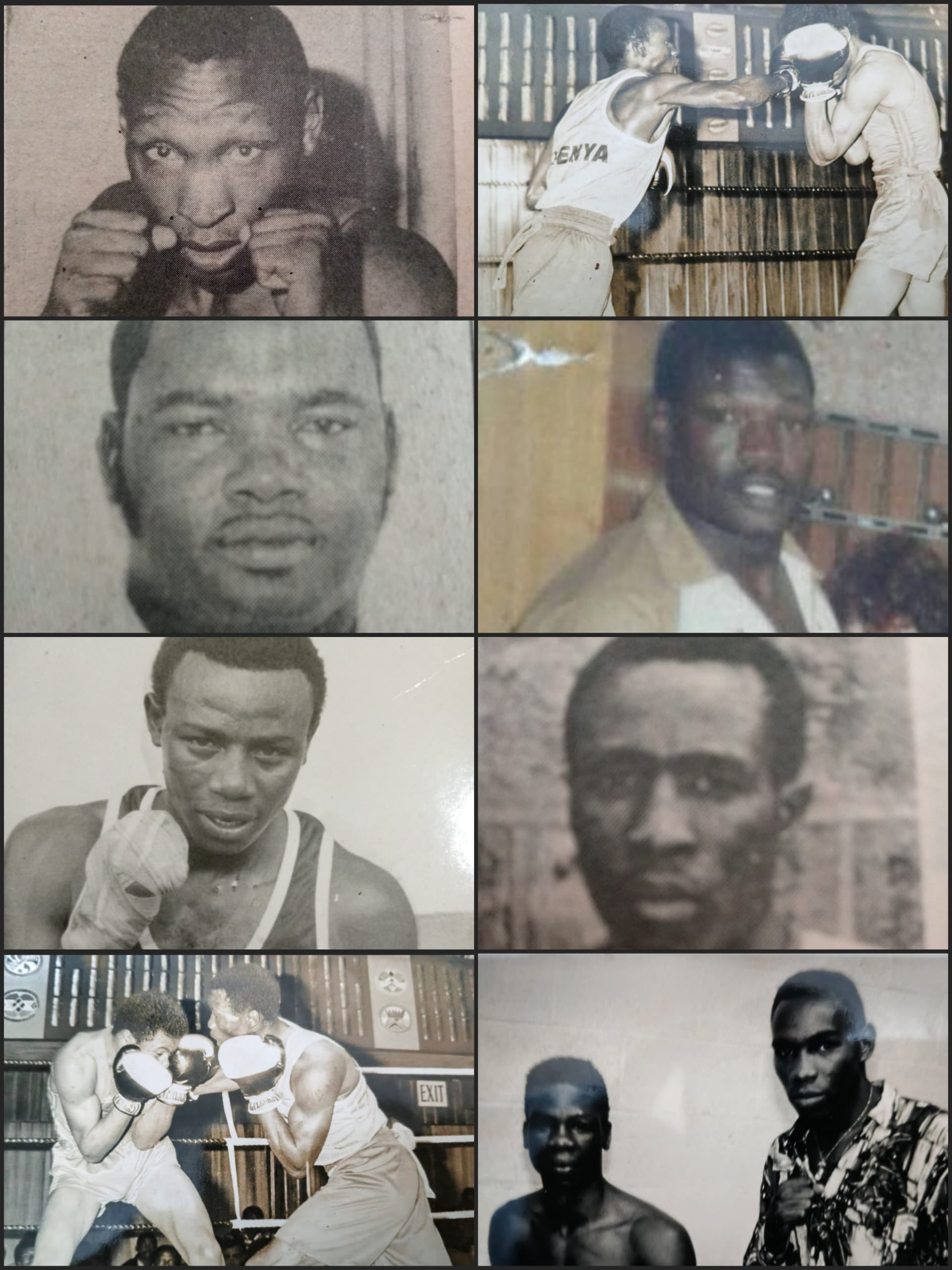
A look at the brief profiles of other Jinja-bound boxers published in the Kenya Times before departure for Uganda.
Light-flyweight Maurice “Kawata” Maina: He started boxing in 1982 with Breweries and moved to Kimbo the following year. In 1984 Maina’s potential was spotted by Kenya Prisons where he landed a permanent job. He made his debut for Hit Squad at an an international tournament in early 1986 in Italy. From Italy, the Kenya team travelled to Germany where Maina won bronze in the Inter-Cup tournament.
Flyweight Daniel “Dante” Mwangi: A product of the famous Nakuru ABC. He started boxing there in 1979 under coach Peter Morris. Moved to Breweries in 1983 and in December that same year, making his debut for the national team, caused a major upset outpointing Zambia’s African champion Keith Mwila in Kenya’s 20th independence anniversary celebrations tournament at City Hall.
Bantamweight Sammy “Kigos” Mwangi: With regular Steve “Dempsey” Mwema away in Yugoslavia on a boxing scholarship with David “Harish” Ouma, Kigos fitted well in the team. Born in 1958, he ventured into boxing in 1970 at Nakuru’s Madison Square Garden. Joined KDF in 1974 and represented Kenya for the first time in 1978 during a Scandinavian tour winning three fights. Won bronze in the 1983 FESCAABA tournament and another bronze in the 1984 King’s Cup in Bangkok and was also in Kenya’s team for the LA Olympics.
Featherweight David “The Destroyer” Gakuha: Born August 14, 1965, Gakuha started boxing in 1983 at Nanyuki Boxing Cup under coach Peter Manene, one of Kenya’s most prominent flyweights to have donned the national vest. Gakuha made it in Kenya’s team after defeating Mike “Spinks” Mutua in the mini-trials held at Ruaraka’s Tusker Village Hall. Ugali and nyama choma is his favourite dish.
Light-welterweight David “DK” Kamau: Born in April 1965, Kamau started boxing in 1979 at Nakuru’s Madison Square Garden Gym. Made his Hit Squad debut in the 1986 King’s Cup, and took Kenya’s boxing fraternity by storm punching his way to the final losing to a Soviet Union boxer. His superlative show was an indication of better things to come.
Welterweight Kennedy “Brambo” Munikah: Born January 2, 1963, Munikah first got involved in boxing at NCC Club under coach Alecky “Kibody” Asima. Made international debut in the 1985 FESCAABA Championships in Nairobi, losing in the final to Zambia’s Anthony Mwamba.
Light-middleweight Chris “Bingwa” Sande: Born April 10, 1964. Sande started boxing in 1983 at Undugu Boxing Club affectionately referred to as Senti under coach Joseph Onyango, a former international. Joined Posta in 1984 and in October the same year landed a job with KDF. Sande clinched the Kenya Open title at the end of 1984 and later made his international debut during a tour of the Scandinavian countries that same year.
Middleweight Martin “Nyoka” Ojuang: Born in 1963, Ojuang started boxing in 1976 at Railways Boxing Club in Mombasa under coach Joseph Kinywa. He made his international debut at an international tournament in Italy 1986, winning Kenya’s only gold jobmedal before moving to Germany for the Inter-Cup.
Light-heavyweight Sullu Okello: Born April 14, 1963, Sullu first got involved with boxing in 1980 at Pumwani Boxing Club under coach Alex Omwomo, a former international. Joined Posta in 1983, and in the same year made his international debut in the 20th anniversary celebrations tournament at City Hall. He made it to Jinja by defeating Lemmy “Cobra” Katibi in the mini-trials at Ruaraka’s Tusker Village Hall.
Heavyweight Harold “Schetzer” Obunga: Born in 1960, the footballer-turned- boxer started boxing in 1983 at Posta on leaving KDF. Won the 1984 Kenya Open title in Kisumu, enabling him travel to the Scandinavian countries for his international debut. He was also in the Kenya team that travelled to Italy and Germany before the Jinja FESCAABA Championships.
Super-heavyweight Chris “Marciano” Odera: Born December 12, 1963, Odera started boxing in 1982 at NCC under coach Eddie “Papa” Musi. Joined Nakuru ABC in 1985 and
switched to Posta mid 1986. Made his international debut in the 1983 African Elite Championships in Kampala, settling for silver after losing losing in the final to Tanzania’s Willie Isangura.
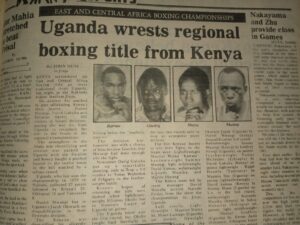
Kenya team arrives in Busia border
We arrived in Busia border at around 9.45 pm. By then the Ugandan immigration staff had already checked out. They normally closed at 6pm, we were told by the Kenyans manning the Busia border.
After spending a night in a Busia town hotel, the Kenya team woke up early heading to Jinja,and were met at the Ugandan border by the Administrative Secretary of the Uganda National Council of Sports Justin Kibunga. The Kenyan boxers remained in buoyant mood aware of the challenge ahead from their traditional rivals Uganda in the FESCAABA Championships.
I ask coach Charles Anjimbi of his expectations in Jinja.
“Johnny hawa Waganda tunachapa, hawatubabaishi labda Wazambia ndio nina hofu nao (Johnny we’ll beat the Ugandans they’re not a threat to us maybe Zambia is the only team to worry about),” responded Anjimbi with an aura of confidence that was also reflected on the faces of the cheerful and focused Hit Squad members led by captain Patrick “Mont” Waweru, one of the seven gold medallists in the 1985
FESCAABA tournament in Nairobi.
Waweru echoed the same sentiments expressed by Anjimbi.
“Our only opposition in Jinja is Zambia, they have very good boxers, Uganda are not as strong as they’ve been in the past,” the normally quietly spoken Waweru told me in the bus as I gathered my material for the story I would file for Kenya Times immediately on arrival in Jinja.
We finally arrived in Jinja at 1pm East African time after a 12-hour journey from Nairobi, and booked at an institution where all the teams would be staying. A steaming lunch of matoke and delicious well prepared chicken was our lunch after which I got down to business scribbling my story which I later filed through a reverse call. The technology at the time was not advanced as it is now so I normally did a hand-written story, and then book a reverse call to the Kenya Times Sports Desk. One of my colleagues in Nairobi would type down the story as I read it to him on phone.
The morale in the Kenya team was sky-high as usual . The boxers believed in themselves. And I was with there to document the event not just reporting. The 80s was a golden era of immense success that solidified Kenya as Africa’s boxing powerhouse.
Kenya and Ethiopia were the first teams to arrive followed by Tanzania. Zambia, Botswana, Malawi and Zimbabwe withdraw from the championships at the last minute, reducing it to a four-nation event.
With Zambia out, coach Anjimbi strolled around with more confidence. He knew they will retain the regional title especially on learning that three key Ugandan boxers, bantamweight John Siryakibe, lightweight Charles Lubulwa and light-middleweight Patrick Lihanda were not with the team in Jinja.
Uganda’s coach, Vincent Byarugaba, said Lubulwa and Lihanda were tied up with their studies while Siryakibe had domestic issues to sort out.
Among the boxers Uganda was heavily banking on were the towering super-heavyweight Dodovic Owiny, heavyweight Peter Odhiambo, lightweight Wanana Deo, bantamweight Geoffrey Nyenje and featherweight John Kakuza.
Coach Byarugaba, a former successful international boxer with two gold medals in the King’s Cup and twice named the best boxer, was very honest when I asked him who would win the Jinja event.
“Kenya are the favourites, they’re stronger than us but you never know this is boxing we’re at home,” said Byarugaba.
The four-nation regional championships was officially opened by Uganda’s Minister for Education John Ntimba.
After the draw, four Kenyan boxers made their way to the finals. Bantamweight Sammy Mwangi and middleweight Martin Ojuang received byes while Sullu Okello and Chris Odera weight categories had only two boxers. Their opponents in the finals were Uganda’s light-heavyweight Lwate Dominic and super-heavyweight Dodovic Owiny.
Mwangi would meet the winner of the semis bout between Uganda’s Godfrey Nyenje and Ethiopia’s Hiwot Tobra while Ojuang’s opponent in the finals was between the semis winner, Tanzania’s Koba Kimanga and Uganda’s Matovu Frehena.
Light-flyweight Maurice Maina and welterweight Kennedy Munikah won their opening bouts in the three-day event with Maina outpointing Ethiopia’s Genecehu Bezabeh while welterweight Kennedy Munikah stopped Uganda’s Omana Kazmil who received a cut above the left eye. Tanzanian southpaw Hussein Rahab was the most impressive winner on Day One with a points win over Ethiopia’s Daniel Gutu.
Kawata agreed was not at his best against the Ethiopian Bezabeh.
“I didn’t box well today, the Ethiopian was not very good but he confused me. I will improve in the finals to win gold,” Maina told me after the fight.
Ethiopia’s coach Gebretsadir Tassew claimed his boxer Bezabeh was robbed of victory against Maina.
“My boxer beat the Kenyan, how he lost I’m surprised,” he said.
Biased officiating reared its ugly head on the second day of the semi-finals when Kenya’s captain Patrick “Mont” Waweru was unbelievably disqualified by Uganda’s referee Joseph Kiiza for butting against Uganda’s Wanana Deo. That was just a figment of the referee’s imagination. Mont didn’t punch with the inside of the gloves as alleged by the referee.
Then came the light-middleweight semis in which Chris Sande had an upper hand over Uganda’s Okeny Geoffrey but the Kenyan lost 3-2. Heavyweight Harold Obunga was eliminated by Tanzania’s Gaston Mlay.
Other Kenyans in action, David Gakuha, Dan Mwangi and David Kamau won their bouts to advance to the finals. Gakuha outpointed Tanzania’s Ali Matumla, Kamau beat Ethiopia’s Tewodas Megin and Mwangi saw off Tanzania’s flyweight David Mwaba. Uganda had five boxers and Ethiopia two in the finals after the draws.
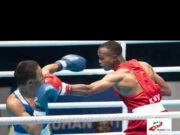
The finals saw Uganda forcefully winning the FESCAABA Championships through the support of their R&Js.
Uganda, who had last won the Fescaaba title in 1979, topped with 27 points followed by Kenya 23, Ethiopia 12 and Tanzania, represented by five boxers, on 8 points.
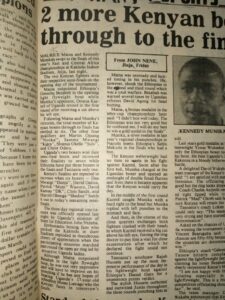
Interestingly, no medals were presented to the winners. Uganda’s federation chairman Francis Nyangweso said they were still being processed in London. Upto now 40 years later the medals have not been presented to the winners who were presented with certificates only in Jinja.
Angered by the unfair decision in flyweight finals bout against Uganda’s Okorach Jacob, Kenya’s Dan Mwangi refused to be awarded his certificate.
Mwangi had dominated the Ugandan, digging deep with body blows and floored him in the third round. Kenyan AIBA (now IBA) referee Stanley Wachanga declared Mwangi the winner by a knockout but he was overruled by the Ugandan judges who disqualified Mwangi claiming he had punched their boxer under the belt. Total farce in Jinja.
Next victim on this night of shame was featherweight David Gakuha who was clearly the better boxer scoring more often against Ethiopia’s impressive Yonah Wubeshet who who was declared 3-2 winner. Kenyan R&J, John Wachira, said Gakuha won but one of the Ugandan judges changed the scoresheet in favour of the Ethiopian.
At light-heavyweight Kenya’s Sullu Okello outboxed Uganda’s Lwate Dominic in the second and third rounds only for the Ugandan to be declared the winner.
“I was so disappointed that night, we just couldn’t believe the Ugandans being so desperate for victory,” Sullu told boxersworld.co.ke in an interview from Norway where he has been staying for over 20 years now.
Kenya’s five winners in the finals were light-flyweight Maurice Maina, bantamweight Sammy Mwangi, light-welterweight David “DK” Kamau, welterweight Kennedy Munikah and middleweight Martin Ojuang.
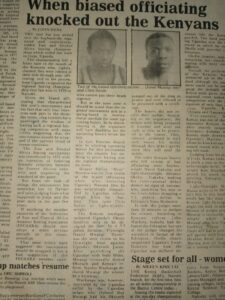
Final results of the 1986 East, South and Central Africa Boxing Championships in Jinja, Uganda.
Light-flyweight: Kenya’s Maurice Maina outpointed Uganda’s Moses Lumago
Flyweight: Uganda’s Okorach Jacob controversially defeated Kenya’s Daniel Mwangi who was disqualified by Ugandan judges for an imaginary underbelt punch yet the Kenyan had already declared the winner by KO
Bantamweight: Kenya’s Sammy Mwangi outpointed Uganda’s Godfrey Nyenje
Featherweight: Ethiopia’s Yonas Wubeshet controversially won 3-2 against Kenya’s David Gakuha
Lightweight: Tanzania’s Rajab Hussein outpointed Uganda’s Wanana Deo
Light-welterweight: Kenya’s David Kamau KO’d Uganda’s Mpima Moses in round two
Welterweight: Kenya’s Kennedy Munikah outpointed Ethiopia’s Sahlu Mokuriat
Light-middleweight: Uganda’s Okeny Geoffrey stopped Ethiopia’s Keross Ayele in round two
Middleweight: Kenya’s Martin Ojuang stopped Uganda’s Matovu Frehena in round two
Light-heavyweight: Uganda’s Lwate Dominic controversially defeated Kenya’s Sullu Okello
Heavyweight: Uganda’s Peter Odhiambo stopped Tanzania’s Gaston Mlayi in round two
Super-heavyweight: Uganda’s Dodovic Owiny outpointed Kenya’s Chris Odera