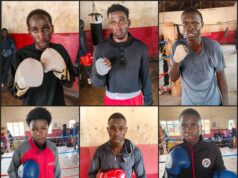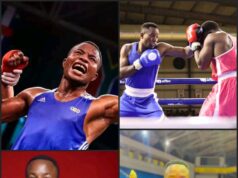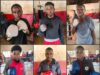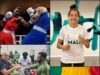


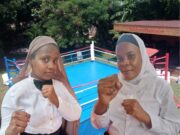
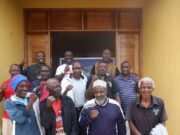
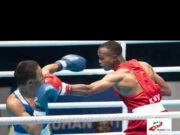
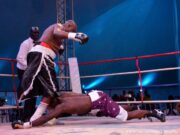
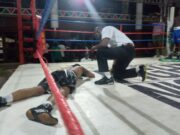
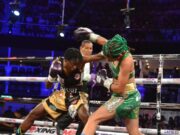
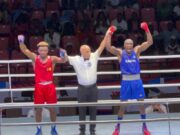
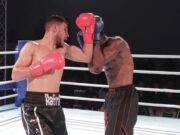
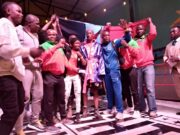

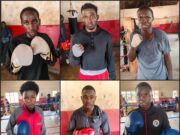
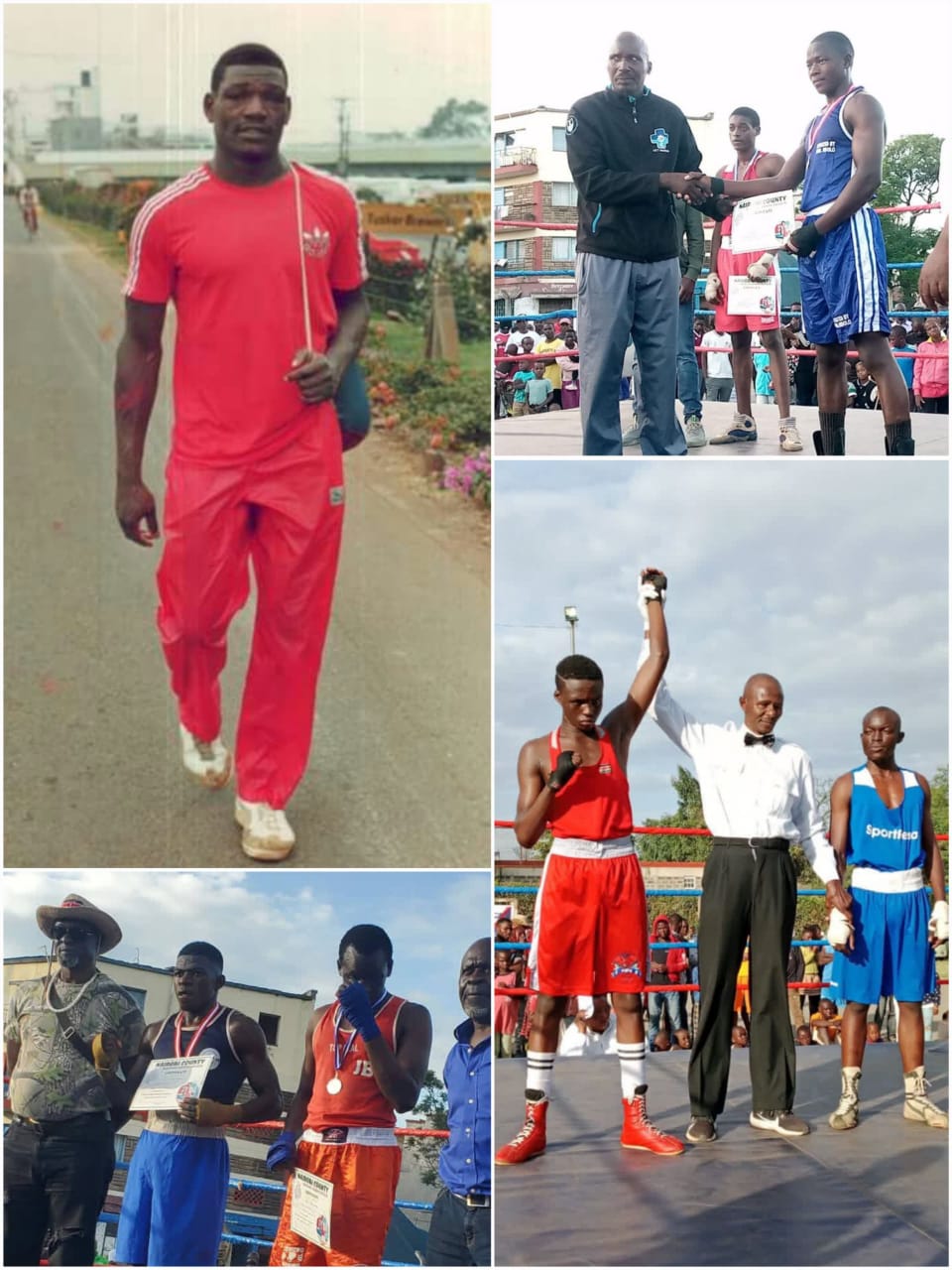
▪️Boxer from various clubs among them Kibra Youth, Jericho and Mathare North converge at Kaloleni open air ground for the annual Obunga Memorial tournament
▪️An attempt to sabotage the Obunga Memorial event by anti-BFK forces was nipped in the bud by a senior national federation official
▪️A capsule summary on Obunga’s highlights during his heydays in the ring
▪️We rewind to that tension-charged heavyweight battle between Obunga and David Anyim in the 1988 Olympic Games trials in “NaxVegas”. At stake was also the Kaloleni bragging rights heavyweight king
▪️The hotly contested trials were loaded with talent. Some of the big names in action included Maurice “Kawata”Maina, Steve “Dempsey” Mwema, John “Duran” Wanjau, David “DK” Kamau, Jericho-bred Robert “Aruba” Wangila, Chris “Bingwa” Sande, Mohamed “Body” Orungi, Mike “Spinks” Mutua, Martin “Nyoka” Ojuang, Silvanus Sullu Okello, Joseph “Nyundo” Alhasamba and James “Demosh” Omondi
The final heavyweight bout was one of the key fights of the night during the 1988 Olympic boxing trials at Nakuru’s Madison Square Garden.
In the ring were two equally matched boxers from the famous Kaloleni Estate in Nairobi or Ololo if you like.
Harold “Schetza” Obunga was facing David “Santos” Anyim for a ticket to the Seoul Olympics.
Nakuru’s boxing-mad fans were eagerly waiting for this bout with the experts analysing the likely winner. I was there too. I hardly missed boxing contests at the Madison Square Garden to report for the KANU-owned newspaper Kenya Times which had selected me to cover the Seoul Olympics. I was supercharged for the trials compiling stats ahead of my Olympic Games debut.
The muscular Obunga was in top shape, so was Anyim. Who will blink first?
Madison Square Garden was packed. At the club’s pub, patrons clinked glasses, laughter filled the air with their faces illuminated by the frothy liquids of Ruaraka as they shouted from the usually elevated stools at the counter. The pub was doing roaring business.
Japan-based Kenya’s legendary Philip Waruinge was also in the house. I did an interview with him, describing pro boxing as a dirty game. He lost his left eye during the 1976 inaugural WBC super-bantamweight title against Panama’s Rigoberto Riasco in Panama City. He told me between the rounds he felt an itchy substance on his left eye suspecting the corner of his opponent had smeared his gloves with some substance. He retired in round nine.
In the ring at Madison Square Garden, top Kenyan boxers furiously traded leather in the hotly-contested Olympics trials.
On his way to the finals, Obunga outpointed James “Demosh” Omondi in the semis and Anyim beat Francis Busienei of Rivatex to set up the final with rival Anyim. It was sweet revenge for Obunga. He had lost to Demosh in the 1986 Kecoso Games in Meru. Demosh, who had left KDF, was now representing Dallas’ Railways Starehe formed in 1969 by national team coach Charles Anjimbi.The trials were teeming with talent with each weight category having several quality boxers.
Chris “Teofilo” Sirengo, Charles “Ironman” Waithaka, Caleb Kuya, Alex “Osambla” Oduor, Mohamed “Body” and Mike “Spinks” Mutua were some of the big names who failed to make it to the finals. It was cut-throat competition.
Sirengo arrived in Nakuru breathing fire. He had caused a big upset the previous weekend by sensationally knocking out Posta’s strongman Chris Odera at super-heavyweight in a national league match. In NaxVegas, Sirengo met his match in unheralded KGGCU’s Joseph Nyahaya who stopped him in the second round round. His Olympic dream was shattered.
As we looked forward to the Obunga vs Anyim thriller, there was plenty of action in the preceding finals bouts. Among them dominant light-flyweight Maurice “Kawata” Maina had beaten Transcom’s Stanley Kinyanjui, flyweight Anthony Ikegu of AFABA outpointed MAB’s Muchiri Waititu, bantamweight Steve “Dempsey” Mwema defeated Breweries’ clubmate George Mwangi, fighting before his home fans John “Duran” Wanjau outclassed David “The Destroyer” Gakuha who the previous year had his cheek stung by a bee that was tucked in a toast of bread he was munching at Kasarani hostel ahead of KDF’s league match against KCC. Homeboy David “DK” Kamau was in devastating form, knocking out tough Prisons light-welterweight Titus Omondi in round three to the thunderous roar of fans. Welterweight Robert “Aruba” Wangila outpointed Ken “Bramble” Munika and Mohammed “Body” Orungi found it an uphill task to penetrate southpaw Chris “Bingwa” Sande’s watertight guard. Sande demolished Orungi to book his Seoul ticket.
Cheers, ululations and whistling greeted Obunga and Anyim as they headed to the ring.. The first round was balanced on a knife’s edge with Obunga connecting heavier shots. It therefore came as no surprise when his right punch exploded on Anyim’s jaw for a second round KO victory.
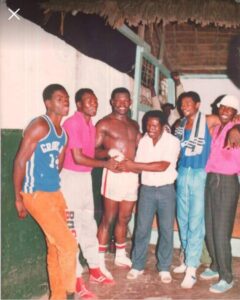
A delighted Obunga was mobbed by his excited Posta teammates. He had fufilled his dream of representing the national team in the Olympic Games though nothing was guaranteed by then.
In addition to booking a ticket to Korea’s capital city Seoul for the Olympic Games, Obunga had won the Kaloleni bragging rights battle.
Back in Ololo, the popular 1000 Street was abuzz with activity, the holy herb doing rounds among members. Towering Abich Mangwana, who was our pointman, led the chitchat on Obunga’s conquest.
The Amateur Boxing Association of Kenya later named a provisional team of 28 boxers for the Olympic Games with Obunga’s heavyweight berth having George “Foreman” Onyango on board. The tall GSU cop announced his arrival in 1986, a graduate of accomplished coach Eddie “Papa” Musi at Kariobangi Boxing Club nicknamed Bangladesh.
Onyango was not a favourite with the status quo at the time. He was among the 13 boxers dropped at Ruaraka’s “Camp David” training camp.
The coast was now clear for Obunga. His Olympic dream remained alive. He put issues beyond doubt in the regional Fescaaba tournament held for the second year running in Nairobi, winning his first ever gold medal for the country by beating Uganda’s Elphas Mubiru.
The Ugandan boxer was timid from the bell, keeping his face low hardly throwing any punch as Obunga punched him at will. At one stage he spat out his gumshield looking at his corner as if signalling them to thrown in the towel. They finally did so when the towel came flying in the second round. Obunga had clinched the regional heavyweight title. With nine finalists, Kenya, the dominant regional powerhouse, won eight gold medals, one less than the nine gold Kenya reaped in the 1987 Fescaaba tournament.
Kenya retained the Fescaaba overall crown with 8-1-2 20pts, followed by Uganda 2-3-4 14 pts, Tanzania 1-3-4 10pts, Zambia 0-5-3 9pts and Malawi 1-0-3 5pts.
The other Kenyan gold medalists were light-flyweight Maurice Maina, bantamweight Steve Mwema, featherweight John Wanjau, light-welterweight David Kamau, welterweight Robert Wangila, light-heavyweight Joseph Akhasamba and super-heavyweight Chrispin Odera.
The aforementioned were all in Kenya’s team for the Seoul Olympics with Kenya stamping its authority by producing the first ever black African Olympic Games gold medallist in Robert Wangila. Others in the Seoul team were flyweight Anthony Ikegu, lightweight Patrick “Mont” Waweru and light-middleweight Mohamed Orungi who had lost to Chris Sande in the Nakuru trials but the ABA of Kenya showed faith in him, moving Sande up to middleweight. A wise decision in that Sande won a bronze medal.
Obunga accounted well for himself, stopping Tonga’s Tualau Fale in the first round and bowing out in the quarter-finals to Poland’s Andrzej Golota who settled for a bronze medal.
On our way back home from Seoul, the triumphant Kenya team had an overnight stop-over in Mumbai then known as Bombay. I was closely together with Obunga and Wangila, watching pro boxing tapes from his video he bought in Seoul. Almost every member of the Kenya team bought video player in Seoul at a throw-away price.
As we watched the pro boxing tapes, Wangila told us he had been approached by Top Rank senior official Muhamnad Akbar to turn pro but we keep the info to ourselves until he signed the contract.
The following morning after breakfast the three of us took a walk at the beach in Mumbai as some locals trailed us asking for “bakshish” meaning cash to help themselves.
“I didn’t know Indians are also beggars yet in Nairobi they behave like Gods,” wondered aloud Wangila.
We also encountered a drug dealer who wanted us carry his mandrax to Nairobi secure in the knowledge as sportsmen his “cargo” would be delivered safely. We told him bluntly NO! That’s not our cup of coffee look for your fellow drug dealers.
Obunga made his international debut in 1984 during a Scandinavian countries tour for boxers who had won the Kenya Open title in Kisumu. I covered the Kenya Open at Tom Mboya Memorial Hall with Obunga winning the heavyweight crown by stopping Thomas Okusi.
My first trip with Obunga out of the country was in 1986 when together with KBC’s renowned broadcaster, Daudi Kanja, we joined the Kenya team for a memorable trip by road to Jinja, Uganda, for the Fescaaba Championships marred by shameless biased officiating by the hosts who made sure they regained the regional overall title in any way possible. The tournament, held at the Kakindu Indoor Stadium, attracted Uganda, Kenya, Tanzania and Ethiopia with Uganda winning on 27pts followed by Kenya 23pts, Ethiopia 12pts and Tanzania 8pts.
Obunga lost in the semi-finals to Tanzania’s Caston Mlei but like other boxers received no medal. The organisers said the medals were still in the production stage in London. That’s now history.
In addition to Obunga, other Kenyan boxers in Jinja were light-flyweight Maurice Maina, flyweight Daniel Mwangi, bantamweight Sammy “Kigos” Mwangi, featherweight David Gakuha making his debut, lightweight Patrick “Mont” Waweru, light-welterweight David Kamau, welterweight Ken Munika, light-middleweight Chris Sande, middleweight Martin Ojuang, light-heavyweight Silvanus Okello and super-heavyweight Chrispin Odera.
The following year ahead of the African Games there was confusion on the suitable heavyweight to represent the national team “Hit Squad” in this major event Kenya hosted for the first time in Nairobi. Earlier, James Omondi was the favourite but his loss to Uganda’s Fred Kaddu in the Fescaaba finals in Nairobi knocked him out of the Kenya team. Omondi lost to George “Foreman” Onyango in the Fescaaba trials but the ABA dropped Onyango arguing his resistance in big international tournaments was not satisfactory.
Any hopes Onyango had of making it in Kenya’s team for the African Games in Nairobi were shattered when the ABA of Kenya picked Obunga in the heavyweight berth. Obunga found the going rough in his first fight going down to Algeria’s Dine Mohammed who stopped him in two minutes 35 seconds of the third round after the Kenyan held his own in the first and second rounds.
One of Kenya’s top former internationals, Kenneth “Valdez” Ochieng describes Obunga as a boxer loaded with stamina and appeared harmless outside the ring.
“Schetza was very polite boxer, showing no appetite for the game but when you spar with him is when you feel the full force of his punches, he had a nice left hook,” says Valdez while Foreman recalls losing twice to Obunga and defeating him once.
“He had heavy straight punches and occasional one-two punches, he was however slow and you could see his punches before he throws them,” says Foreman who at one time coached the national team during the reign of Boxing Association of Kenya (BAK) President John Kameta.
Obunga started boxing in 1983 on abandoning football. He was a soldier at KDF and quit in 1979 to join Posta.
After the Seoul Olympics, Obunga was less active in the ring and passed on in 1995 in a road accident.
His sister Josephine narrates how it all happened.
“They were going to Mombasa Port to collect a car with his friend and a mechanic. On reaching Makindu they got an accident by hitting a Canter from behind and my brother died on the spot. At that time he had left Kenya Posta and was working with Hyundai Motors in Sales and Marketing Department as a Sales and Marketing Manager.”
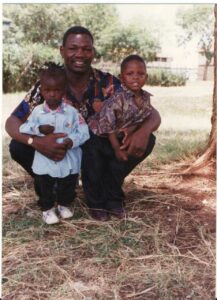
Harold “Schetza” Obunga was the second born to the late William Obunga and late Emma Obunga. He had five siblings, three brothers Zingy, Tony, Shaddie, and two sisters Josephine and Carol. He was married to Alice Koke and were blessed with two sons Harold Jnr and Eugene William. Obunga was a career soldier in the Kenya Army. He had risen to the rank of Captain when he left in 1979 to join Kenya Posts and Telecommunications.
His sister Josephine is married to the Assistant Secretary-General of the Nairobi County Boxing Association Ronnie Khainga who is the coordinator of the Harold Obunga Memorial Tournament.
“We had a very successful event on Saturday (December 20) at the usual venue in Kaloleni, and I thank all those who supported us,” the hard working Khainga told boxersworld.co.ke in an interview.
It’s understood there was an attempt to sabotage the Obunga Memorial by some anti-Boxing Federation of Kenya pessimists who reportedly paid some referees and judges.
A senior BFK official flexed his muscles, nipping the evil plan in the bud and read the Riot Act to the R&Js who coiled their tails in fear and toed the line to the amusement of the organisers.
Khainga said next year they will invite Kampala Combined to face their Nairobi counterparts in the Obunga Memorial Tournament.